1. Background: Chennai’s Repeated Climate Events
Chennai is one of India’s most climate-exposed metropolitan cities due to its coastal location along the Bay of Bengal, flat terrain, and dense urbanization. Over the last decade, the city has experienced repeated episodes of
- Severe monsoon flooding
- Cyclones and depressions making landfall on the Tamil Nadu coast
- Urban waterlogging caused by heavy rainfall combined with inadequate drainage
Major flood events (notably in 2015, 2021, and subsequent years) and recurring cyclones have caused prolonged disruption to daily life, property damage, displacement, and financial loss. These experiences have significantly altered how people perceive residential real estate risk.
2. Shift in Risk Awareness Among Homebuyers
Climate Risk as a Core Decision Factor
Traditionally, homebuying decisions in Chennai were driven by price, proximity to employment hubs, transport connectivity, and social infrastructure. After repeated floods and cyclones, climate vulnerability has emerged as a core evaluation parameter.
- Homebuyers now assess the following:
- Historical flood incidence in a locality
- Duration of water stagnation during heavy rains
- Frequency of power, water, and road disruptions
- Long-term habitability during extreme weather events
This represents a structural shift from short-term affordability considerations to long-term livability and safety concerns.
3. Location Preferences: From Low-Lying to Safer Elevations
Declining Preference for Flood-Prone Micro-Markets
Areas that are:
- Low-lying
- Close to natural water bodies, canals, or marshlands
- Built on reclaimed wetlands
have seen increased scrutiny from buyers. While such locations earlier attracted demand due to lower prices or proximity to the city core, repeated flooding has altered buyer perception of value.
Growing Emphasis on Elevation and Natural Drainage
Homebuyers increasingly examine the following:
- Ground elevation relative to surrounding areas
- Natural slope and runoff patterns
- Distance from flood plains and stormwater channels
This preference is rooted in lived experience, where even small differences in elevation have resulted in drastically different flood outcomes during the same rainfall event.
4. Structural and Design-Related Preferences
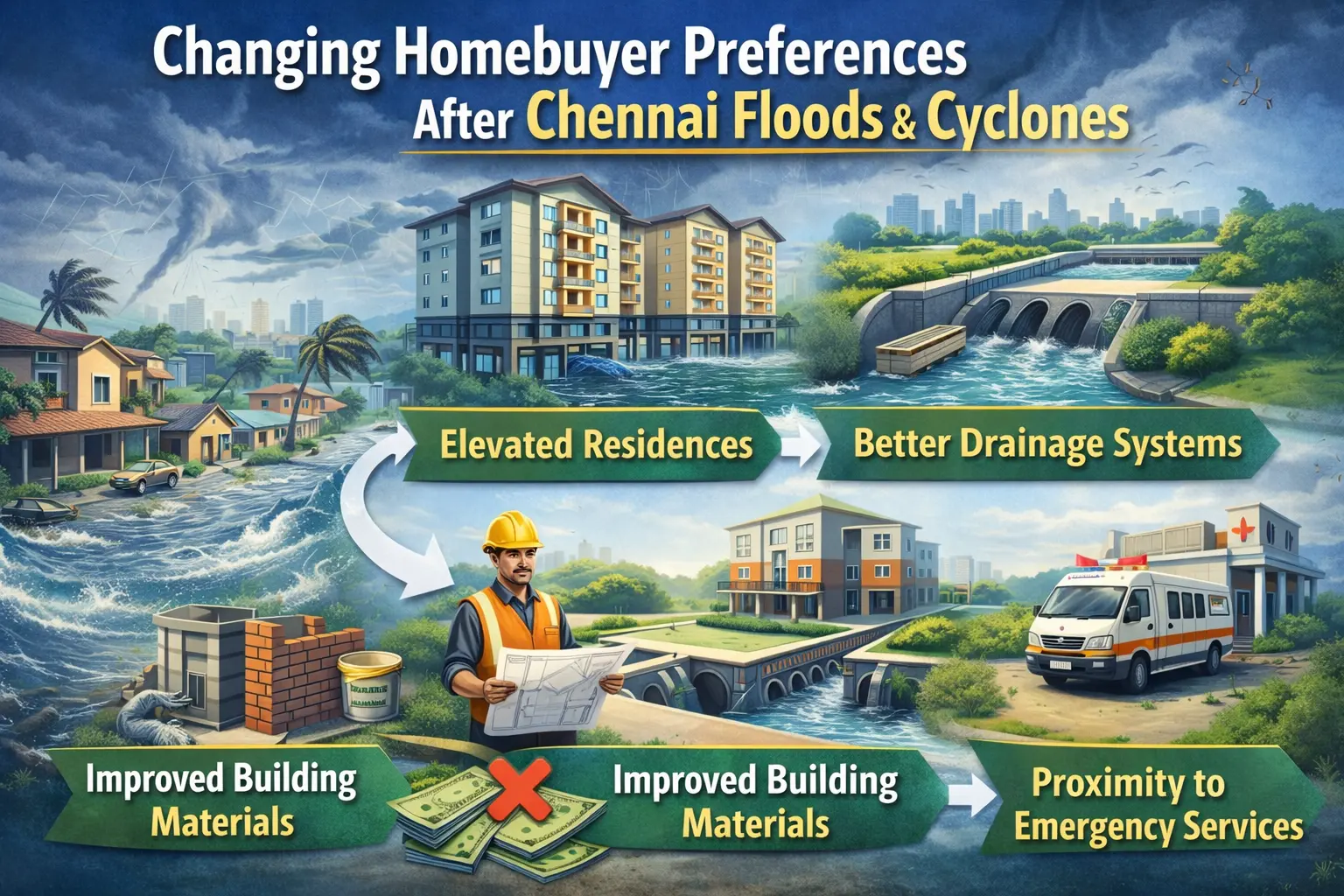
Importance of Flood-Resilient Construction
Buyers are paying closer attention to how a building is constructed rather than focusing only on unit interiors. Observed preferences include:
- Raised plinth levels
- Elevated basements or absence of basements
- Proper stormwater drainage within the project
- Building materials that withstand prolonged moisture
Structural resilience has become synonymous with long-term property usability.
5. Demand for Infrastructure Reliability
Floods and cyclones have exposed vulnerabilities in urban infrastructure. As a result, buyers now evaluate residential projects based on:
- Internal road levels within communities
- Drainage capacity during peak rainfall
- Availability of uninterrupted power and water supply
- Sewage backflow prevention systems
Infrastructure resilience is now viewed as an extension of home quality rather than a municipal issue alone.
6. Rise of Gated Communities and Planned Developments
Repeated climate disruptions have reinforced a preference for large, planned residential developments over standalone buildings. This trend is driven by observed differences during floods, where:
- Gated communities often recover faster
- Internal drainage and maintenance systems are better managed
- Power backup and water storage reduce disruption
The preference is less about luxury and more about predictability and control during emergencies.
7. Sustainability and Environmental Sensitivity
Increased Value of Eco-Responsive Features
Floods have highlighted the consequences of poor environmental planning. As a result, buyers increasingly value the following:
- Rainwater harvesting systems
- Permeable surfaces and green cover
- Water recycling and storage mechanisms
These features are seen not just as “green add-ons” but as practical necessities in a climate-stressed city.
8. Impact on Property Perception and Pricing Psychology
Risk-Adjusted Value Thinking
Homebuyers now mentally factor in:
- Potential repair costs after flooding
- Insurance availability and premiums
- Temporary relocation expenses during extreme events
This has changed how buyers perceive “cheap” properties in vulnerable zones. Lower prices are often interpreted as compensation for higher long-term risk rather than a bargain.
9. Investment vs End-Use Behavior
Floods and cyclones have widened the distinction between investor demand and end-user demand:
- End-users show stronger aversion to high-risk locations due to daily living concerns
- Investors assess liquidity risk, rental demand volatility, and resale difficulty
This divergence has influenced demand patterns across different micro-markets within Chennai.
10. Long-Term Cultural Shift in Homebuying Mindset
Perhaps the most significant change is psychological. Floods and cyclones have transformed homebuying in Chennai from a purely aspirational decision to a risk-management exercise.
Homes are increasingly viewed as:
- Long-term shelters against climate uncertainty
- Assets requiring resilience, not just appreciation
- Spaces that must remain functional during extreme events
This marks a fundamental shift in urban housing preferences shaped by lived climate experience rather than abstract environmental awareness.