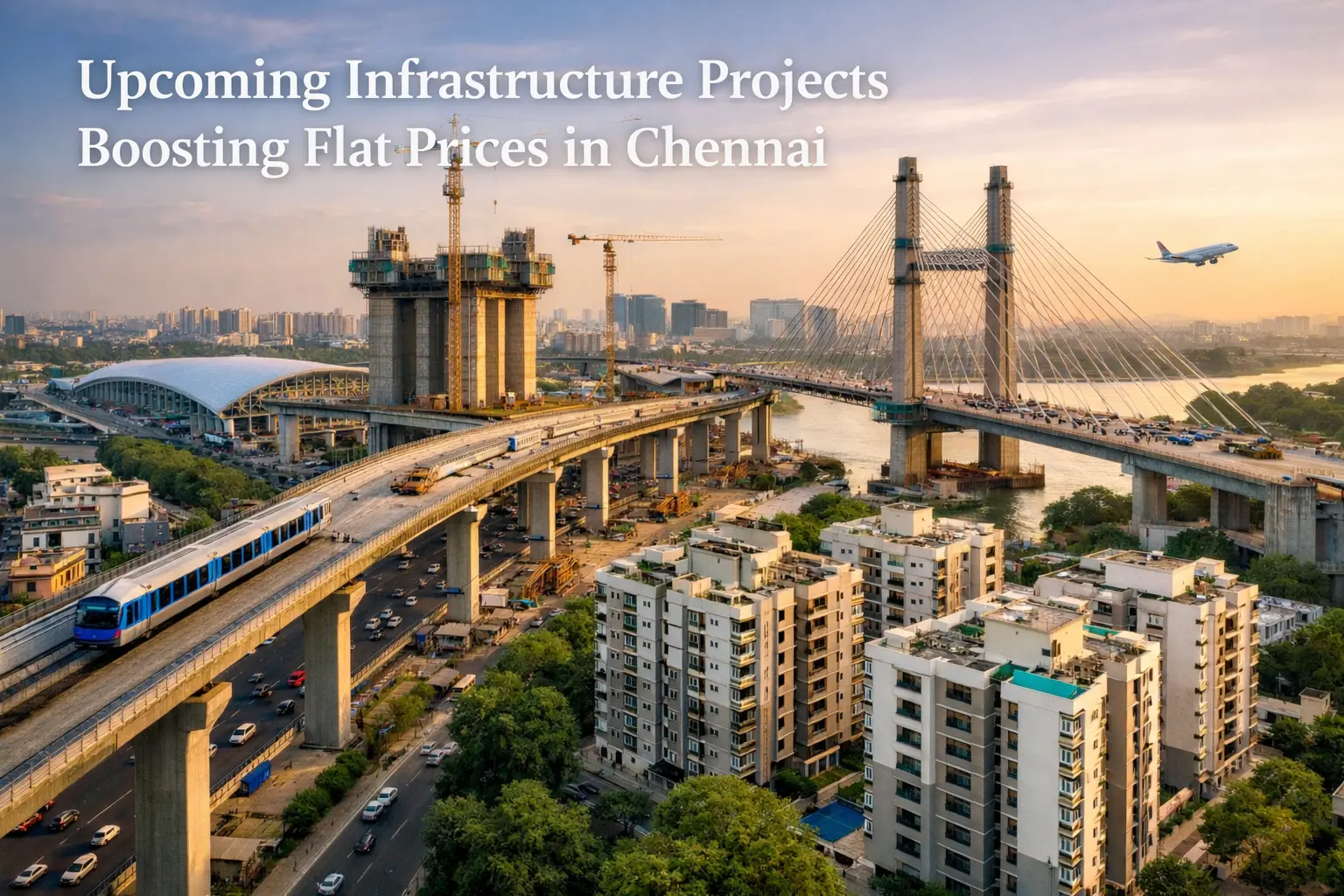
Chennai is experiencing a structural shift in its residential real estate market. Flat prices are rising not due to speculation, but because of large, planned infrastructure investments that are permanently changing how the city functions. Improved transport, better access to employment centers, reduced travel time, and organized urban expansion are directly increasing demand for apartments across multiple zones of the city.
Infrastructure influences real estate because it determines where people want to live, how easily they can travel, and how sustainable a location is for long-term living. Chennai’s current infrastructure pipeline is addressing all three.
1. Chennai Metro Rail Phase II – The Strongest Influence on Flat Prices
The Chennai Metro Rail Phase II is the single most powerful driver of flat price appreciation in the city.
Project Scope and Reach
- Over 118 km of new metro lines
- Extensive coverage connecting residential suburbs, IT corridors, industrial zones, and central business districts
- Integration with existing metro lines and suburban rail
This project is not limited to one part of the city—it reshapes Chennai as a whole.
How Metro Connectivity Changes Housing Demand
- Commute efficiency: Daily travel time reduces drastically, making longer-distance living practical
- Lifestyle improvement: Less dependence on private vehicles improves quality of life
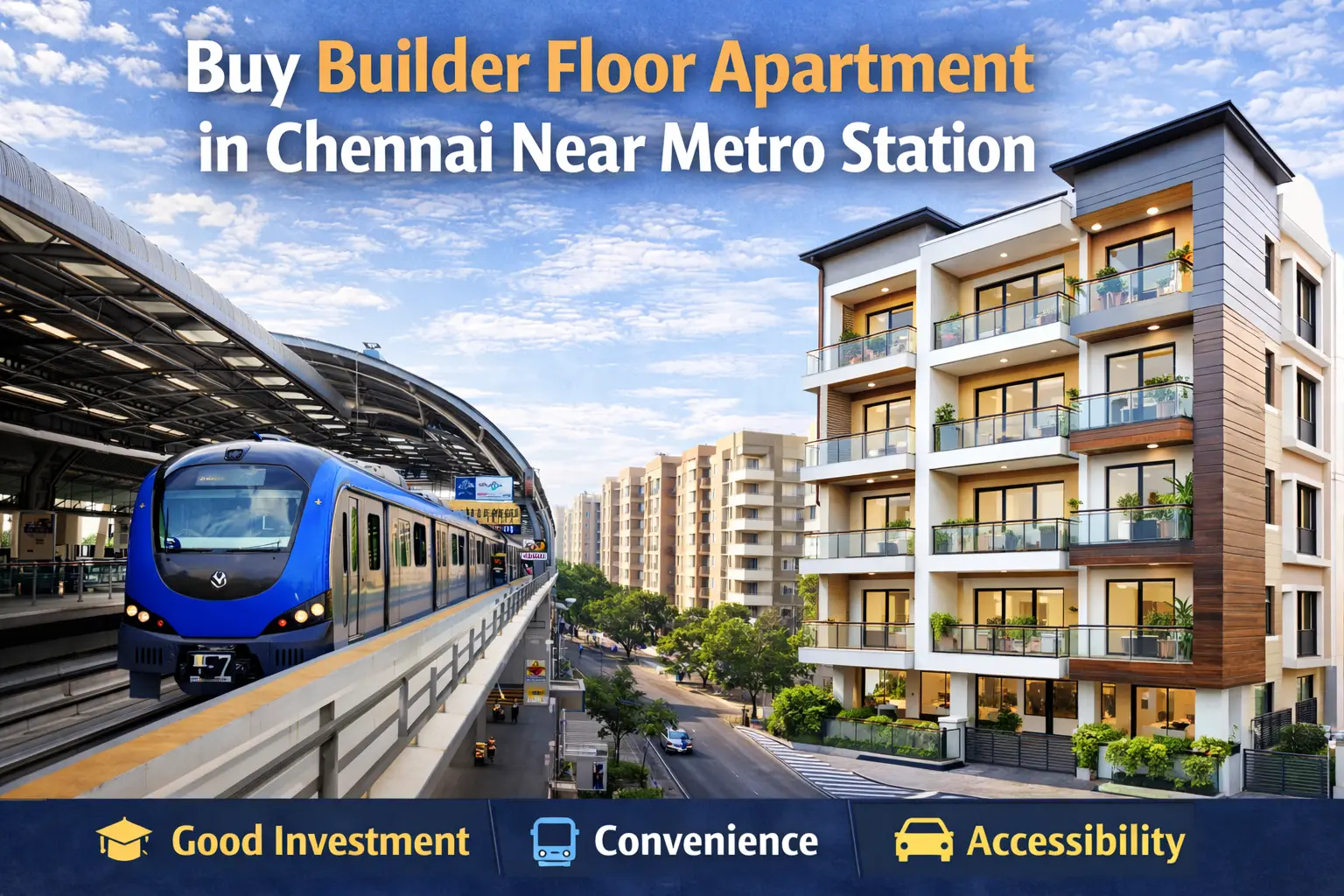
- Rental attractiveness: Tenants prefer homes near metro stations
- Resale advantage: Buyers are willing to pay more for guaranteed connectivity
Impact on Flat Prices
- Flats located within walking distance of metro stations command premium pricing
- Pre-completion appreciation occurs as buyers anticipate future convenience
- Even older apartment buildings near metro corridors experience value growth
- Developers price new launches higher along confirmed metro routes
Metro infrastructure converts average residential zones into high-demand urban micro-markets.
2. Expressways, Ring Roads, and Highway Infrastructure
Road infrastructure is equally critical in shaping Chennai’s expanding residential geography.
Outer Ring Road and Peripheral Connectivity
Ring roads connect national highways, industrial belts, and emerging suburbs.
How This Affects Flat Prices
- Areas previously considered “too far” become realistic residential options
- Travel between suburbs and employment hubs becomes faster and predictable
- Large residential communities develop due to improved access
- Buyer preference shifts toward newer suburbs with better planning
Long-Term Market Effect
- Flats in newly connected suburbs see steady appreciation
- Land scarcity in central Chennai pushes demand outward
- Infrastructure-backed suburbs become long-term residential hubs
Road connectivity allows Chennai to expand horizontally while maintaining livability.
3. New Greenfield Airport at Parandur – Long-Term Price Multiplier
The upcoming Parandur Airport is expected to reshape the city’s real estate dynamics over the next decade.
Why Airports Drive Residential Growth
- Airports attract logistics, commercial offices, hotels, and services
- Employment opportunities increase in surrounding regions
- Government invests heavily in roads, utilities, and public services nearby
Effect on Flats
- Early investment areas experience gradual appreciation
- Demand grows for employee housing near new commercial zones
- Long-term capital appreciation becomes significant once operations begin
Airport-led development typically transforms semi-urban areas into major city extensions.
4. Elevated Corridors, Flyovers, and Traffic Decongestion Projects
Urban mobility improvements play a direct role in residential price growth.
Purpose of Elevated Corridors
- Reduce congestion on key arterial roads
- Improve travel speed across dense city areas
- Separate local and through traffic
Residential Impact
- Areas once avoided due to traffic congestion become livable
- Flats gain value as travel stress reduces
- Improved accessibility boosts resale and rental demand
- Daily commuting becomes more predictable
Livability improvements often translate directly into higher flat prices.
5. IT Corridor Infrastructure and Employment Alignment
The Old Mahabalipuram Road (OMR) remains one of Chennai’s strongest residential demand generators.
Infrastructure Improvements
- Metro expansion along the corridor
- Road widening and service road upgrades
- Improved water, power, and civic facilities
Impact on Apartment Demand
- Strong end-user demand from IT professionals
- High rental occupancy throughout the year
- Continuous absorption of new apartment supply
- Stable and predictable price appreciation
Infrastructure aligned with employment creates sustained and resilient housing markets.
6. Why Infrastructure Consistently Pushes Flat Prices Upward
Infrastructure affects flat prices through multiple reinforcing mechanisms:
- Accessibility – Faster and easier travel increases desirability
- Economic growth – Jobs generate housing demand
- Urban expansion – New residential corridors open
- Buyer confidence – Planned development reduces risk
- Rental demand – Tenants prefer connected locations
- Supply constraints – Demand rises faster than new supply
These forces combine to create steady, long-term price appreciation rather than short-term volatility.
Conclusion
Chennai’s flat price growth is being driven by fundamental changes in infrastructure rather than speculation. Metro expansion, expressways, airport development, elevated corridors, and IT-focused upgrades are reshaping residential demand across the city. These projects improve connectivity, livability, and economic opportunity, leading to sustained and structured appreciation in flat prices. Infrastructure-led growth in Chennai is long-term, demand-backed, and deeply rooted in urban transformation.
Frequently Asked Questions (FAQs)
Q1. Why does infrastructure development increase flat prices even before completion?
A: Buyers and investors factor in future convenience, connectivity, and livability. This anticipation increases demand early, resulting in pre-completion price appreciation.
Q2. Do infrastructure projects affect all flats equally?
A: No. Flats closer to metro stations, highways, and employment hubs benefit the most. Impact decreases with distance from infrastructure.
Q3. Is infrastructure-driven price growth safer than speculative growth?
A: Yes. Infrastructure growth is backed by real usage, long-term planning, and economic activity, making it more stable and sustainable.
Q4. Do resale flats benefit from new infrastructure?
A: Yes. Older flats near new infrastructure often experience increased demand and improved resale value due to location advantage.
Q5. How does infrastructure affect rental income?
A: Improved connectivity and employment access increase tenant demand, leading to higher rents and lower vacancy rates.
Q6. Will flat prices ever decrease after infrastructure is completed?
A: Prices may stabilize temporarily, but long-term appreciation usually continues due to population growth and urban expansion.