1. Introduction
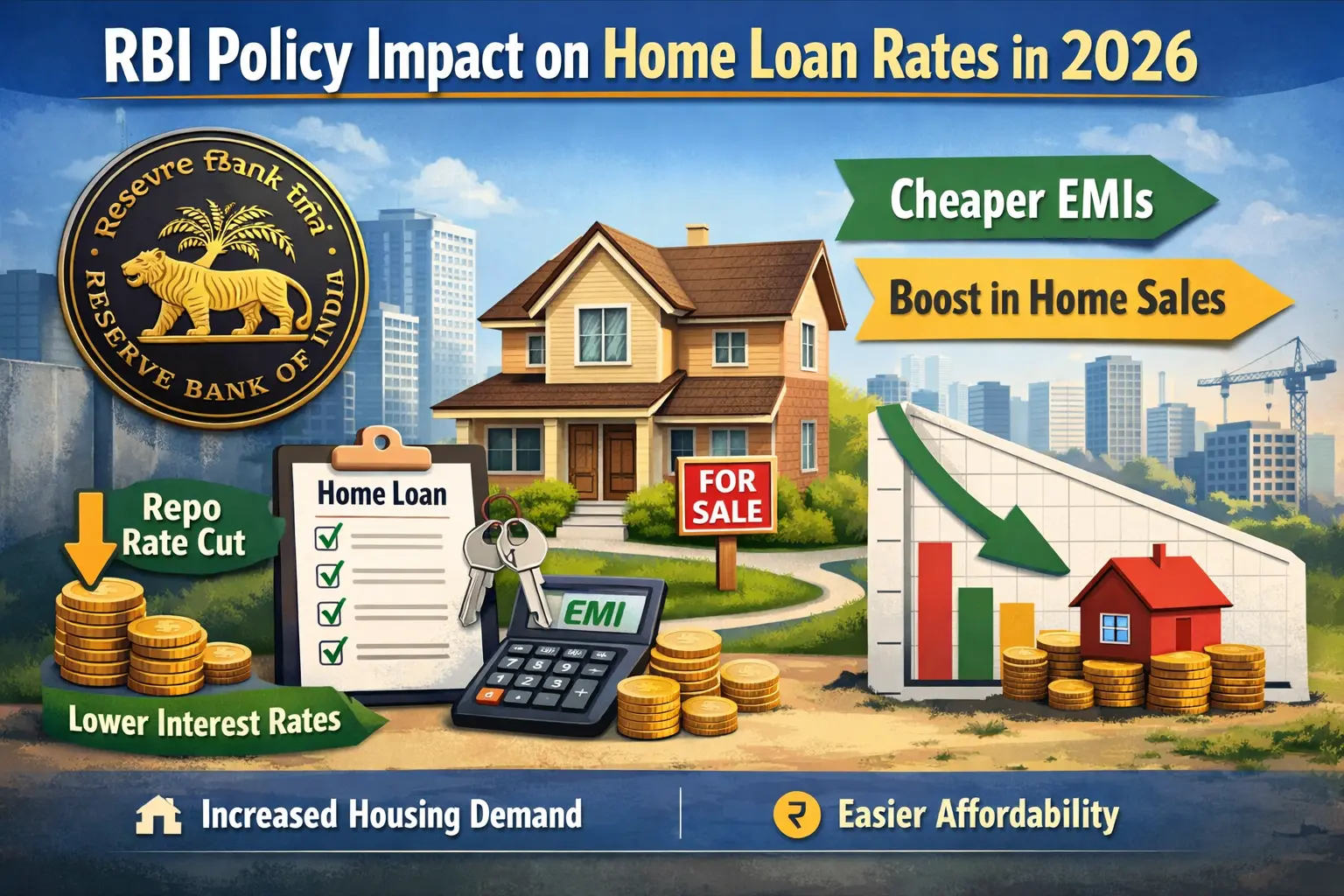
Home loan interest rates in India are closely linked to the monetary policy decisions taken by the Reserve Bank of India (RBI). In 2026, RBI’s policy stance continues to play a crucial role in determining how affordable housing loans remain for millions of borrowers. Understanding how RBI policies work, how banks transmit these policies, and what borrowers should expect helps individuals make better decisions regarding buying homes, refinancing loans, or managing EMIs.
2. What Is RBI Monetary Policy?
RBI’s monetary policy refers to actions taken to regulate:
- Money supply
- Credit availability
- Interest rates in the economy
Primary Objectives:
- Control inflation (price stability)
- Support economic growth
- Maintain financial system stability
RBI announces its Monetary Policy six times a year through the Monetary Policy Committee (MPC).
3. Key RBI Policy Rates That Affect Home Loans
3.1 Repo Rate (Most Important)
- The repo rate is the rate at which RBI lends money to commercial banks.
- It acts as the base reference for lending rates in India.
Impact:
- Repo rate ↓ → Home loan interest ↓
- Repo rate ↑ → Home loan interest ↑
3.2 Reverse Repo Rate
- Rate at which banks park surplus funds with RBI.
- Influences liquidity but indirectly affects lending rates.
3.3 Cash Reserve Ratio (CRR)
- Portions of deposits banks must keep with the RBI.
- Higher CRR → Less money for lending → Potentially higher loan rates.
3.4 Statutory Liquidity Ratio (SLR)
- Portion of deposits invested in government securities.
- Affects banks’ ability to lend aggressively.
4. RBI Policy Environment in 2026 (Contextual Overview)
In 2026, RBI’s monetary policy is shaped by:
- Moderating but watchful inflation trends
- Stable domestic economic growth
- Global uncertainties (oil prices, geopolitics, US Fed policies)
- Housing demand and banking system liquidity
RBI has largely followed a cautious and balanced approach, avoiding sharp rate movements unless inflation or growth deviates significantly from targets.
5. How RBI Policy Translates Into Home Loan Rates
5.1 External Benchmark Lending Rate (EBLR)
Most home loans in India are now linked to an external benchmark, usually:
- RBI Repo Rate
This system ensures:
- Faster and transparent transmission of RBI decisions
- Automatic changes in loan interest rates after reset periods
5.2 Transmission Mechanism Explained Step-by-Step
- RBI changes repo rate
- Banks adjust their Repo Linked Lending Rate (RLLR)
- Spread is added based on borrower risk profile
- Final home loan rate is revised
- EMI changes at the next reset date
5.3 Why EMIs Do Not Change Immediately
- Home loans have reset periods (monthly, quarterly, or annually)
- Banks may adjust tenure instead of EMI
- Transmission may be partial due to:
- Deposit costs
- Liquidity constraints
- Competition among banks
6. Impact on Different Types of Home Loans
6.1 Floating Rate Home Loans
- Directly linked to repo rate
- Benefit quickly from rate cuts
- EMIs or tenure fluctuate
2026 Impact:
Floating-rate borrowers enjoy relative stability if RBI holds rates steady.
6.2 Fixed Rate Home Loans
- Rates remain unchanged for a fixed period
- Not immediately affected by RBI changes
- Usually higher than floating rates
2026 Impact:
Less attractive compared to floating loans due to stable policy rates.
6.3 Existing Borrowers vs New Borrowers
Category
Impact
- Existing borrowers
- EMI/tenure changes at reset
- New borrowers
- Loan rates reflect latest repo
- Balance transfer customers
- Can negotiate better rates
7. What RBI Policy in 2026 Means for Homebuyers
7.1 Positive Effects
- Predictable EMIs
- Improved affordability
- Stable borrowing environment
- Better loan planning
7.2 Risks to Watch
- Future inflation spikes
- Global rate hikes
- Liquidity tightening
8. Should You Buy a Home in 2026?
From a policy perspective:
- RBI’s stable stance supports housing demand
- Developers benefit from steady financing
- Borrowers can plan long-term loans with confidence
However, buyers should also consider:
- Property prices
- Personal income stability
- Credit score
- Long-term interest rate cycles
9. Strategies for Borrowers in 2026
- Choose repo-linked floating loans
- Maintain a high credit score
- Opt for shorter reset periods
- Consider prepayments when rates are stable
- Evaluate balance transfer options
10. Long-Term Outlook
While 2026 appears stable, home loan borrowers must remember:
- Interest rates move in cycles
- RBI policy reacts to inflation first
- Long-term borrowers should be prepared for fluctuations
Prudent financial planning remains essential.
Frequently Asked Questions
Q1. Does RBI directly decide home loan interest rates?
No. RBI sets policy rates like the repo rate. Banks decide final home loan rates by adding a spread.
Q2. How quickly do RBI rate changes affect my EMI?
Usually within the next reset period (1–6 months depending on loan terms).
Q3. Why does my EMI sometimes stay the same but tenure increases?
Banks often extend loan tenure instead of raising EMIs to reduce borrower burden.
Q4. Are fixed home loans safer in 2026?
Fixed loans offer certainty but may cost more. Floating loans are generally better during stable or falling rate cycles.
Q5. Can RBI policy reduce home loan rates further in 2026?
Yes, if inflation remains under control and economic growth slows, RBI may consider cuts.
Q6. Is refinancing worth it in 2026?
Yes, if:
- Rate difference is ≥ 0.5%
- Remaining tenure is long
Transfer costs are reasonable
Q7. Does CRR or SLR affect my home loan?
Indirectly. Higher CRR/SLR reduces banks’ lending capacity, which can push rates upward.
Q8. What matters more than RBI policy for my loan?
Your credit score, income stability, loan amount, and tenure often matter as much as policy rates.