Introduction
The official land value in Tamil Nadu for 2026 is determined through the Guideline Value system, which is published and maintained on the TNREGINET portal. This value plays a critical legal and financial role in property transactions, as it forms the minimum benchmark for registering land and property documents across Tamil Nadu. This guide explains in detail what guideline value is, why it matters, how it is fixed, and how to search the latest 2026 land values using TNREGINET.
What Is Official Land Value (Guideline Value)?
The Guideline Value is the government-notified minimum value of land or property in a specific location. It is fixed per unit area (square foot, square meter, ground, or acre) and is legally enforced during property registration.
During registration:
- Property value cannot be declared below the guideline value
- Stamp duty and registration fees are calculated on the higher of:
- Guideline Value
- Actual sale consideration
Authority Behind Guideline Value
The guideline value is fixed, revised, and enforced by the Tamil Nadu Registration and Stamps Department and implemented through Sub-Registrar Offices across the state.
Why Guideline Value Is Important
Guideline value exists to:
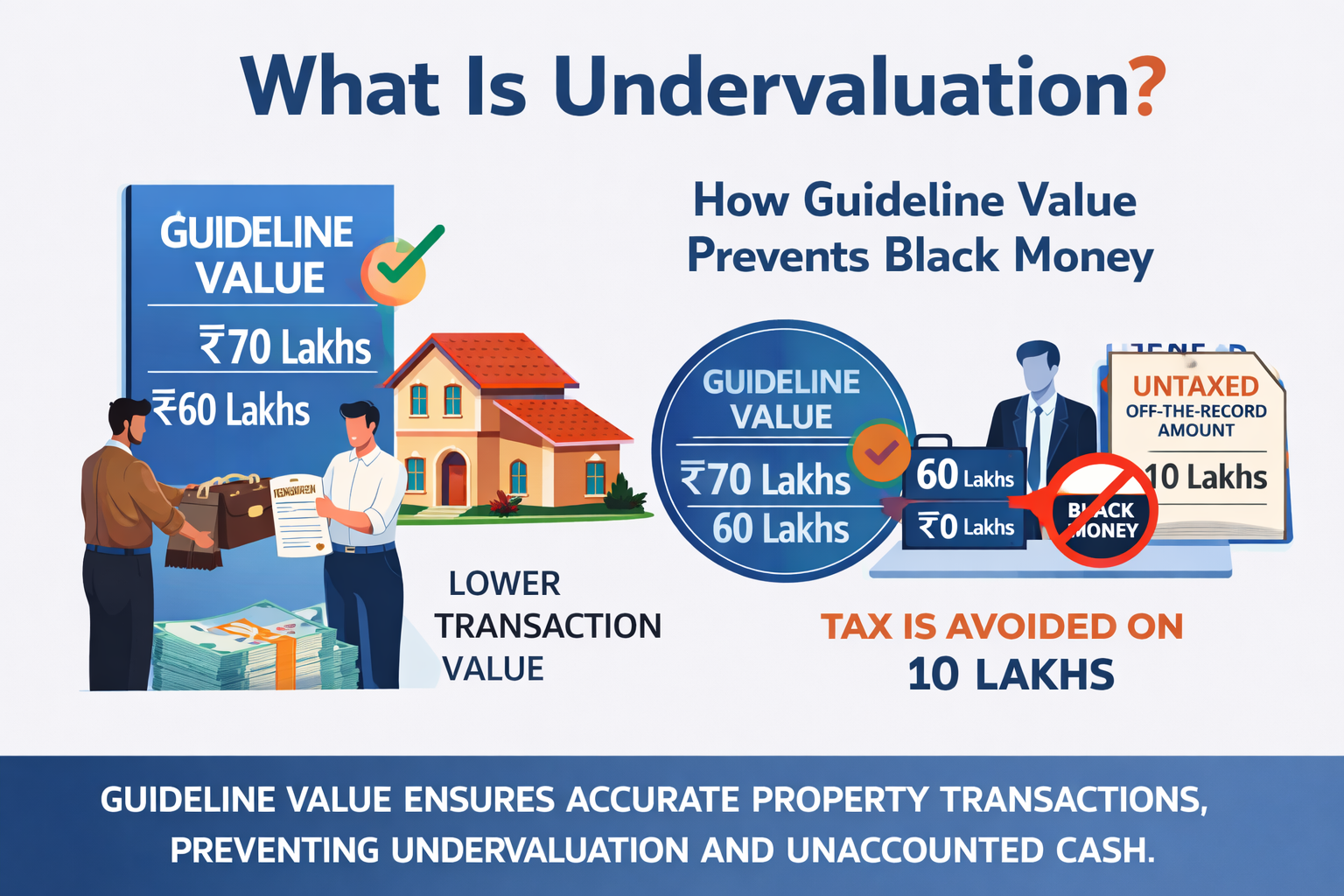
- Prevent undervaluation of property
- Control tax evasion and black-money transactions
- Ensure uniform stamp duty collection
- Provide a legal reference value for courts, banks, and tax authorities
- Bring transparency to real estate transactions
How Guideline Value Is Fixed
The government fixes guideline value after detailed evaluation of multiple factors:
1. Location Factors
- Main road vs interior street
- Proximity to highways, transport hubs, markets
- Urban, semi-urban, or rural classification
2. Land Use Classification
- Residential
- Commercial
- Industrial
- Agricultural
Commercial land usually has a higher guideline value than residential land in the same area.
3. Infrastructure & Development
- Road width
- Water supply, drainage, electricity
- Nearby schools, hospitals, offices, IT parks
4. Market Transaction Data
- Past registered sale deeds
- Volume and frequency of transactions
- Growth and future development potential
Because of this, guideline value varies street-wise and survey-number-wise, even within the same locality.
Land Value and Building Value
For built-up properties, valuation has two components:
- Land Value – based on location and area
- Building Value – based on:
- Construction type (RCC, tiled, etc.)
- Usage (residential/commercial)
- Age of building (depreciation applied)
- Built-up area
Total Registration Value = Land Value + Building Value
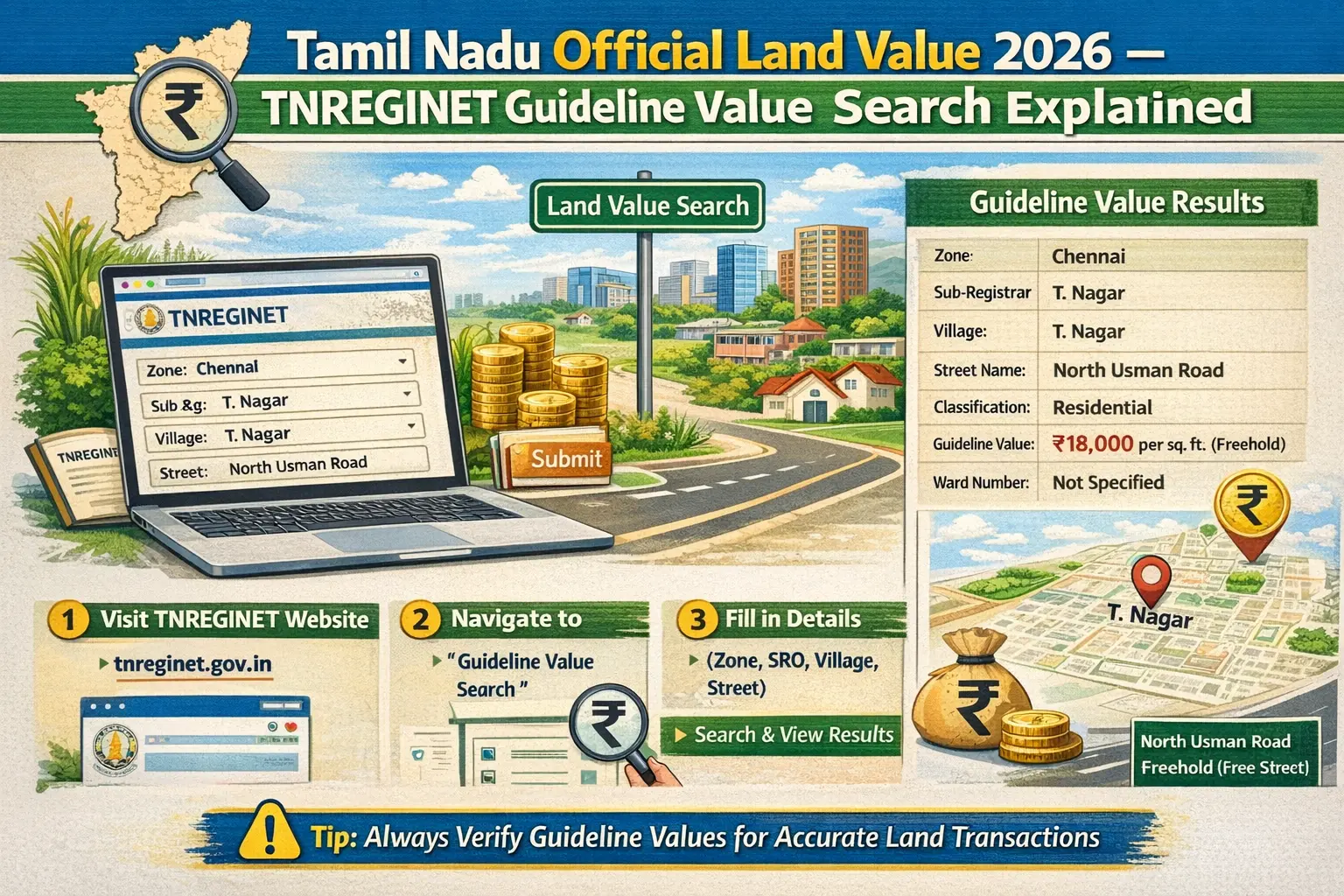
TNREGINET Guideline Value Search – 2026
The official portal for checking land and property guideline values is TNREGINET.
How to Search Guideline Value on TNREGINET
- Open the TNREGINET portal
- Select Guideline Value / Property Valuation
- Choose:
- District
- Sub-Registrar Office
- Village / street name or survey number
- Property type
- Submit to view the official guideline value
The values displayed are legally valid for 2026 registrations.
Who Fixes and Enforces Guideline Value?
Guideline values are fixed and enforced by the Tamil Nadu Registration and Stamps Department.
Implementation happens through:
- Sub-Registrar Offices (SROs)
- Digital enforcement via the TNREGINET system
Sub-Registrars cannot approve registration below the applicable guideline value.
Objectives of Guideline Value
The guideline value system exists to:
- Prevent undervaluation of property
- Eliminate black-money practices
- Ensure correct stamp duty collection
- Create a uniform valuation framework
- Reduce legal disputes during registration
- Provide a reliable benchmark for banks, courts, and tax authorities.
Guideline Value vs Market Value
- Guideline Value: Government-fixed minimum value
- Market Value: Actual price agreed between buyer and seller
For registration purposes, the higher value is always adopted.
Stamp Duty & Registration Charges
In Tamil Nadu, charges are calculated on the higher of guideline value or sale price.
(Indicative – subject to revision)
- Stamp Duty: ~7%
- Registration Fee: ~2%
These charges significantly affect the total property cost.
Impact on Buyers
- Higher guideline value = higher registration cost
- Influences home loan eligibility, as banks rely on registered value
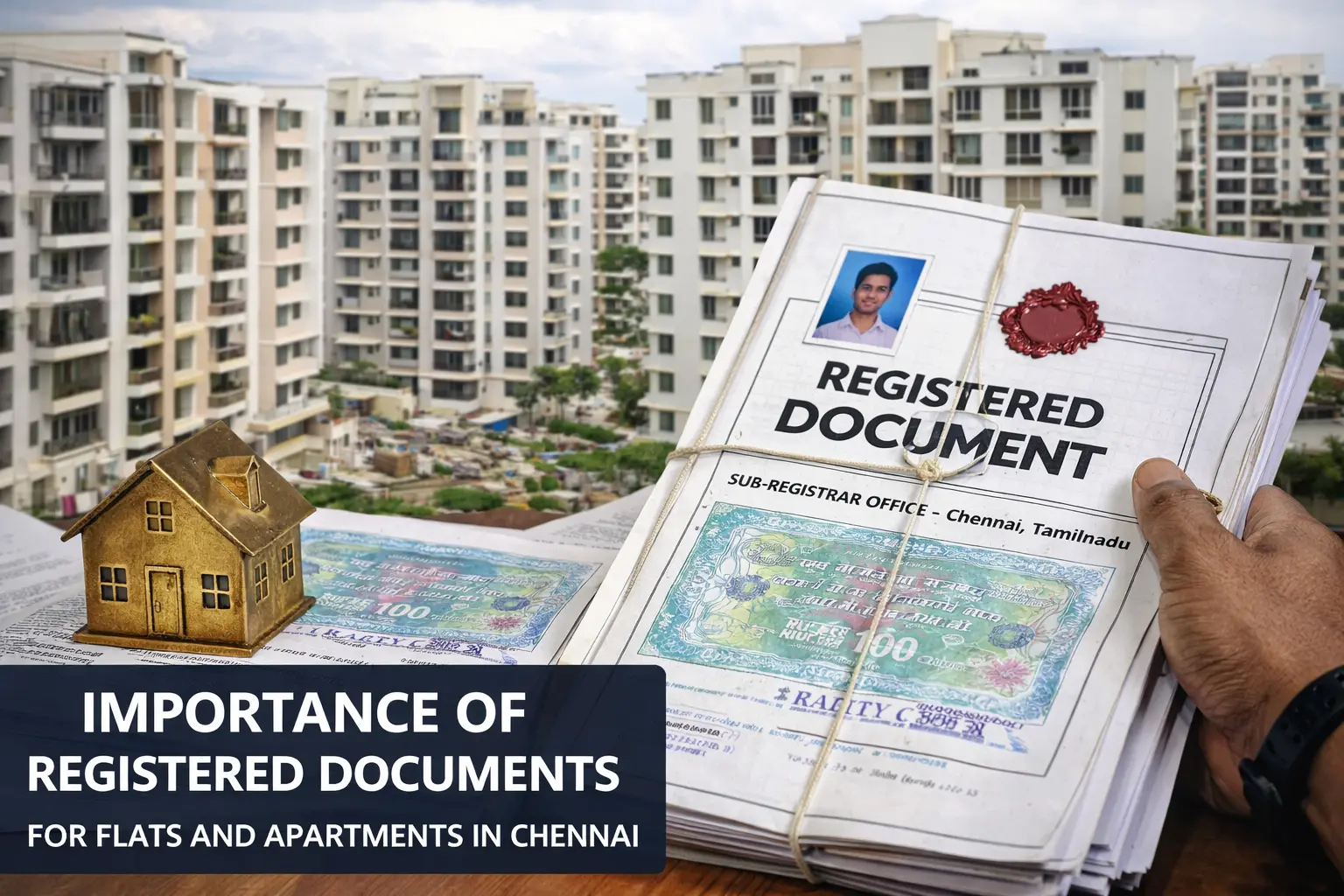
- Ensures legal ownership and transparency
Impact on Sellers
- Cannot legally register property below guideline value
- High GV may affect buyer affordability
- Creates official transaction history for the property
Revision of Guideline Value
- No fixed annual revision cycle
- Revised periodically by government notification
- Based on market conditions and economic factors
- Revised values apply prospectively only
Role in Taxation & Legal Matters
Guideline value is used by:
- Income-tax authorities (capital gains & scrutiny)
- Banks and housing finance companies
- Courts and legal proceedings
- Audit and valuation assessments
FAQs – Tamil Nadu Official Land Value 2026
1. Is guideline value mandatory for registration in Tamil Nadu?
Yes. Property cannot be registered below the guideline value.
2. Is the 2026 guideline value available online?
Yes. The latest official values are available on the TNREGINET portal.
3. Can guideline value be higher than market value?
Yes. In some areas, guideline value may exceed actual market prices.
4. Are land and building values calculated separately?
Yes. Land value and building value are assessed independently.
5. Does guideline value affect home loan approval?
Yes. Banks often consider the registered (guideline) value while sanctioning loans.
6. Is guideline value the same across an entire locality?
No. It varies street-wise, zone-wise, and survey-number-wise.
7. Can guideline value be reduced on request?
Only through official government revision or reassessment.
8. Is TNREGINET guideline value legally valid?
Yes. Values published on TNREGINET are legally binding.