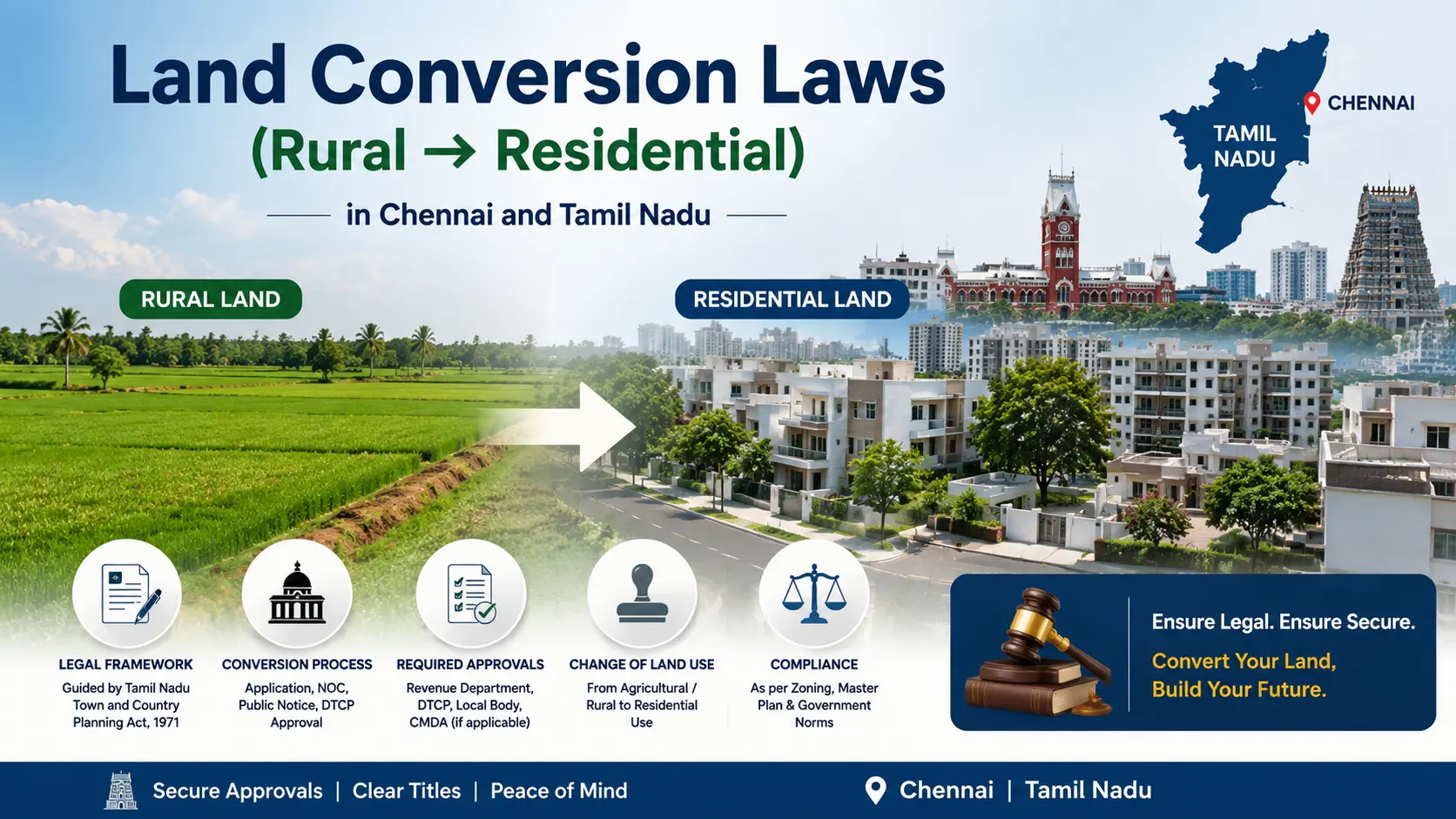
Land conversion from rural/agricultural use to residential use is a mandatory legal requirement in Chennai and throughout Tamil Nadu. Owning land does not automatically grant the right to build a house. Without proper land-use conversion, construction is illegal and punishable under state planning and revenue laws.
1. What Is Land Conversion?
Land conversion is the legal process of changing the land-use classification recorded in government records from
- Agricultural / Rural land (Nanjai / Punjai)
- Residential land (Manai / Housing)
This approval is granted only by statutory planning authorities, not by village panchayats or revenue officials alone.
2. Why Land Conversion Is Compulsory in Tamil Nadu
Tamil Nadu follows planned development laws. According to town planning and revenue rules:
- Agricultural land is protected from unregulated construction
- Residential use is allowed only in designated zones
- Unauthorized layouts are illegal
- Infrastructure planning depends on approved land use
If land is NOT converted:
- Construction is illegal
- Banks reject home loans
- Registration can be cancelled
- Electricity, water, sewage connections may be denied
- Demolition notices may be issued
3. Laws Governing Land Conversion
Land conversion is governed by:
- Tamil Nadu Town and Country Planning Act
- Revenue Standing Orders (RSO)
- Local Master Plans & Zoning Regulations
These laws ensure controlled urban expansion and protection of agricultural land.
4. Authorities Responsible for Land Conversion
Chennai Metropolitan Area
Land within Chennai's metropolitan limits is regulated by the following:
- Chennai Metropolitan Development Authority (CMDA)
CMDA approves:
- Land use change
- Residential zoning
- Layout approvals
Outside Chennai (Rest of Tamil Nadu)
Land outside CMDA limits is regulated by:
- Directorate of Town and Country Planning (DTCP)
DTCP approves:
- Rural and semi-urban land conversion
- Panchayat and municipal planning
Revenue Authorities (Supporting Role)
- District Collector
- Tahsildar
- Revenue Department
They update patta, chitta, and adangal but cannot authorize residential use alone.
5. Types of Land Classifications in Tamil Nadu
Classification / Meaning / Residential Conversion
- Nanjai
- Wet agricultural land
- Mostly restricted
- Punjai
- Dry agricultural land
- Allowed with approval
- Manai
- Residential land
- Already converted
- Grama Natham
- Village habitation
- Case-specific
- Poramboke
- Government land
- Not allowed
-Only privately owned patta land is eligible
6. Zoning Rules – Most Important Check
Before applying for conversion, land must fall under a residential zone in the approved master plan.
Conversion is NOT allowed if land is in:
- Green Belt
- Agricultural Preservation Zone
- Water bodies, lakes, channels
- OSR (Open Space Reservation)
- Forest land
- Certain CRZ-restricted coastal areas
Zoning violations lead to automatic rejection.
7. Step-by-Step Land Conversion Process (End to End)
Step 1: Land Due Diligence
Verify:
- Patta classification
- Chitta & Adangal
- Field Measurement Book (FMB)
- Encumbrance Certificate (30+ years)
- Local zoning / master plan
Step 2: Apply for Land Use Conversion (LUC)
- Chennai area → Apply to CMDA
- Other districts → Apply to DTCP
Application includes:
- Proposed residential use
- Plot extent and survey details
Step 3: Documents Required
Mandatory Documents
- Registered Sale Deed
- Patta, Chitta, Adangal
- Encumbrance Certificate
- FMB sketch
- Location map & site plan
- Identity & address proof
- Application form
Step 4: Payment of Conversion Charges
Charges depend on:
- Location
- Guideline value
- Approximate range:
- Rs 50 to Rs 300 per sq. m
- Plus scrutiny, inspection, and development charges
Step 5: Site Inspection
Officials inspect:
- Ground reality vs records
- Road access
- Zoning compliance
- Environmental impact
Step 6: Approval Order Issued
Once approved:
- Land use officially changes to Residential (Manai)
- The patta is updated
- Building plan approval can be applied for.
- Typical timeline: 30–90 days
8. Special Rules for Chennai
In Chennai and CMDA areas:
- Minimum road width: 7.2 meters
- Layout approval mandatory for subdivisions
- OSR reservation required for large layouts
- CRZ rules apply near the coast
9. Online Application System
Tamil Nadu has introduced online planning portals for:
- Application submission
- Fee payment
- Status tracking
However, technical scrutiny and inspections are still manual.
10. Penalties for Illegal Conversion or Construction
Violation / Consequence
- Building without conversion
- Demolition
- Unauthorized layout
- Heavy fines
- No approval
- Loan rejection
- Illegal sale
- Registration cancellation
- Utilities
- Disconnection
11. Impact on Buying, Selling & Loans
Buying
Always demand:
- Conversion order
- Zoning compliance proof
Selling
Unconverted land:
- Sells at lower value
- Limited buyer pool
Bank Loans
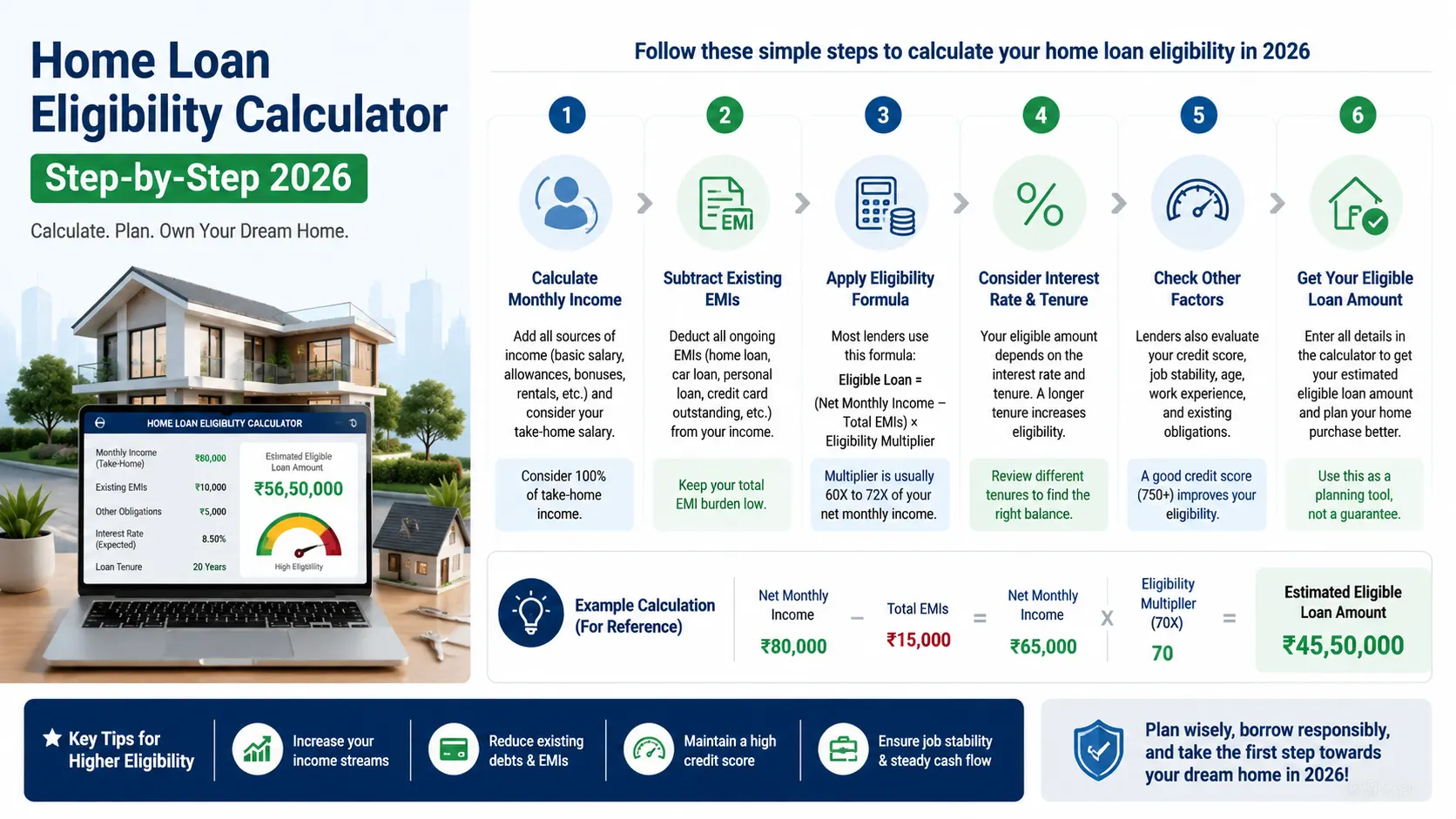
Banks approve loans only for converted residential land.
12. Appeal & Rejection Process
If application is rejected:
- Reasons are issued in writing
- Rectification or appeal can be filed
- Final authority: District Collector / Planning Authority
13. Who Must Apply for Land Conversion?
- Individual landowners
- Home builders
- Plot promoters
- Real estate developers
- Investors
14. Buyer’s Legal Checklist
Before purchase:
- Land use conversion order
- Correct zoning classification
- CMDA / DTCP approval number
- Patta shows Residential (Manai)
- Approved access road
15. Frequently Asked Questions (FAQs)
Is land conversion compulsory in Tamil Nadu?
Yes. Residential use without conversion is illegal.
Can I build a house on agricultural land?
No, unless the land is officially converted.
Who approves land conversion in Chennai?
CMDA inside Chennai limits; DTCP elsewhere.
How long does conversion take?
Usually 30–90 days.
Is Grama Natham exempt?
Sometimes, but verification is mandatory.
What is the conversion cost?
Generally Rs 50–Rs 300 per sq.m.
Is patta change enough?
No. Land use conversion is mandatory.
Can conversion be rejected?
Yes, due to zoning or environmental restrictions.
Can I sell unconverted land?
Yes, but buyers cannot legally build.
Can rejected cases be appealed?
Yes, through planning authorities.
16. Conclusion
Land conversion from rural or agricultural use to residential use is not optional in Chennai and Tamil Nadu. It is the foundation of legal property ownership and construction.
Ignoring conversion laws can lead to:
- Legal action
- Financial loss
- Demolition
Always ensure:
- Valid conversion approval
- Proper zoning
- Authority-approved layout