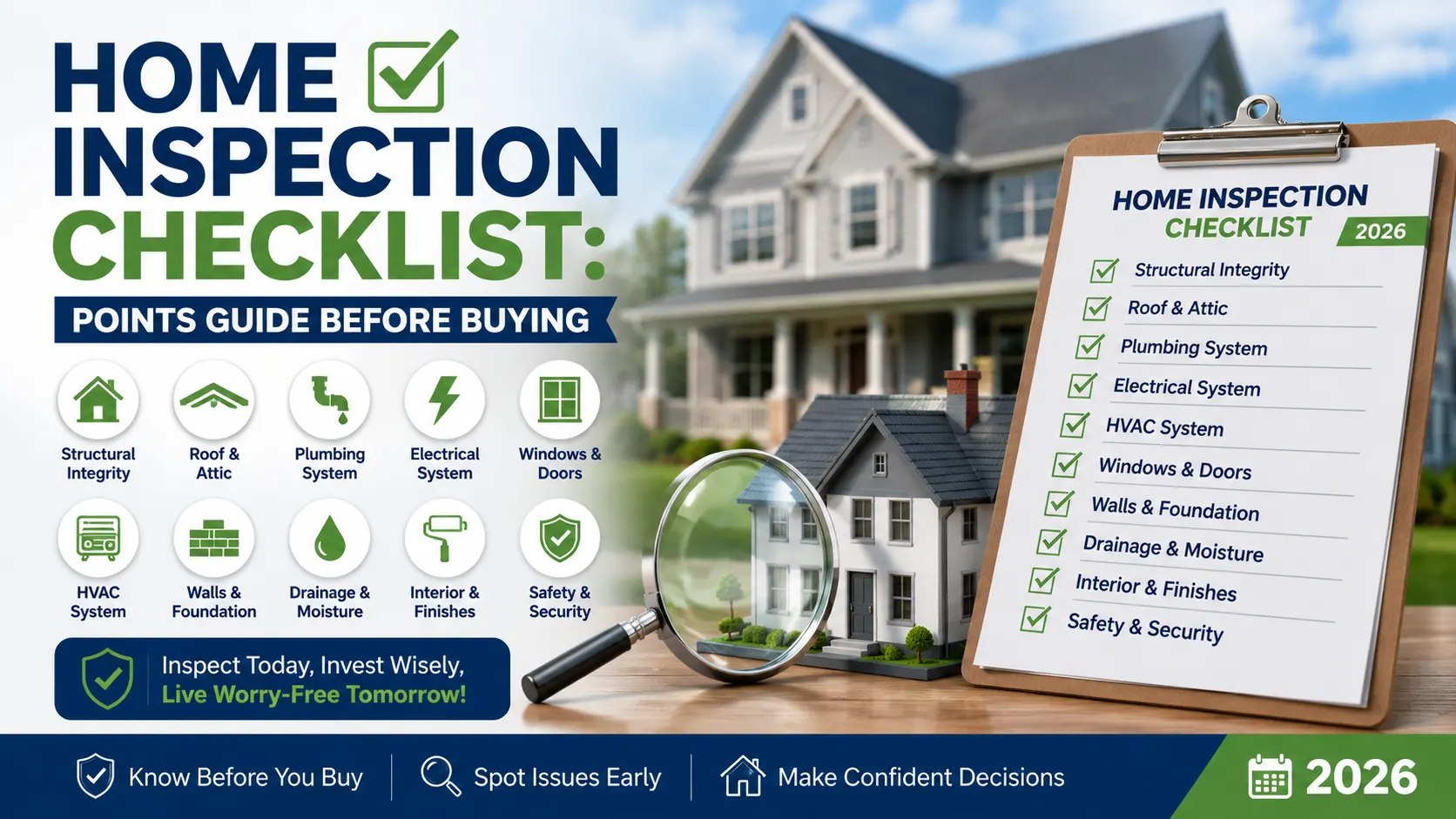
Buying a home is one of the biggest investments you’ll ever make — and a thorough home inspection could save you thousands of dollars and years of stress. In 2026, real estate markets are competitive, buyers are informed, and inspection standards continue to evolve. This complete checklist helps you evaluate a home from top to bottom, avoid hidden problems, and negotiate with confidence.
Why a Home Inspection Matters
A professional home inspection:
- Identifies safety issues
- Reveals hidden structural or system problems
- Helps estimate future repair costs
- Gives you bargaining power
- Prevents unexpected surprises after moving in
Even if a property looks perfect, the inspector may uncover issues behind walls, under floors, or within major systems like electrical, plumbing, and roofing.
Home Inspection Checklist: What to Look For
This checklist breaks the inspection into major sections, so you don’t miss anything.
1. Exterior Inspection
Roof
Inspect the condition of:
- Shingles or tiles—cracks, curling, missing
- Flashings around chimneys and vents
- Gutters and downspouts—clogs, leaks
- Signs of water damage or wear
Why it matters: Roof repairs can be expensive—sometimes thousands of dollars—so identifying issues early is crucial.
Walls & Siding
Check:
- Cracks, rot, or peeling paint
- Water stains
- Loose or damaged siding materials
Foundation
Look for:
- Large cracks or displacement
- Signs of settling / shifting
- Moisture near the base
A stable foundation supports the entire house. Even small cracks can grow larger over time.
Windows & Doors
Assess:
- Broken seals
- Drafts or air leaks
- Cracks or rot in wood frames
2. Roof & Attic
Attic Space
Check:
- Proper insulation
- Signs of pests
- Water leaks
- Ventilation
Poor attic insulation can increase energy bills significantly.
3. Interior Inspection
Walls, Ceilings & Floors
- Check for cracks or water stains
- Inspect for uneven surfaces
- Ensure flooring is level
Doors & Windows
- Smooth opening and closing
- No sticking or dragging
- Locks function correctly
4. Plumbing System
In Kitchen & Bathrooms
- Test all faucets
- Check under sinks for leaks
- Examine toilets for secure flush and sealing
Water Heater
- Age of water heater
- Rust or corrosion
- Proper venting
5. Electrical System
- Test outlets (especially grounded and GFCI outlets)
- Check panel for outdated wiring
- Ensure proper breaker labels
- Look for exposed wiring or unsafe electrical work
Electrical issues are a common cause of home fires; safety here is critical.
6. HVAC (Heating, Ventilation & Air Conditioning)
- Age and service history
- Signs of damage
- Proper airflow
- Thermostat function
Replacing HVAC systems can cost several thousand dollars — inspect thoroughly.
7. Structural Integrity
- Support beams and joists
- Walls under load-bearing points
- Signs of sagging floors or ceilings
A structural engineer may be recommended if issues are suspected.
8. Garage & Driveway
- Cracks, drainage issues, and slope problems
- Garage door function and safety sensors
9. Basement / Crawl Space
- Moisture or flooding signs
- Mold or mildew
- Insect infestation
- Insulation condition
Moisture control here influences the entire home’s air quality and structure.
10. Safety Elements
- Smoke detectors
- Carbon monoxide detectors
- Fire extinguishers
- Egress windows in bedrooms
Inspection Tools and Tips for Buyers
You don’t need to be a contractor to understand your home inspection. Still, taking simple tools and habits to the inspection can help you better understand the home:
- Flashlight (to see dark corners)
- Notebook or mobile to take photos
- Checklist printout
- Ask questions—inspectors expect questions
How to Choose a Home Inspector
When selecting an inspector:
- Ask for certifications (ASHI, InterNACHI, or equivalent in your country)
- Check reviews and references
- Confirm they use digital reporting
- Ask if they include photos in their report
Post-Inspection: What to Do Next
After inspection:
- Review the detailed report
- Ask the seller to fix issues or adjust price
- Get contractor estimates for major repairs
- Decide whether to proceed, renegotiate or walk away
Conclusion
A detailed home inspection is non-negotiable before buying in 2026. Markets evolve, but the fundamentals of protecting your investment remain the same. With this Home Inspection Checklist, you’ll step into the home-buying process informed, confident, and ready to make the right decision.
Frequently Asked Questions
Q1: What’s included in a home inspection?
A home inspection generally covers structural, electrical, plumbing, HVAC, roofing, exterior, interior, and safety elements of a house. Inspectors produce a written report with photos and findings.
Q2: How long does a home inspection take?
Inspections typically take 2–4 hours, depending on the home’s size and condition.
Q3: Can I attend the home inspection?
Yes—buyers are strongly recommended to attend so you can ask questions on the spot.
Q4: Does a home inspection guarantee a perfect home?
No inspection can guarantee perfection, but it significantly reduces the risk of unexpected issues.
Q5: What happens if issues are found?
You can:
- Request repairs
- Ask for credits or price negotiations
- Walk away if the contract allows
Q6: Do condos and apartments require inspections?
Yes—though inspection focus may vary (e.g., less structural, more unit systems).
Q7: Should I get specialized inspections (pest, radon, sewer)?
Sometimes. Decide based on home age, location, and inspection results.