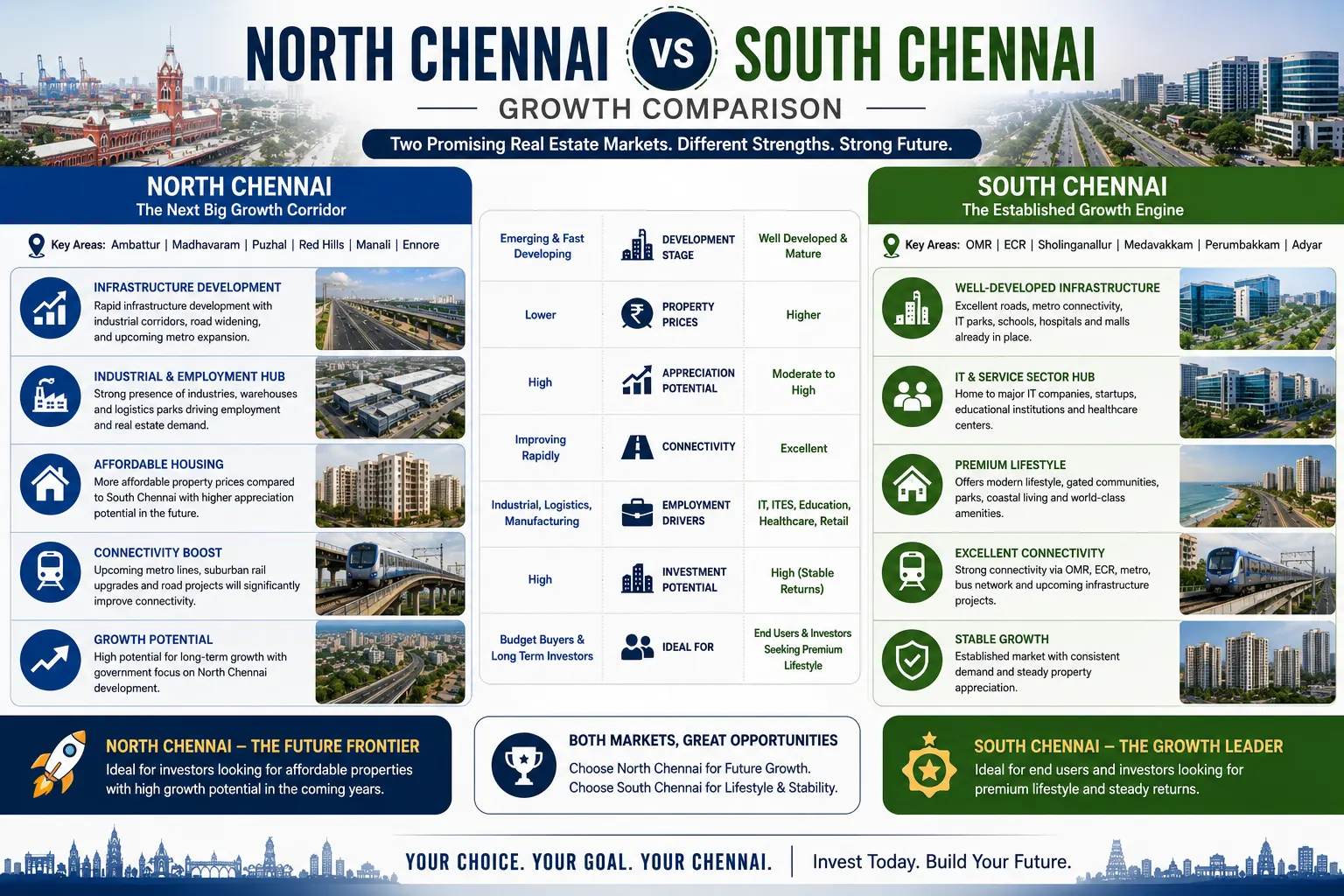
1. Stage of the Real Estate Cycle
- North Chennai is in an early-to-mid transformation stage. Prices stayed low for decades due to industrial perception and older housing, which means much of the future value is yet to be realized.
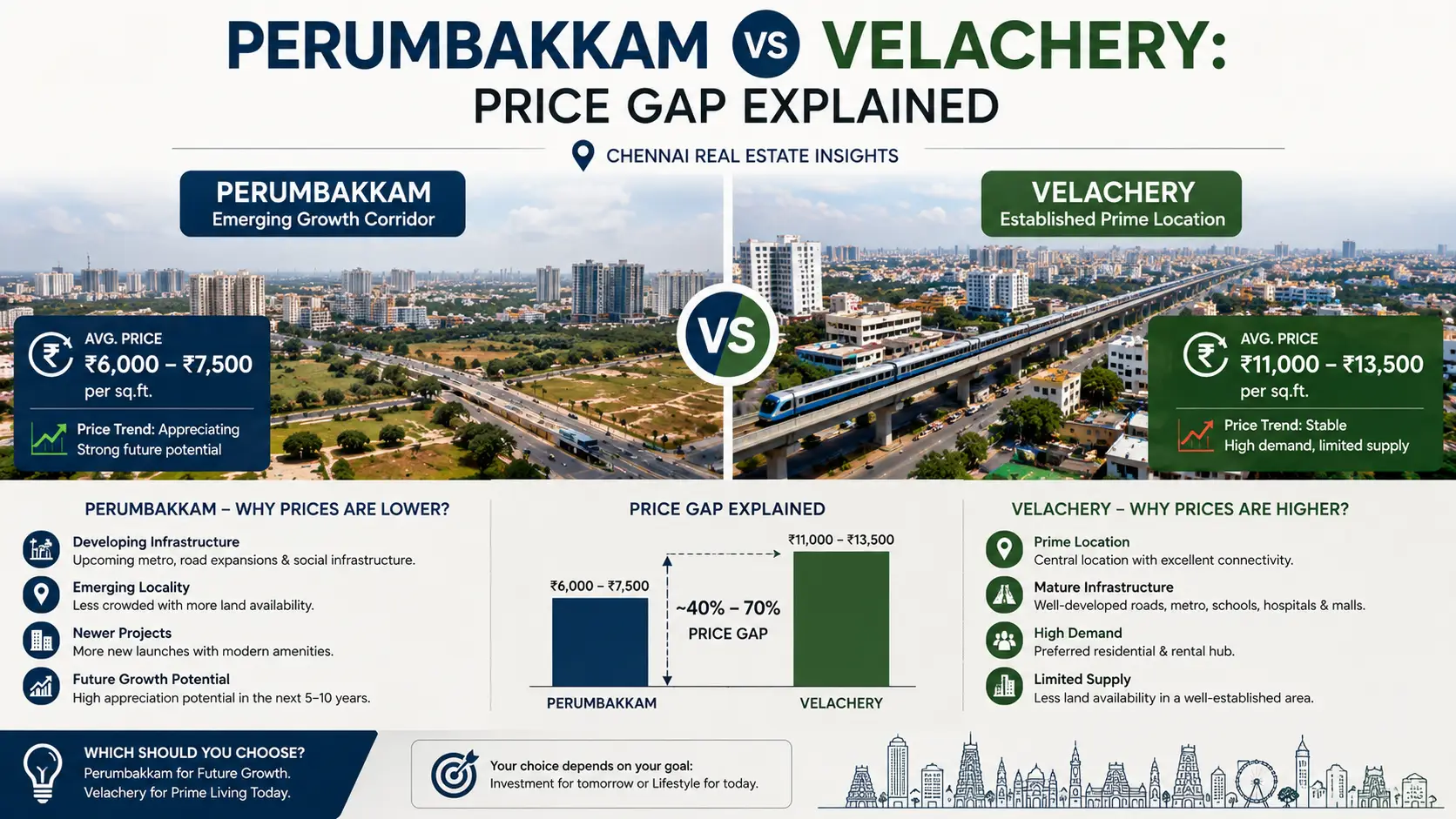
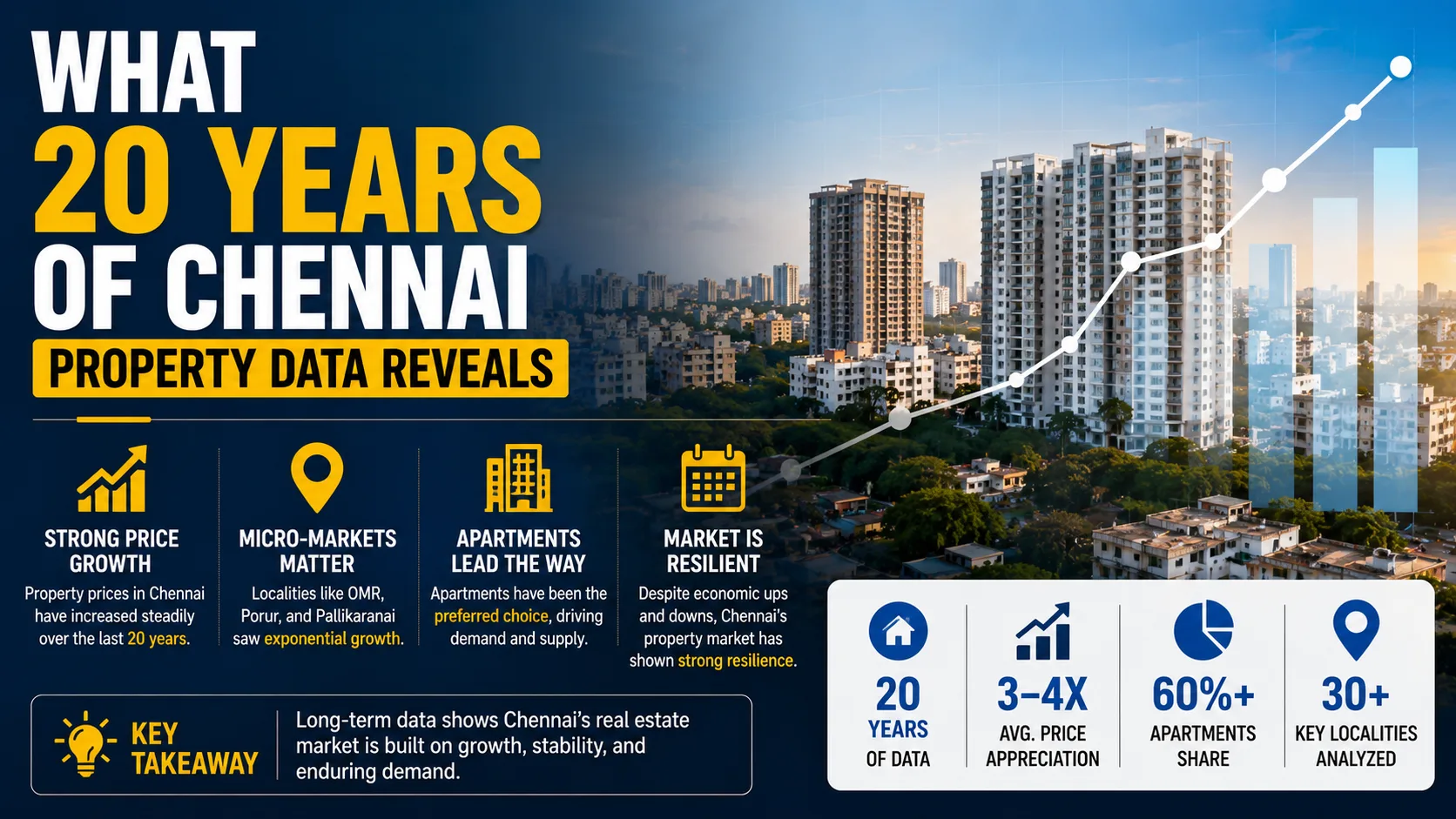
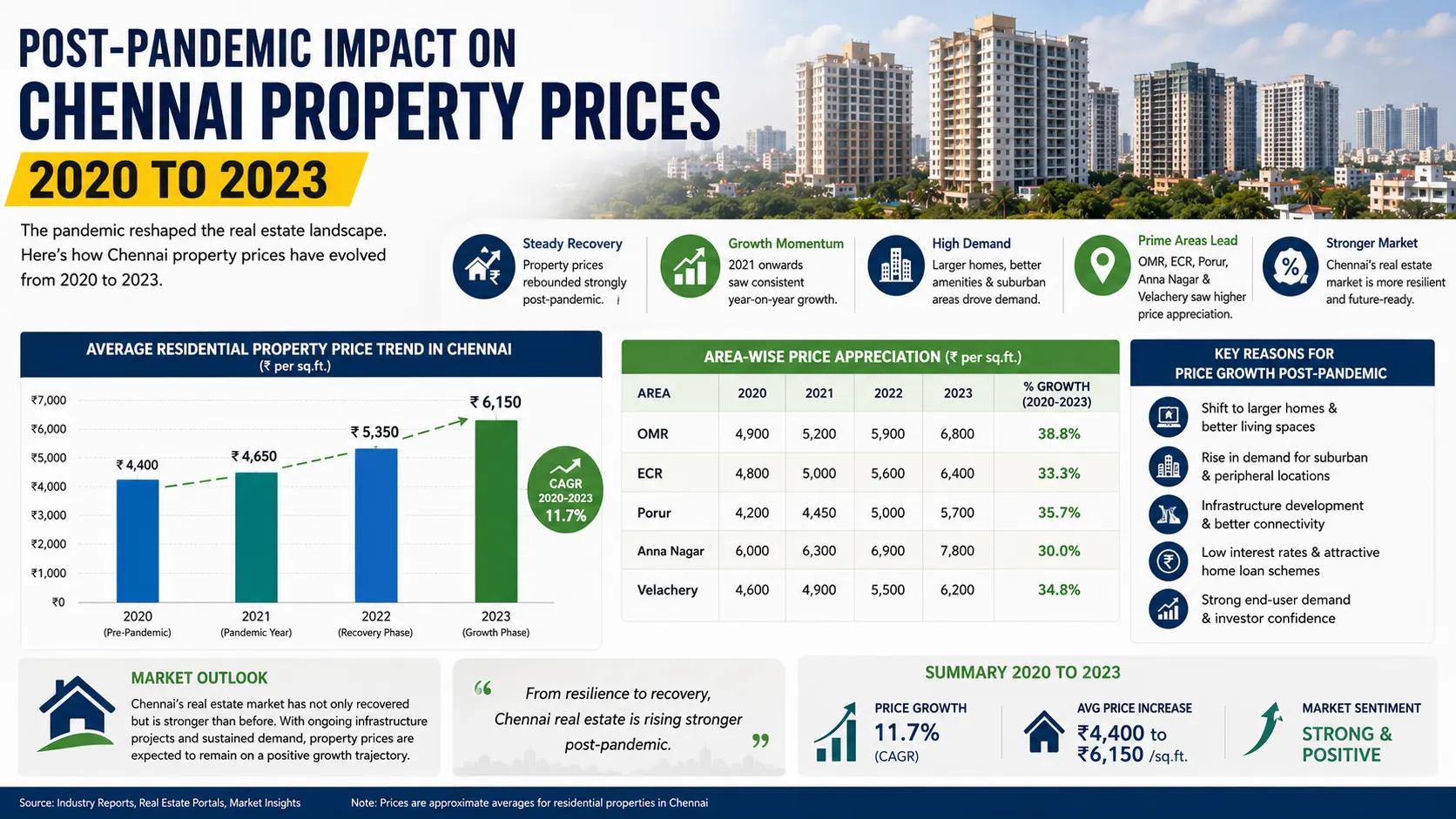
- South Chennai is in a mature stage. Two decades of IT-led growth have already been priced in, so gains now are incremental rather than explosive.
Insight: North Chennai has more headroom for appreciation; South Chennai offers predictability.
2. Price Discovery vs Price Stability
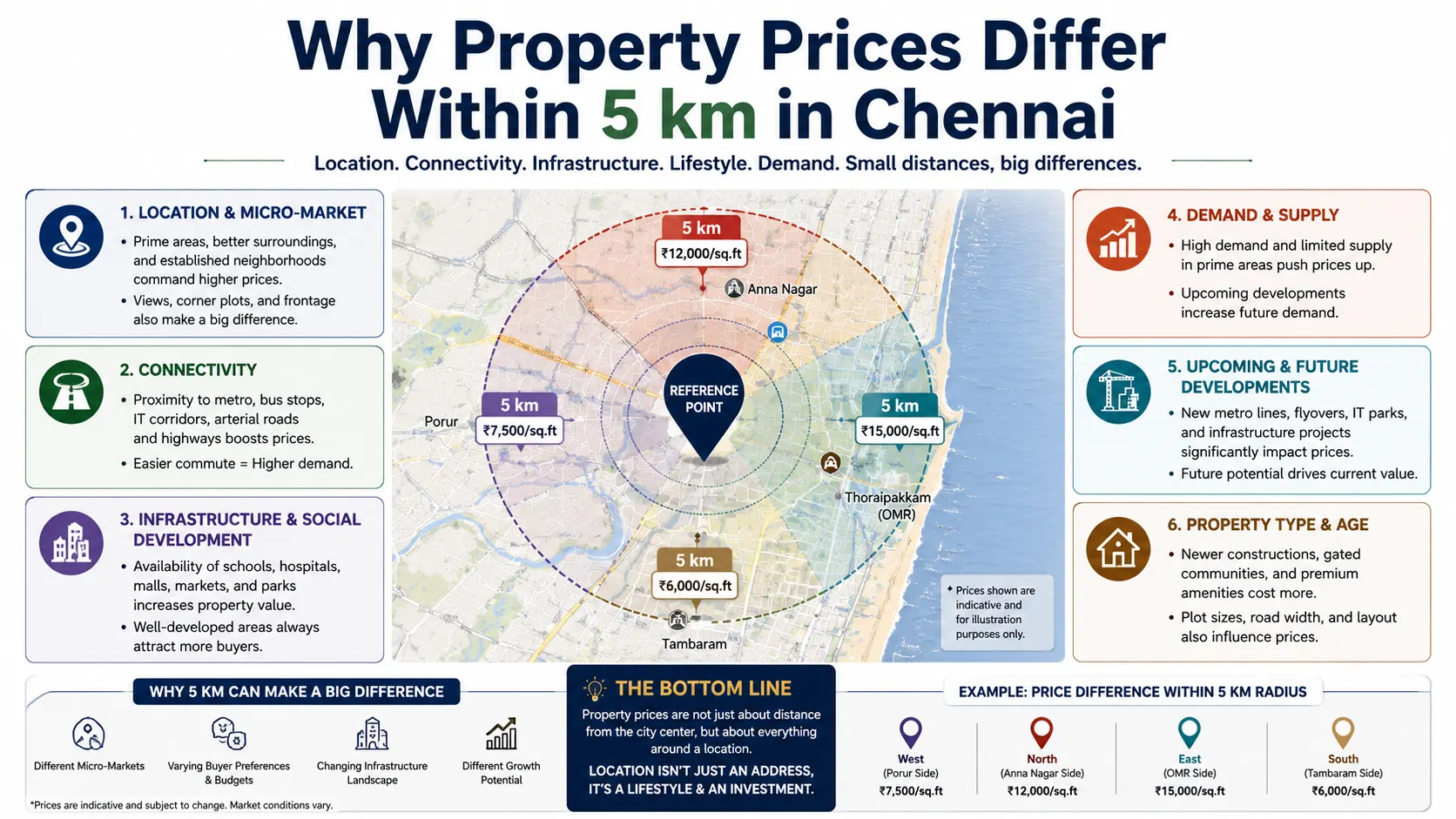
- North Chennai still has price discovery happening—new infrastructure, metro access, and redevelopment are gradually changing how the market values land.
- South Chennai has price stability—values move slowly and steadily because demand and supply are well understood.
Insight: Investors seeking upside prefer uncertainty with potential (north); end-users prefer certainty (south).
3. Land Value vs Built Property Value
- In North Chennai, land value drives returns. Old buildings and independent houses often sit on valuable land that hasn’t been fully monetized yet.
- In South Chennai, built-up value dominates. Buyers pay for apartments, amenities, and lifestyle rather than just land.
Insight: North Chennai rewards land banking and redevelopment; South Chennai rewards ready-to-move living.
4. Demand Quality
- North Chennai's demand is local and functional—workers, traders, and small investors. This keeps the market steady but less speculative.
- South Chennai's demand is aspirational—IT professionals, NRIs, and lifestyle buyers—making it sensitive to economic cycles but stronger in perception.
Insight: South Chennai sells on aspiration; North Chennai sells on utility and value.
5. Rental Yield vs Capital Appreciation
- North Chennai often delivers better rental yield percentages because purchase prices are low and occupancy is stable.
- South Chennai delivers higher absolute rents, but yields are compressed due to high capital values.
Insight: Yield-focused investors lean north; rent-maximization favors south.
6. Risk Profile
- North Chennai carries execution and perception risk—older titles, redevelopment timelines, and slower short-term returns.
- South Chennai carries valuation risk—high entry prices limit future upside and expose buyers to market corrections.
Insight: North Chennai risk is about when value unlocks; South Chennai risk is about how much more value remains.
7. Infrastructure as a Value Catalyst
- In North Chennai, infrastructure (metro, port upgrades, road improvements) is a value creator—each project can materially change prices.
- In South Chennai, infrastructure is a value sustainer—it protects prices more than it boosts them.
Insight: Infrastructure creates growth in the north; it preserves growth in the south.
8. Redevelopment Potential
- North Chennai has significant redevelopment upside—old buildings, large plots, and consolidation opportunities.
- South Chennai has limited redevelopment scope—most growth has already shifted to the outskirts.
Insight: Redevelopment is the single biggest long-term trigger for North Chennai real estate.
9. Investor vs End-User Bias
- North Chennai aligns more with long-term investors who can wait for transformation.
- South Chennai aligns more with end-users who value immediate lifestyle benefits.
Insight: North Chennai is a future story; South Chennai is a present-day solution.
10. Long-Term Market Direction
- Over the next decade, the valuation gap is expected to narrow, not reverse.
- South Chennai will remain desirable, but North Chennai will increasingly be seen as undervalued central-city real estate.
Final Insight:
South Chennai represents safety and lifestyle, while North Chennai represents opportunity and re-rating. The smarter choice depends not on which is “better,” but on time horizon, risk appetite, and purpose of purchase.