Chennai’s real estate market is known for its stability, end-user demand, and infrastructure-driven growth. Property prices across the city vary significantly based on location maturity, connectivity, employment hubs, and future development plans. Each zone in Chennai follows a distinct growth pattern.
1. Central & Premium Residential Areas
Key Localities
- Adyar
- Anna Nagar
- Alwarpet
- Besant Nagar
Price Trends
- Average prices: Rs 15,000 – Rs 22,000+ per sq.ft
- Among the highest in Chennai
Growth Pattern
- Slow but consistent appreciation
- Limited land availability restricts new supply
- Prices remain resilient during market downturns
Market Nature
- Dominated by end-users and high-income buyers
- Strong resale value and rental demand
- Low volatility, minimal speculative activity
2. Established Mid-Segment & Balanced Growth Areas
Key Localities
- Velachery
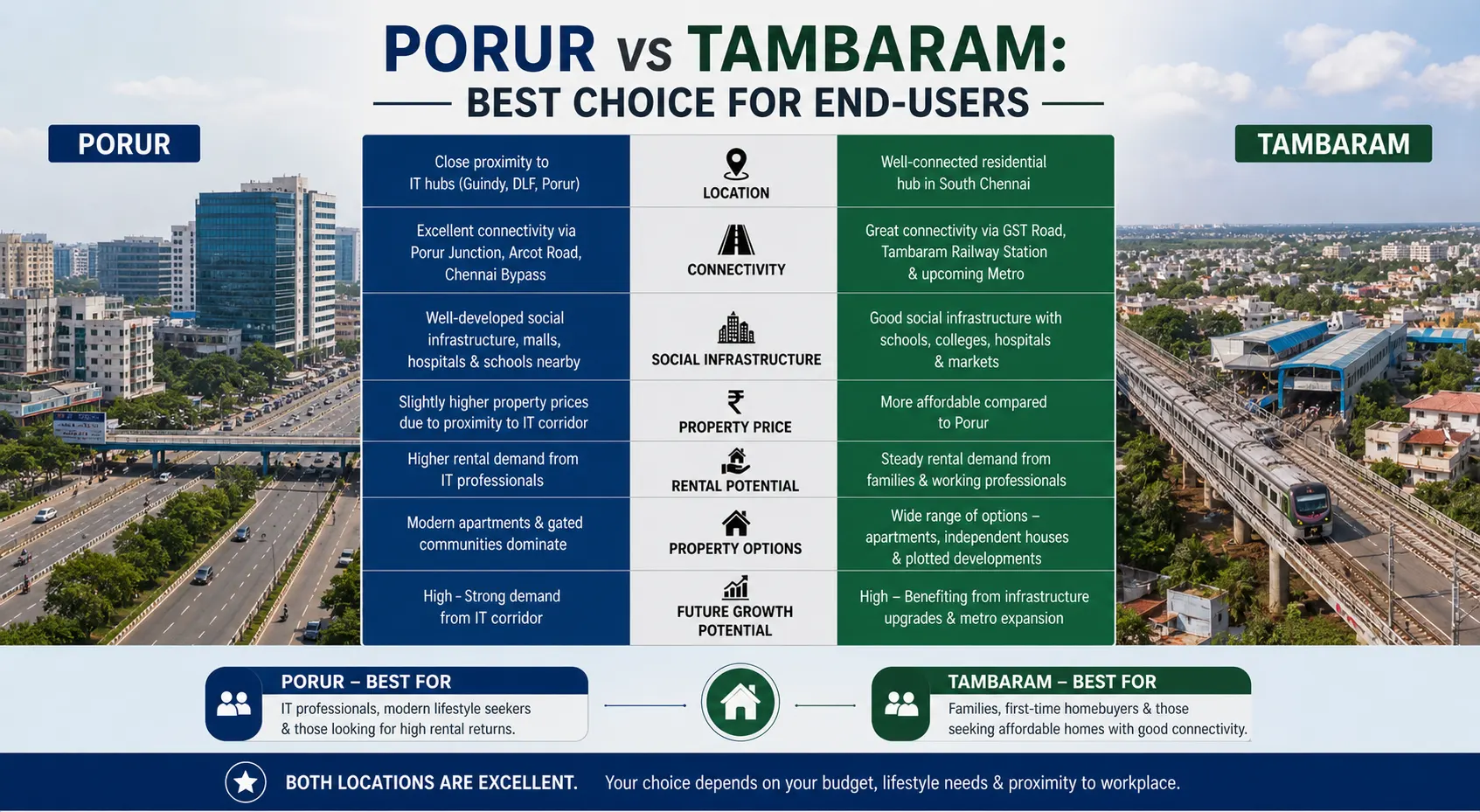
- Porur
- Ashok Nagar
- KK Nagar
Price Trends
- Average prices: Rs 6,000 – Rs 12,000 per sq.ft
Growth Pattern
- Moderate to strong appreciation
- Improved road connectivity and metro access
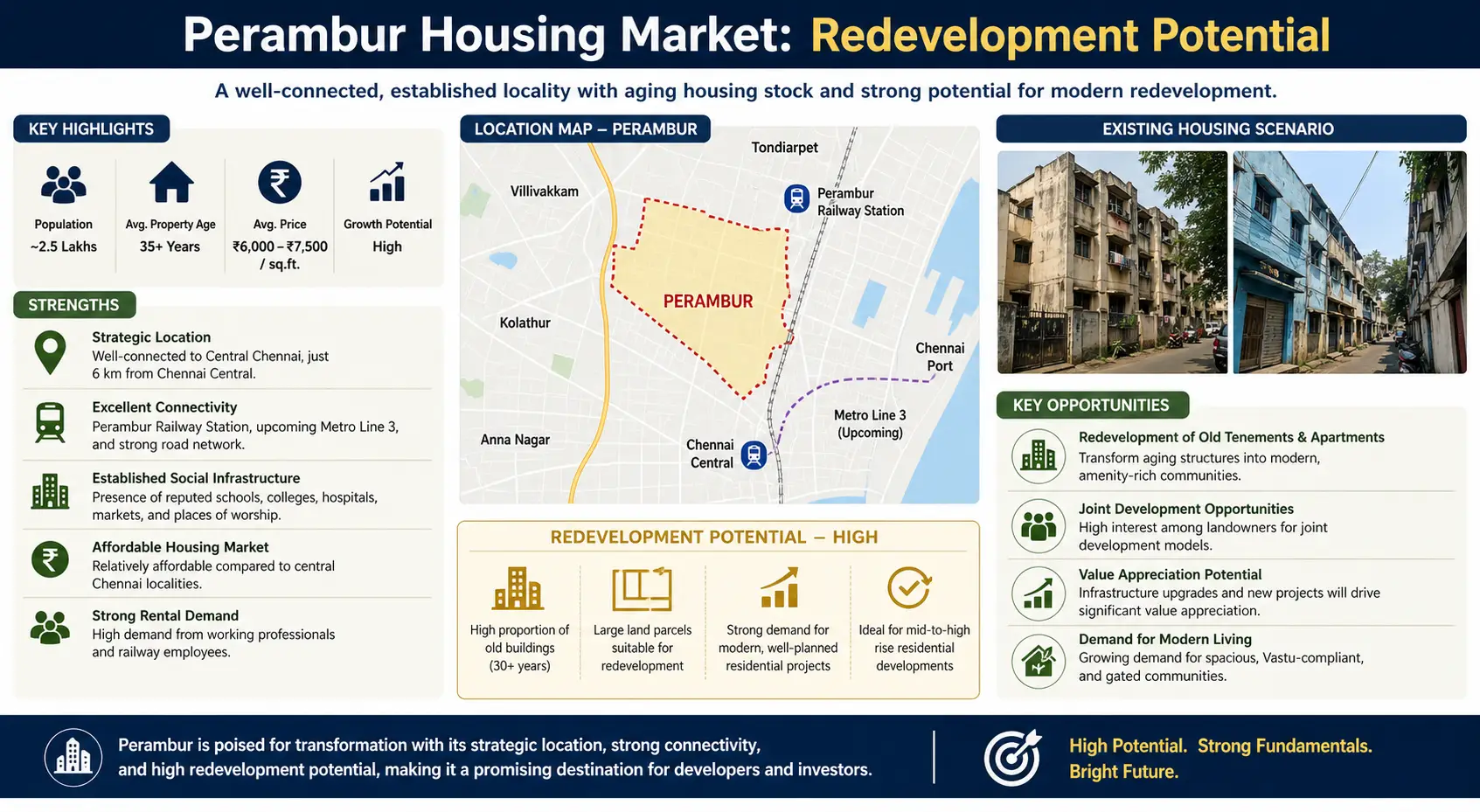
- Continuous residential redevelopment
Market Nature
- Balanced demand from homebuyers and investors
- Healthy mix of rental income and capital growth
- Faster appreciation than core city areas due to scope for development
3. IT & Employment-Driven Growth Corridors
Key Corridor
- Old Mahabalipuram Road (OMR)
Key Localities
- Sholinganallur
- Perungudi
- Thoraipakkam
Price Trends
- Average prices: Rs 6,500 – Rs 9,000+ per sq.ft
Growth Pattern
- Employment-linked appreciation
- Prices rise with IT expansion and office absorption
- Periodic supply cycles influence short-term pricing
Market Nature
- Strong rental demand
- Younger demographic and working professionals
- Higher transaction volumes compared to core city areas
4. Southern Suburbs & Affordable Residential Zones
Key Localities
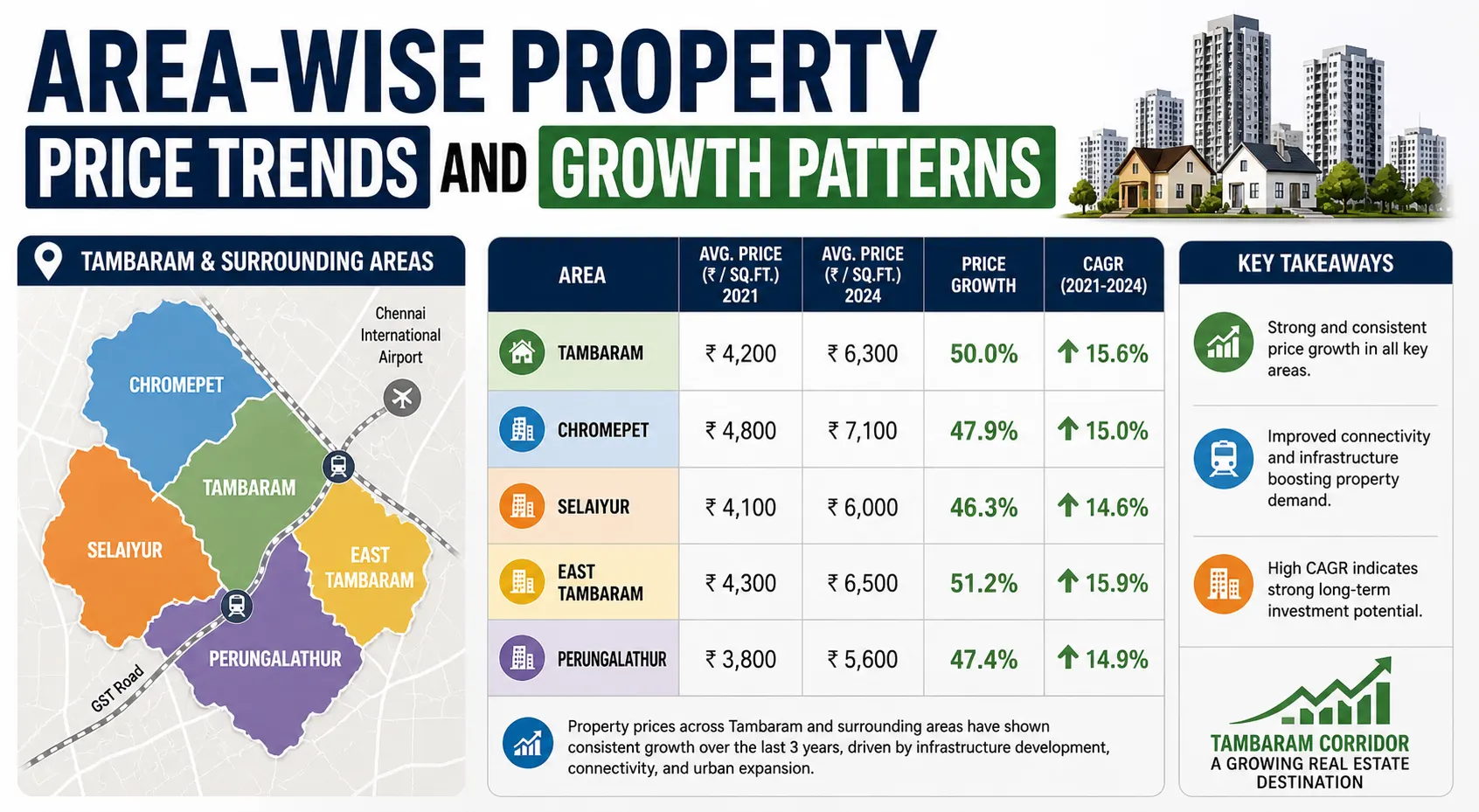
- Tambaram
- Medavakkam
- Urapakkam
- Pallikaranai
Price Trends
- Average prices: Rs 4,000 – Rs 7,000 per sq.ft
Growth Pattern
- Gradual and steady appreciation
- Growth driven by suburban rail, road connectivity, and urban expansion
- Prices increase in phases aligned with infrastructure upgrades
Market Nature
- Strong end-user demand
- Larger residential layouts and plotted developments
- Long-term growth visibility rather than short-term spikes
5. Peripheral & Future Development Areas
Key Zones
- Outer GST Road stretch
- Areas beyond Tambaram and OMR extensions
Price Trends
- Average prices: Rs 3,500 – Rs 5,500 per sq.ft (apartments; plots vary)
Growth Pattern
- Low initial growth followed by acceleration
- Appreciation depends on project execution and civic development
- Early-stage pricing attracts long-term holding investors
Market Nature
- Higher risk compared to established zones
- Infrastructure-dependent value creation
- Suitable for land banking and future residential expansion
Conclusion
Area-wise property price trends in Chennai reflect the city’s structured, infrastructure-led growth model. Premium areas offer price stability, mid-segment zones deliver balanced appreciation, IT corridors respond to job growth, and suburban areas provide long-term expansion opportunities. Each zone follows its own growth curve, making locality-specific analysis essential for understanding Chennai’s real estate market.