1. Area Alone Does Not Define Livability
While carpet or a built-up area indicates size, it does not guarantee comfort or quality of living. Two homes with the same area can feel completely different depending on:
- How air moves inside the home
- How much natural light enters
- Noise levels
- Heat retention
- Privacy
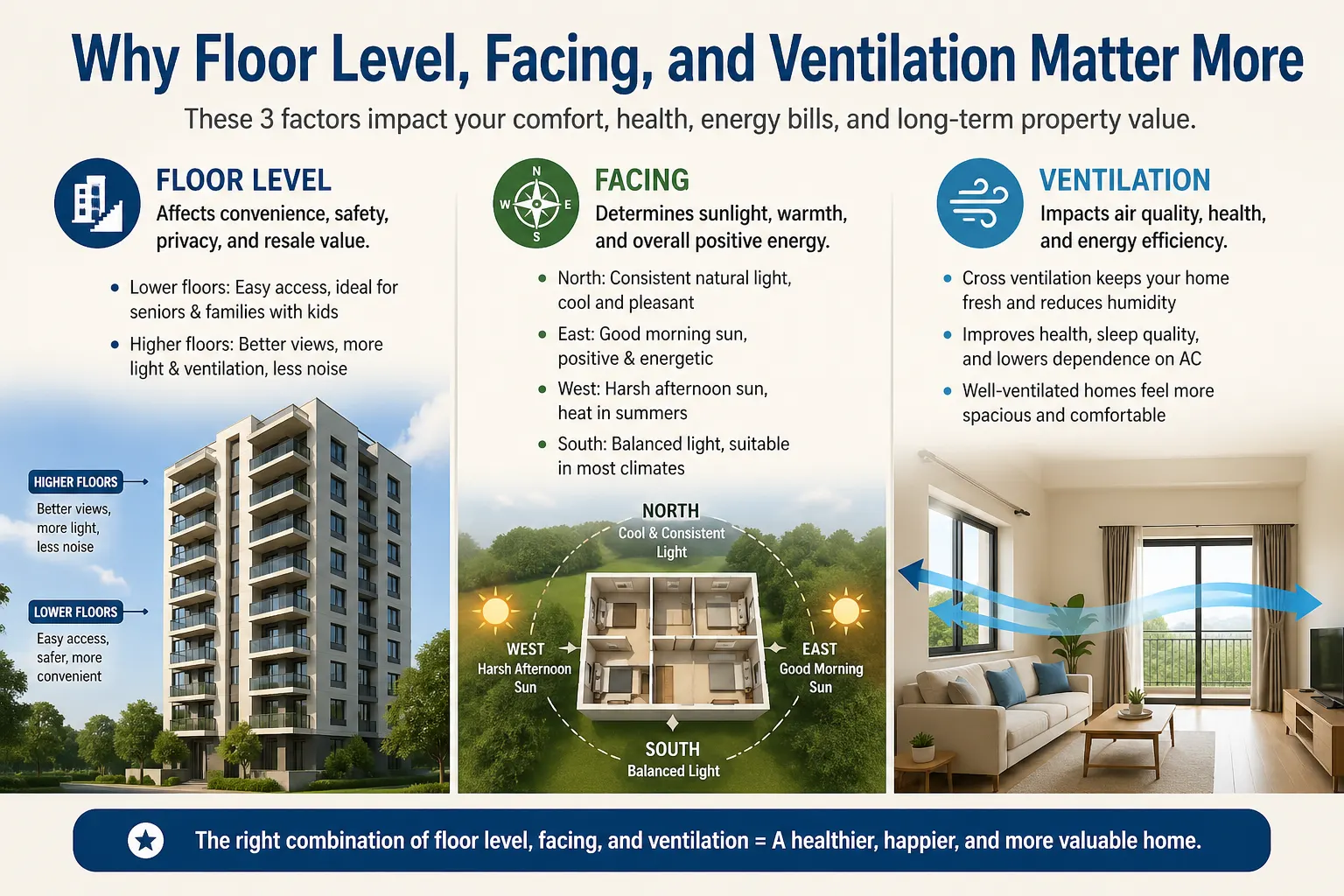
Floor level, facing, and ventilation directly influence these everyday living factors.
2. Importance of Floor Level
a) Natural Light and Airflow
- Mid-level and higher floors generally receive better sunlight and airflow.
- Lower floors may face obstruction from nearby buildings, compound walls, or trees.
- Better airflow reduces indoor heat and keeps rooms fresh.
b) Noise and Dust Control
- Lower floors are more exposed to:
- Road noise
- Vehicle pollution
- Dust
- Higher floors experience less noise and cleaner air, improving health and comfort.
c) Privacy and Security
- Homes on higher floors offer:
- Better privacy
- Reduced visibility from outside
- Ground or lower floors may feel exposed, especially in dense urban areas.
d) Health and Comfort Impact
- Better air quality and reduced humidity on higher floors help prevent:
- Mold
- Damp walls
- Respiratory discomfort
Thus, a slightly smaller home on a better floor often feels more comfortable than a larger one on a poorly positioned floor.
3. Importance of Facing (Direction of the Home)
a) Sunlight Exposure
Facing determines how much and when sunlight enters the home:
- Proper sunlight:
- Keeps rooms bright
- Reduces artificial lighting needs
- Helps control moisture and bacteria
- Poor facing can lead to:
- Dark interiors
- Cold, damp rooms
- Higher electricity usage
b) Heat Management
- Homes that receive harsh afternoon sun can become excessively hot.
- Balanced sunlight helps maintain comfortable indoor temperatures.
- Correct facing reduces dependency on air conditioning.
c) Psychological Well-Being
- Bright, sunlit homes:
- Feel more open and positive
- Improve mood and mental comfort
- Dark homes, even if large, can feel cramped and uncomfortable.
d) Cultural and Practical Preferences
- Many buyers value fencing due to
- Traditional beliefs
- Long-term resale demand
- Homes with preferred facing generally have better market acceptance, regardless of size.
4. Importance of Ventilation
a) Air Quality and Health
Good ventilation ensures the following:
- Continuous flow of fresh air
- Removal of indoor pollutants, smoke, and odors
- Reduced risk of allergies and respiratory issues
Poorly ventilated large homes can feel suffocating, while smaller well-ventilated homes feel fresh.
b) Temperature Regulation
- Cross-ventilation lowers indoor temperatures naturally.
- Reduces dependence on fans and air conditioners.
- Helps maintain consistent comfort throughout the day.
c) Moisture and Dampness Control
- Proper ventilation prevents the following:
- Mold growth
- Damp walls
- Bad odors
- Poor ventilation leads to long-term maintenance issues, regardless of home size.
d) Functional Living
Ventilation affects daily activities:
- Kitchens remain odor-free
- Bathrooms dry faster
- Bedrooms stay fresh overnight
5. Long-Term Value Perspective
- Homes with good floor level, facing, and ventilation:
- Retain value better
- Are easier to rent or resell
- Have higher buyer preference
- Area can be increased only by buying a different home, but orientation and airflow cannot be easily changed.
6. Conclusion
- Area defines how much space you own.
- Floor level, facing, and ventilation define how well you live in that space.
- For long-term comfort, health, and satisfaction, quality of space consistently outweighs quantity of space.