Get a quote
Buying Property in Joint Names Pros and Cons

Mar 10 2026

Buying a property jointly means two or more people legally own the same property. This is common for spouses, partners, family members, or friends. Ownership can be structured mainly as joint tenants or tenants in common, which affects rights and inheritance.


Pros of Buying Property in Joint Names

1. Shared Financial Burden

  • Purchase price, deposit, mortgage repayments, maintenance, and taxes are divided.
  • Makes property ownership more affordable.
  • Reduces individual financial pressure.

2. Easier Mortgage Approval

  • Combined incomes improve loan eligibility.
  • Higher borrowing capacity.
  • Better interest rates may be available.

3. Shared Tax Benefits

  • Deductions (interest, property tax, depreciation, rental expenses) can often be split.
  • Capital gains tax liability may be shared when selling (depending on local laws).

4. Joint Ownership Rights

  • All owners have legal rights to the property.
  • Decisions such as renting or selling usually require mutual consent.
  • Provides a sense of security for co-owners.

5. Estate Planning Benefits

  • In Joint Tenancy, ownership automatically passes to the surviving owner(s) upon death.
  • Simplifies inheritance and avoids probate in many cases.

6. Ideal for Family or Investment Planning

  • Enables families to buy property together.
  • Useful for long-term investments or helping children enter the property market.


Cons of Buying Property in Joint Names

1. Risk of Disputes

  • Disagreements may arise over finances, usage, selling, or renovations.
  • Relationship breakdowns can complicate ownership.

2. Complex Legal Issues

  • Legal documentation must be precise.
  • Exiting the arrangement can be difficult without mutual agreement.
  • Court intervention may be required in disputes.

3. Credit Score Impact

  • All owners are equally responsible for the mortgage.
  • If one party defaults, it affects everyone’s credit score.
  • Late payments by one owner harm all co-owners.

4. Difficult to Sell or Divide

  • Property cannot usually be sold without consent of all owners.
  • Splitting ownership or buyouts can be costly and time-consuming.

5. Unequal Financial Contribution Risks

  • If one owner contributes more financially, disputes may arise later.
  • Without a legal agreement, recovering extra contributions can be difficult.

6. Inheritance Complications (Tenants in Common)

  • Ownership shares pass according to a will, not automatically.
  • Can create conflicts among heirs.


Key Things to Consider Before Buying Jointly

  • Create a co-ownership agreement outlining exit plans, cost sharing, and dispute resolution
  • Decide ownership structure carefully
  • Consider future scenarios (marriage, separation, death, financial hardship)
  • Seek legal and financial advice before purchase


Joint Tenants vs Tenants in Common

When buying property with someone else, the way ownership is structured matters a lot. The two most common forms are Joint Tenants and Tenants in Common. Each has different legal, financial, and inheritance implications.


Joint Tenants

Joint tenancy means all owners own the property together as a single unit.
Key features:

  • All owners have equal ownership, regardless of who paid more.
  • The property is owned as a whole, not in separate shares.
  • Right of survivorship applies: if one owner dies, their share automatically passes to the remaining owner(s).
  • The property does not form part of the deceased’s will or estate.
  • One owner cannot sell or transfer their share without consent of the others.


Best suited for:

  • Married couples
  • Long-term partners
  • People who want automatic inheritance for the survivor


Main drawback:

  • No flexibility for unequal contributions or leaving a share to someone else.


Tenants in Common

Tenants in common means each owner holds a distinct share in the property.
Key features:

  • Ownership shares can be equal or unequal.
  • Each owner owns a defined portion of the property.
  • There is no automatic inheritance.
  • An owner’s share passes according to their will or legal heirs.
  • Each owner can sell or transfer their share independently (subject to legal terms).


Best suited for:

  • Friends buying property together
  • Family members contributing different amounts
  • Property investors


Main drawback:

  • Inheritance can become complicated and lead to disputes among heirs.


Conclusion 

Buying property in joint names can be a smart financial move when trust, transparency, and planning are in place. However, without proper agreements and foresight, it can lead to legal and financial complications.


Why Some Properties Sell Faster Than Others in the Same Area

Mar 09 2026


1. Pricing Strategy: The 1 Driver of Speed

Correct pricing is the single most important factor.

  • Market-aligned pricing attracts immediate interest and multiple buyers.
  • Overpriced homes (even by 5–10%) often stagnate, forcing later price reductions that signal “something is wrong.”
  • Homes priced slightly below market value often sell faster due to competition and bidding wars.

Insight:
Buyers compare homes online first. If your property doesn’t look like good value on screen, they won’t even schedule a visit—no matter how good it is in person.


2. Property Condition & Move-In Readiness

Homes that sell fast usually feel easy and low-risk to buyers.
Faster-selling homes tend to:

  • Be clean, decluttered, and freshly painted
  • Have updated kitchens/bathrooms (even minor upgrades)
  • Show no obvious repair issues

Slower homes often:

  • Need visible repairs
  • Have outdated fixtures or worn finishes
  • Feel “tired” or poorly maintained

Insight:
Most buyers mentally overestimate renovation costs. A Rs 50,000 repair may feel like Rs 500,000 to them.


3. Presentation: First Impressions Matter More Than Ever

In the same area, presentation separates winners from losers.
What speeds up sales:

  • Professional photography
  • Good lighting and neutral colors
  • Home staging or well-arranged furniture
  • Attractive listing descriptions

What slows sales:

  • Dark, blurry photos
  • Empty or overcrowded rooms
  • Poor layout visibility

Insight:
Today, your first showing happens online. If buyers don’t fall in love with the photos, they won’t visit.


4. Layout, Design & Usability (Even With Same Square Footage)

Two homes with identical sizes can sell at very different speeds.
Faster-selling layouts:

  • Open or semi-open living spaces
  • Logical room flow
  • Good natural light and ventilation
  • Functional balconies or storage

Slower-selling layouts:

  • Awkward room shapes
  • Poorly placed kitchens/bathrooms
  • Dark interiors despite good location

Insight:
Buyers pay for how a space feels, not just how many square feet it has.


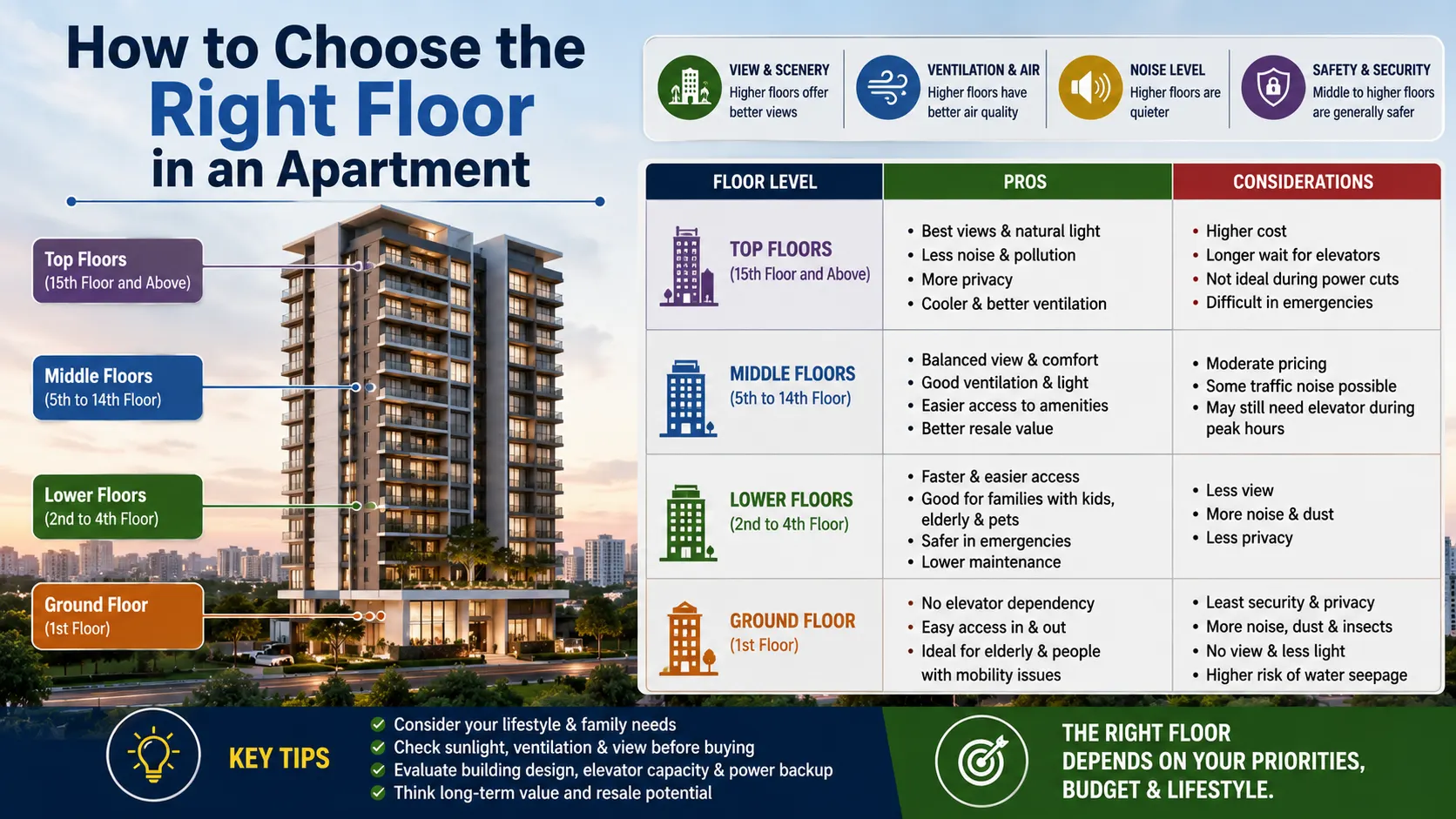
5. Floor Level, Orientation & View

Within the same building or street:

  • Better floor levels
  • Favorable sunlight direction
  • Open views instead of walls or parking areas

These homes sell faster.
Insight:
People subconsciously value light, air, and privacy—even if they don’t say it explicitly.


6. Seller Motivation & Flexibility

Motivated sellers create faster deals.
Faster sales happen when sellers:

  • Are flexible on price or payment terms
  • Respond quickly to offers
  • Are ready with documents
  • Allow easy site visits

Slower sales occur when sellers:

  • Are emotionally attached to price
  • Reject reasonable offers
  • Delay decisions
  • Restrict showings

Insight:
Buyers prefer smooth, confident sellers. Delays create doubt and push buyers toward easier options.


7. Timing & Market Conditions

Even in the same area, timing matters.
Faster-selling homes:

  • Are listed during high-demand seasons
  • Match current buyer preferences (e.g., home office space)
  • Enter the market when inventory is low

Slower-selling homes:

  • Launch when many similar properties are available
  • Miss seasonal demand peaks

Insight:
A great property listed at the wrong time can underperform an average one listed at the right time.


8. Marketing Reach & Agent Effectiveness

Two identical homes can have very different exposure.
Faster sales usually involve:

  • Strong online listings
  • Targeted buyer marketing
  • Active follow-ups
  • Realistic buyer qualification

Slower sales often suffer from:

  • Poor listing visibility
  • Weak negotiation
  • Passive marketing

Insight:
Speed isn’t just about the property—it’s also about how aggressively and intelligently it’s marketed.


9. Buyer Psychology & Perception

Perception drives behavior more than facts.

  • Homes that feel “well cared for” sell faster
  • Properties that appear “problematic” get ignored
  • Long days-on-market reduce buyer urgency

Insight:
Once a home is perceived as undesirable, it must be discounted to regain attention.


10. Small Differences That Add Up

In the same area, even minor differences matter:

  • Parking convenience
  • Noise levels
  • Society management quality
  • Maintenance costs
  • Future resale potential

Insight:
Buyers subconsciously rank homes—even when they seem similar on paper.


CONCLUSION

Properties sell faster than others in the same area because of a combination of price, presentation, condition, psychology, and execution—not just location.
Fast-Selling Homes:

  •  Priced right
  •  Well-presented
  •  Move-in ready
  •  Marketed effectively
  •  Easy to buy

Slow-Selling Homes:

  •  Overpriced
  •  Poorly presented
  •  Emotionally priced
  •  Hard to view or negotiate

Infrastructure Projects that will Impact Chennai Flat Prices in the Next 5 Years 2026 to 2030

Mar 07 2026

Real estate prices in Chennai increase mainly when transport connectivity, employment hubs, and major government infrastructure projects improve accessibility. The following projects are expected to significantly influence apartment prices.


1. Chennai Metro Phase 2

This is the largest ongoing infrastructure project in Chennai.
Key details

  • Length: 118.9 km
  • Stations: about 128
  • Estimated completion: 2026–2028
  • Cost: around Rs 60,000+ crore

Main corridors

  1. Madhavaram → SIPCOT
  2. Lighthouse → Poonamallee
  3. Madhavaram → Sholinganallur

Impact on flat prices

  • Apartments near metro stations generally increase 15–30% in value once the metro becomes operational.
  • Metro connectivity allows people to live farther from the city center while still commuting quickly.

Areas most affected

  • Porur
  • Poonamallee
  • Sholinganallur
  • Perambur
  • Madhavaram

These suburbs are expected to see strong apartment demand because metro connectivity reduces travel time.


2. Parandur Greenfield Airport

This is planned as the second international airport for Chennai.
Key details

  • Location: Parandur (Kanchipuram district)
  • Land area: around 5,000 acres
  • Estimated cost: about Rs 25,000 – 30,000 crore

Impact on flat prices
Airports create large economic ecosystems such as:

  • logistics parks
  • hotels
  • commercial offices
  • residential townships

When airports are built, nearby real estate often grows rapidly because of employment opportunities and improved connectivity.
 

Areas expected to benefit

  • Sriperumbudur
  • Sunguvarchatram
  • Kanchipuram region

These locations could become new residential hubs as airport development progresses.


3. Chennai Peripheral Ring Road

This project is designed to connect major highways around Chennai and reduce congestion within the city.
Key details

  • Length: about 133 km
  • Connects several national highways around the city

Impact on flat prices
Ring roads typically encourage urban expansion. Areas outside the city become more accessible, making them attractive for residential developments.
Areas influenced

  • Minjur
  • Ponneri
  • Chengalpattu
  • Sriperumbudur
  • Oragadam

Developers are already planning townships along this corridor because transportation access will improve significantly.


4. Bengaluru–Chennai Expressway

This is a high-speed expressway linking Chennai and Bangalore.
Key details

  • Reduces travel time between the two cities to around 2–3 hours.
  • Supports logistics and manufacturing industries.

Impact on flat prices
The expressway will strengthen industrial growth along the corridor. When industries expand, demand for employee housing also increases.
Key locations affected

  • Sriperumbudur
  • Kanchipuram
  • Arakkonam

These areas already host automobile and electronics manufacturing companies, so housing demand is expected to rise.


5. Kilambakkam Bus Terminus

This large bus terminal improves long-distance connectivity for Chennai.
Key details

  • Located near GST Road
  • Serves southern districts and intercity buses

Impact on flat prices
Transport hubs increase demand for nearby housing because they make commuting easier.
Areas influenced

  • Guduvanchery
  • Urapakkam
  • Tambaram
  • Vandalur

These suburbs are expected to see steady apartment demand due to improved transport infrastructure.


Overall Insight

Chennai’s real estate growth pattern is shifting outward.
Key reasons:

  • Metro expansion improves suburban connectivity.
  • Highways and ring roads open new development corridors.
  • Industrial and airport projects create employment clusters.

Because of these factors, suburban locations connected by major infrastructure projects are expected to experience faster flat price growth than older central areas over the next five years.


Why Vastu Shastra Still Influences Flat Buying Decisions in Chennai

Mar 06 2026

In a rapidly developing metropolitan city like Chennai, real estate buyers often balance modern amenities with traditional beliefs. One such enduring influence is Vastu Shastra, the ancient Indian system of architecture and spatial design. Despite the rise of contemporary apartment living and urban planning, Vastu continues to play a significant role in how people choose flats.

1. Cultural and Traditional Beliefs

Vastu Shastra has been part of Indian culture for thousands of years. Many families in Chennai view a home not just as a physical structure but as a sacred living space that should align with natural energies.
Why this matters

  • Homes are associated with prosperity, happiness, and health.
  • Elders in families often insist on Vastu-compliant homes.
  • Buyers believe following Vastu prevents negative energy and misfortune.

Because Chennai has a strong cultural foundation rooted in tradition, buyers often prefer flats aligned with Vastu principles.


2. Psychological Comfort and Peace of Mind

Even buyers who are not deeply religious often feel mentally comfortable choosing a Vastu-compliant flat.
Key psychological factors

  • A Vastu-friendly home creates a sense of positivity and harmony.
  • Families feel reassured they have made the “right” decision.
  • Avoiding Vastu defects prevents future regret or blame if problems arise.

For many buyers, peace of mind is as important as location and price.


3. Resale Value and Market Demand

In Chennai’s real estate market, Vastu compliance directly affects property demand and resale value.
Market reality

  • Many buyers shortlist only Vastu-compliant flats.
  • Real estate agents highlight east-facing entrances, north-facing homes, and Vastu kitchens.
  • Flats with major Vastu defects may sell slower or at lower prices.

Developers know this trend and design projects accordingly.


4. Influence of Family Decision-Making

In Chennai, purchasing a home is usually a family decision, not just an individual one.
Family influence

  • Parents and elders often consult Vastu experts.
  • Joint families prefer traditional layouts.
  • Even younger buyers may follow Vastu to satisfy family expectations.

This cultural dynamic strengthens Vastu’s influence on property choices.


5. Developer and Builder Practices

Builders in Chennai increasingly design projects with Vastu-friendly layouts.
Common Vastu-friendly features

  • East or north-facing main doors
  • Kitchen in the southeast direction
  • Master bedroom in the southwest
  • Prayer room in the northeast
  • Good sunlight and ventilation

By incorporating these elements, developers attract a larger pool of buyers.


6. Alignment with Natural Elements

Vastu is based on balancing the five natural elements:

  • Earth
  • Water
  • Fire
  • Air
  • Space

In coastal cities like Chennai, where climate, sunlight, and airflow matter, some Vastu principles also align with practical environmental design.
Examples:

  • East-facing homes receive morning sunlight.
  • Cross ventilation improves cooling in humid weather.
  • Open northeast spaces allow better airflow and light.

Thus, Vastu sometimes overlaps with climate-friendly architecture.


7. Religious and Spiritual Significance

Chennai is home to many temples and deeply spiritual communities. Many residents feel that a home aligned with Vastu invites divine blessings and positive energy.
Important considerations often include:

  • Direction of the puja room
  • Entrance facing auspicious directions
  • Placement of sacred symbols

These beliefs continue to influence modern apartment buyers.


Key Vastu Factors Buyers Check in Flats

When purchasing apartments in Chennai, buyers commonly check:
1. Entrance Direction
Preferred directions:

  • East
  • North
  • Northeast

2. Kitchen Placement

  • Ideal direction:
  • Southeast (Fire element)

3. Master Bedroom

  • Best direction:
  • Southwest

4. Puja Room

  • Ideal direction:
  • Northeast

5. Toilet Placement

  • Avoid:
  • Northeast corner

6. Balcony Direction

  • Preferred:
  • East or North


Challenges of Following Vastu in Apartments

Although important, Vastu compliance can be difficult in modern high-rise apartments.

  • Common challenges include:
  • Limited layout flexibility
  • Shared building structure
  • Fixed plumbing and electrical systems
  • Space constraints in compact flats
  • Despite this, developers try to provide partial Vastu compliance.


Conclusion

Even in a modern and fast-growing city like Chennai, Vastu Shastra continues to shape flat-buying decisions. Its influence stems from cultural traditions, family values, psychological comfort, and real estate market dynamics.


Best Areas to Buy Flats in Chennai in 2026

Mar 05 2026

Chennai is one of the fastest-growing metropolitan cities in India and a major hub for IT, manufacturing, education, and healthcare. Because of steady economic growth and expanding infrastructure, the demand for residential properties has increased significantly. Buying a flat in Chennai in 2026 can be a good long-term investment, especially if the property is located in an area with strong connectivity, employment opportunities, and good social infrastructure.
Several localities in the city have become real estate hotspots due to metro rail expansion, new highways, IT parks, and commercial developments. Below is a detailed explanation of the best areas to buy flats in Chennai in 2026.


1. OMR (Old Mahabalipuram Road)

Old Mahabalipuram Road, commonly known as OMR, is one of the most important residential and commercial corridors in Chennai. It is widely known as the city’s IT corridor because many major technology companies and IT parks are located along this stretch.
Over the past decade, OMR has transformed from a relatively quiet suburban road into a thriving real estate hub. The presence of large IT parks such as SIPCOT IT Park and other technology campuses has created a huge demand for housing among IT professionals.
Many large residential projects and gated communities have been developed in this region. These apartments often include modern amenities such as swimming pools, gyms, landscaped gardens, children’s play areas, and security systems. Because of the large number of professionals working nearby, rental demand in this area is consistently high.
Another factor contributing to the growth of OMR is infrastructure development. New road improvements and metro rail expansion are expected to significantly improve connectivity with other parts of Chennai in the coming years.
Average property price: Rs 6,000 to Rs 9,000 per square foot.
Why people prefer OMR

  • Close proximity to IT parks and offices
  • High rental demand from professionals
  • Availability of modern apartment complexes
  • Strong potential for long-term property appreciation


2. Sholinganallur

Sholinganallur is one of the fastest-growing residential areas in South Chennai and is located along the OMR corridor. Due to its strategic location near major IT companies and technology parks, it has become a preferred residential destination for professionals working in the IT sector.
The area has experienced rapid development in recent years. Several international schools, hospitals, shopping centers, supermarkets, and entertainment facilities have been established to support the growing population. This makes it a convenient location for families as well as working professionals.
Another reason why Sholinganallur is considered a good place to buy flats is the large number of newly constructed residential projects. Buyers can find a variety of options ranging from affordable apartments to luxury high-rise flats with premium amenities.
Because of continuous demand and ongoing development, property values in this area have been steadily increasing.
Average property price: Rs 7,000 to Rs 8,500 per square foot.
Key advantages

  • Rapid infrastructure development
  • Excellent rental market due to IT workforce
  • Wide range of apartment projects
  • Easy access to OMR and ECR areas


3. Medavakkam

Medavakkam is another rapidly developing residential locality in South Chennai. It is strategically located between major roads such as OMR, Velachery-Tambaram Road, and GST Road. Because of this central location, commuting to different parts of the city is relatively convenient.
In recent years, Medavakkam has become popular among middle-income homebuyers because it offers relatively affordable housing options compared to areas directly on the IT corridor. Many apartment complexes have been built here, providing modern living spaces at reasonable prices.
The locality also offers good social infrastructure, including schools, colleges, hospitals, banks, supermarkets, and restaurants. This makes it an attractive location for families looking for a comfortable residential environment.
Due to its connectivity and affordability, Medavakkam continues to attract both homebuyers and investors.
Average property price: Rs 6,000 to Rs 8,000 per square foot.
 

Reasons to consider Medavakkam

  • Affordable property prices compared to nearby IT hubs
  • Good connectivity to major roads and business areas
  • Rapid residential development
  • Suitable for families and first-time homebuyers


4. Porur

Porur is a major residential and commercial locality located in West Chennai. The area has gained popularity among homebuyers due to its proximity to major IT parks, business centers, and educational institutions.
One of the main factors contributing to Porur’s growth is the presence of large employment hubs nearby, including major IT companies and industrial zones. Many professionals working in these areas prefer to live close to their workplaces, which has increased the demand for flats.
The locality has also seen significant infrastructure improvements in recent years. Road widening projects, flyovers, and improved public transportation have enhanced connectivity to other parts of the city.
Porur also offers a wide range of residential properties, including budget apartments, mid-range flats, and premium housing projects.
Average property price: Rs 6,200 to Rs 7,500 per square foot.
Advantages of living in Porur

  • Close to major IT and business hubs
  • Improved road connectivity
  • Availability of schools, hospitals, and shopping centers
  • Balanced property prices compared to central Chennai


5. Anna Nagar

Anna Nagar is one of the most well-planned and prestigious residential areas in Chennai. The locality is known for its wide roads, organized layout, parks, and excellent civic infrastructure.
Because of its prime location and high-quality living environment, Anna Nagar has always been considered a premium residential destination. Many business owners, professionals, and affluent families prefer to live in this neighborhood.
The area also offers excellent connectivity through metro rail stations, bus routes, and major roads. Residents have access to high-end shopping malls, restaurants, schools, and healthcare facilities.
Although property prices are relatively higher compared to other areas, Anna Nagar remains a safe and stable real estate investment due to its strong demand and limited availability of land.
Average property price: Rs 12,000 to Rs 17,000 per square foot.
Why Anna Nagar is highly preferred

  • Premium residential environment
  • Excellent infrastructure and amenities
  • Metro connectivity and central location
  • Strong property value stability


6. Tambaram

Tambaram is a well-established suburb located in South Chennai and is known for its affordability and excellent connectivity. It is one of the largest residential areas outside central Chennai and continues to attract homebuyers looking for budget-friendly housing options.
The locality has a major railway junction, which connects it to various parts of Chennai and nearby cities. It is also well connected through GST Road and other important highways.
Tambaram has a strong social infrastructure with many schools, colleges, hospitals, banks, and shopping areas. Because of these facilities, it is considered a comfortable place for families to live.
As the city expands further toward the outskirts, Tambaram is expected to see continued growth in residential development.
Average property price: Rs 5,000 to Rs 7,000 per square foot.
Benefits of buying flats in Tambaram

  • Affordable property prices
  • Excellent railway and road connectivity
  • Good educational institutions nearby
  • Growing residential demand


Important Factors to Consider Before Buying a Flat in Chennai

Before purchasing a flat, buyers should carefully evaluate several important factors.

  • Location and connectivity are crucial because they determine convenience and property appreciation. Properties near IT hubs, metro stations, and highways usually have better demand.
  • Builder reputation is another important factor. Choosing a trusted builder ensures better construction quality and timely project completion.
  • Legal approvals and documentation must also be verified. Buyers should confirm that the property is properly approved and registered with the appropriate authorities.
  • Infrastructure and amenities such as water supply, electricity, drainage, and public transportation should also be considered before making a purchase decision.


Illegal Apartment Construction Laws and Penalties

Mar 04 2026

1. What Is Illegal Apartment Construction?

Illegal apartment construction refers to any residential building or apartment project developed in violation of applicable laws, regulations, or approvals issued by government or local authorities. Such construction is considered unlawful regardless of whether it is partially or fully completed.
Common situations that make an apartment construction illegal include:

  • Construction without obtaining mandatory building permits
  • Building more floors, units, or area than approved
  • Deviations from the sanctioned building plan
  • Construction on land not approved for residential use
  • Non-compliance with fire safety, structural safety, or environmental norms
  • Failure to obtain Completion Certificate (CC) or Occupancy Certificate (OC)


2. Laws Governing Apartment Construction (India – General Framework)

Apartment construction is regulated by multiple layers of law, not a single statute.
a) Municipal & Local Authority Laws
Municipal corporations and development authorities regulate:

  • Building plan approvals
  • Floor Area Ratio (FAR) / Floor Space Index (FSI)
  • Height restrictions
  • Setbacks and open spaces
  • Zoning and land-use rules

Any violation of these rules makes construction illegal.
 

b) Town Planning & Development Acts
State-level planning laws control:

  • Master plans and development plans
  • Land-use classification (residential, commercial, mixed-use, etc.)
  • Road access, public utilities, and infrastructure planning

Unauthorized construction that contradicts these plans is illegal.

c) Real Estate Regulatory Authority (RERA)
Under RERA:

  • Apartment projects must be registered before sale or advertisement
  • Builders must follow sanctioned plans and disclose approvals
  • Structural changes without buyer consent are prohibited

Non-registration or deviation is a legal offence with serious penalties.

d) Environmental & Safety Laws
Large apartment projects must comply with:

  • Environmental clearance regulations
  • Fire safety approvals
  • Structural stability certifications

Non-compliance can result in immediate stoppage or demolition orders.


3. Types of Illegal Apartment Construction

Illegal apartment construction commonly falls into the following categories:

  1. No Approval Construction – Entire building constructed without any permission
  2. Excess Construction – Extra floors, flats, or built-up area beyond approval
  3. Plan Deviations – Change in layout, staircases, parking, or flat sizes
  4. Zoning Violations – Residential apartments built in non-residential zones
  5. Encroachment – Construction on public land, roads, or open spaces
  6. Unsafe Construction – Violating fire, seismic, or structural safety norms


4. Penalties for Illegal Apartment Construction

Penalties vary by state and city but usually include multiple consequences applied together.
a) Monetary Fines

  • Heavy fines imposed by municipal authorities
  • Fines may increase daily until compliance
  • Higher penalties for willful or repeated violations

b) Stop-Work Notices
Authorities may issue:

  • Immediate stop-work orders
  • Sealing of construction site
  • Cancellation of permits

Continuing work after such notice is a serious offence.

c) Demolition Orders

  • Illegal portions or entire buildings may be demolished
  • Demolition costs are recovered from the owner/developer
  • Courts generally do not protect unauthorized structures

d) Criminal Liability
Depending on severity:

  • Prosecution under municipal or planning laws
  • Imprisonment provisions for defying lawful orders
  • FIRs against developers, owners, or responsible officials

e) Loss of Legal Status

  • No Occupancy Certificate (OC)
  • Utilities like water, electricity, and sewage may be denied
  • Apartments become difficult or impossible to sell or mortgage

f) Civil Liability

  • Buyers may sue builders for fraud or misrepresentation
  • Compensation, refunds, or cancellation of agreements may be ordered


5. Impact on Apartment Buyers & Residents

Residents of illegal apartments may face:

  • Risk of eviction or demolition
  • Lack of basic civic services
  • Inability to obtain home loans
  • Reduced property value
  • Long legal disputes with uncertain outcomes

Even innocent buyers can be affected, as legality depends on the building — not intent.


6. Government Enforcement Process (Typical)

  • Inspection by authorities
  • Show-cause notice to owner/builder
  • Opportunity for explanation or compliance
  • Penalty or rejection of explanation
  • Stop-work/sealing/demolition order
  • Legal action or prosecution if orders are ignored


Home Loan Eligibility Rules for Flats in Chennai

Mar 03 2026

1. Who Can Apply for a Home Loan in Chennai?

Banks and Housing Finance Companies (HFCs) in India (regulated by Reserve Bank of India) allow the following applicants:
Eligible Applicants

  • Salaried individuals (private, government, PSU)
  • Self-employed professionals (CA, Doctor, Architect, Lawyer, etc.)
  • Self-employed business owners
  • NRIs / OCIs (with conditions)
  • Co-applicants (spouse, earning parents)

Age Criteria

  • Minimum: 21 years
  • Maximum at loan maturity:
  1. Salaried: 60–65 years
  2. Self-employed: 65–70 years


2. Income Eligibility (Most Important Factor)

Banks calculate eligibility using FOIR (Fixed Obligation to Income Ratio).
General Rules

  • EMI should not exceed 40–55% of net monthly income
  • Higher income = higher loan eligibility

Chennai Income Benchmarks (Indicative)

Monthly Net Income 

  • Rs 30,000
  • Rs 50,000
  • Rs 75,000
  • Rs 100,000+

Approx. Loan Eligibility 

  • Rs 20 - 25 L
  • Rs 35 - 45 L
  • Rs 55 - 70L 
  • Rs 80L - Rs 1.2cr  

(Assuming 20–30 years tenure and current interest rates)
Banks like State Bank of India and HDFC Ltd follow similar income logic, though private banks may allow higher FOIR.


3. Credit Score (CIBIL Score)

Minimum Requirements

  • 750+ → Best interest rates & faster approval
  • 700–749 → Loan possible with slightly higher rates
  • 650–699 → Reduced loan amount or co-applicant needed
  • Below 650 → High rejection risk

Late payments, credit card overuse, or personal loans reduce eligibility.


4. Property Eligibility Rules for Flats in Chennai

Even if you are eligible, the flat must also be eligible.
Approved Property Criteria

  • CMDA / DTCP approved layout
  • Clear parent documents (minimum 30 years preferred)
  • No encroachment on OSR land, water bodies, or poramboke
  • Proper UDS (Undivided Share of Land)
  • Completion Certificate (for ready flats)
  • Approved building plan

Location Sensitivity in Chennai
Extra scrutiny for:

  • Pallikaranai marshland areas
  • Velachery low-lying zones
  • Parts of Perumbakkam & Medavakkam
  • Areas near Buckingham Canal / Cooum / Adyar river


5. Flat Type Eligibility

Ready-to-Move Flats

  1.  Highest approval chances
  2.  Immediate disbursement

Under-Construction Flats

  • Builder must be bank-approved
  • Stage-wise disbursement
  • Possession date should be realistic

Resale Flats

  • Property age usually ≤25–30 years
  • Remaining life of building matters
  • Strong legal verification required


6. Loan-to-Value (LTV) Ratio

As per RBI rules:
Property Value 

  • Up to 30L
  • Rs 30 - 75L 
  • Above Rs 75L 


Max Loan Allowed 

  • 90%
  • 80%
  • 75%

Example:

  • Flat price Rs 80 lakhs → Max loan ≈ Rs 60 lakhs
  • You must arrange the rest as down payment + registration costs


7. Employment Stability Rules

Salaried Applicants

  • Minimum 2 years total experience
  • At least 6–12 months in current job
  • IT, Manufacturing, Banking, PSU jobs preferred in Chennai

Self-Employed Applicants

  • Minimum 3 years business vintage
  • Stable ITR income for last 2–3 years
  • GST returns (if applicable)


8. Documentation Required

Personal Documents

  • PAN, Aadhaar
  • Address proof
  • Passport (for NRIs)

Income Proof
Salaried

  • Last 3–6 months payslips
  • Form 16
  • Bank statements (6 months)

Self-Employed

  • ITR (2–3 years)
  • Balance Sheet & P&L
  • Business proof

Property Documents

  • Sale Agreement
  • Approved plan
  • EC (Encumbrance Certificate)
  • Patta / Chitta / TSLR
  • Completion Certificate (if applicable)


9. Interest Rates (Chennai—Indicative)

  • Public sector banks: 8.5%–9.5%
  • Private banks: 9%–10.5%
  • NBFCs: 10%–12%

Rates depend on:

  • Credit score
  • Employer profile
  • Loan amount
  • Property type


10. Common Reasons for Rejection in Chennai

  • Flat built on unapproved land
  • Missing UDS or OSR violations
  • Low credit score
  • Over-leveraged applicant
  • Builder blacklisted by banks
  • Flood-prone area risk

11. Smart Tips to Improve Eligibility

  • Add earning spouse as co-applicant
  • Close personal loans before applying
  • Choose longer tenure (initially)
  • Ensure property legal check before paying advance
  • Compare banks, not just interest rates


Conclusion 

In Chennai, property legality is as important as your income. Many loan rejections happen due to flat approval issues, not applicant issues.


Launched Pricing Strategy How Builder Price New Flats in Chennai

Mar 02 2026

Launch pricing is a strategic method used by real estate builders to price new flats at the initial stage of a project. In Chennai, this strategy is widely used to attract early buyers, generate cash flow, and establish market confidence for a new residential project.


1. What Is Launch Pricing?

Launch pricing refers to the introductory price offered by builders when a project is announced or construction has just begun. These prices are usually lower than later-stage prices and are meant for early investors and end users who are willing to buy at an early phase.
In Chennai’s real estate market, launch pricing plays a crucial role due to:

  • High land acquisition costs
  • Regulatory approvals
  • Long construction timelines
  • Buyer sensitivity to price changes

2. Key Factors Influencing Launch Pricing in Chennai

a. Land Cost
Land cost forms a major portion of the base price. Areas like:

  • OMR
  • Anna Nagar
  • Adyar
  • Velachery

have significantly higher land values, which directly increases launch prices.

b. Location and Connectivity
Builders price flats based on:

  • Proximity to IT corridors
  • Metro rail access
  • Schools, hospitals, and commercial hubs
  • Road connectivity and future infrastructure projects

Better connectivity usually results in higher launch prices, even at early stages.

c. Project Size and Scale
Large township projects often offer:

  • Lower per-square-foot launch prices
  • Phased price increases as each phase sells out

Smaller boutique projects may have higher launch prices due to limited inventory.

d. Construction Stage
Pricing varies depending on whether the project is:

  • Pre-launch
  • Official launch
  • Early construction stage

Earlier the stage, lower the risk-adjusted price offered to buyers.

e. Market Demand and Absorption Rate
Builders closely study:

  • Current housing demand
  • Inventory overhang
  • Recent sales velocity in the locality

High-demand areas in Chennai usually see minimal launch discounts.

3. Cost Components Included in Launch Pricing

Builders calculate launch prices by factoring in:

  • Land acquisition cost
  • Construction and material cost
  • Approval and statutory charges
  • Financing and interest cost
  • Marketing and sales expenses
  • Developer profit margin

The launch price balances profitability with buyer affordability.

4. Buyer Psychology and Early-Bird Incentives

To encourage early bookings, builders offer:

  • Lower base price per sq. ft.
  • Waiver or reduction of floor rise charges
  • Discounts on car parking
  • Flexible payment plans
  • Assured appreciation promises (in some cases)

These incentives create urgency and improve early sales traction.

5. Price Escalation After Launch

Once a project gains momentum:

  • Prices are increased in stages
  • Each construction milestone triggers a price hike
  • Higher floors and premium units are repriced

In Chennai, price escalations typically range from 5% to 15% between launch and completion, depending on market conditions.

6. Risk Adjustment in Launch Pricing

Builders factor risk into launch pricing, including

  • Approval delays
  • Construction risks
  • Market slowdown
  • Interest rate changes

Early buyers accept these risks in exchange for lower entry prices.

7. Regulatory Influence on Pricing

Regulations such as real estate transparency laws require:

  • Clear disclosure of carpet area
  • Defined possession timelines
  • Project registration before sale

This has led to more realistic and structured launch pricing in Chennai, reducing speculative pricing.

8. Competitive Pricing Strategy

Builders analyze:

  • Nearby competing projects
  • Prevailing market rates
  • Amenities offered by competitors

Launch prices are set slightly below or at par with market averages to remain competitive.

9. Difference Between Launch Price and Final Price

Stage:

  • Pre-Launch/Launched 
  • Mid Construction 
  • Near Possession 

Price Level:

  • Lowest 
  • Moderate 
  • Highest 

This staged pricing rewards early buyers and maximizes builder revenue over time.

10. Common Practices in Chennai’s Market

  • Discounts are more common in suburban areas
  • Prime locations offer limited launch benefits
  • Trusted builders offer smaller discounts but better appreciation potential
  • Unsold inventory may lead to extended launch pricing

Conclusion

Launch pricing in Chennai is a carefully planned strategy that balances cost, risk, demand, and competition. Builders use it to secure early funding, test market response, and build credibility, while buyers benefit from lower prices and potential appreciation.


Data Driven Insights Why Some Housing Schemes Fail

Feb 28 2026

1. Demand–Supply Mismatch

Insight: Data often shows housing supply growing faster than real demand.
Developers rely on optimistic projections instead of:

  • Absorption rates
  • Household income data
  • Buyer demographics

Failure outcome: Large unsold inventory and stalled cash flow.


2. Wrong Location Selection

Insight: Projects far from job centers, transport, and social infrastructure record:

  • Lower occupancy
  • Higher resale time
  • Reduced rental demand

Data lesson: Location convenience outweighs amenities.


3. Pricing Beyond Affordability

Insight: Housing schemes fail when prices exceed

  • Local income-to-home price ratios
  • Comparable market rates

Data shows: Even small price mismatches significantly reduce buyer interest.


4. Weak Financial Structuring

Insight: Failed projects show:

  • Over-dependence on customer advances
  • High leverage
  • Poor working capital planning

Result: Delays, quality compromise, or abandonment.


5. Approval & Regulatory Delays

Insight: Data from stalled projects highlights:

  • Late approvals
  • Land title issues
  • Compliance gaps

Impact: Cost escalation and erosion of buyer confidence.


6. Construction & Quality Gaps

Insight: Defect and complaint data reveal:

  • Poor material quality
  • Inadequate supervision
  • Rushed timelines

Long-term effect: Negative reputation and legal disputes.


7. Poor Product–Market Fit

Insight: Many schemes fail because layouts and features do not match end-user needs:

  • Inefficient floor plans
  • High maintenance costs
  • Unnecessary luxury features

Data takeaway: Practical homes sell faster than flashy ones.


8. Ineffective Sales & Marketing Strategy

Insight: Data shows low conversion rates when:

  • Marketing is generic
  • Digital buyer behavior is ignored
  • Promises exceed deliverables

Result: High site visits but low bookings.


9. Economic & Policy Sensitivity

Insight: Housing schemes are vulnerable to:

  • Interest rate hikes
  • Job market slowdowns
  • Policy changes

Projects without risk buffers fail during downturns.


10. Ignoring Data Analytics

Insight: The biggest failure factor is decision-making without data.

  • Failed developers often ignore:
  • Micro-market trends
  • Buyer behavior analytics
  • Project performance benchmarks

Conclusion: Data-led projects consistently outperform intuition-led ones.


Conclusion 

Housing schemes fail not due to construction alone, but due to data-blind planning across location, pricing, finance, and execution. Projects that continuously track and adapt to real market data are far more likely to succeed.


Why Vastu Still Influences Flat Buying Decisions in Chennai

Feb 27 2026

Even in a rapidly modernizing real estate market, Vastu continues to play a major role in flat-buying decisions in Chennai. While today’s buyers are well-educated, tech-savvy, and aware of market trends, many still place strong importance on traditional architectural principles when choosing a home. This influence is not accidental—it is deeply rooted in culture, psychology, lifestyle beliefs, and practical living experiences.
 

Deep Cultural and Traditional Roots

Chennai is a city where tradition and modernity coexist closely. For many families, buying a flat is not just a financial decision but an emotional and cultural milestone. Homes are associated with prosperity, stability, and well-being, and Vastu is believed to guide positive energy into living spaces. In many households, elders play a significant role in property decisions. Their trust in Vastu principles—passed down through generations—strongly influences the final choice. Even younger buyers, though practical in approach, often respect these beliefs to maintain family harmony.


Belief in Health, Peace, and Prosperity

One of the strongest reasons Vastu continues to matter is the belief that it directly impacts health, peace of mind, and financial stability. Many buyers feel that a Vastu-compliant flat promotes:

  • Better physical and mental well-being
  • Harmonious family relationships
  • Career growth and financial stability
  • Reduced stress and negative influences

In a city like Chennai, where work pressure, traffic, and urban stress are common, buyers often look for anything that promises balance and positivity in daily life.


Psychological Comfort and Peace of Mind

Vastu also offers psychological reassurance. When buyers choose a flat that aligns with Vastu principles, they feel confident and stress-free about their investment. This peace of mind is especially important because buying a flat is usually one of the biggest financial commitments in a person’s life.


Influence of Family and Social Circles

In Chennai, property decisions are rarely made in isolation. Relatives, friends, neighbors, and even brokers actively discuss Vastu aspects such as entrance direction, kitchen placement, bedroom orientation, and pooja room location. Social influence plays a key role. When people hear success stories linked to Vastu-compliant homes—or problems blamed on Vastu defects—it reinforces belief and demand. As a result, many buyers prefer to follow Vastu norms to align with collective social thinking.


Strong Impact on Resale and Rental Demand

From a market perspective, Vastu has a direct impact on resale value and rental demand in Chennai. Flats that are considered Vastu-compliant are generally:

  • Easier to sell
  • Faster to rent
  • More attractive to traditional families

Many buyers think long-term. Even if they personally are flexible about Vastu, they consider future resale prospects. Since a large segment of buyers still values Vastu, ignoring it could limit demand later.


Builder and Developer Adaptation

Real estate developers in Chennai clearly recognize the importance of Vastu. Most new residential projects are designed with Vastu principles in mind—east-facing entrances, well-placed kitchens, proper ventilation, and balanced layouts. By offering Vastu-compliant flats, builders widen their buyer base and reduce objections during site visits. This further reinforces the idea that Vastu is not outdated but integrated into modern urban housing.


Climate and Practical Design Compatibility

Interestingly, many Vastu principles align naturally with Chennai’s climate. Proper ventilation, natural light, airflow, and placement of rooms help manage heat and humidity effectively.
For example:

  • East and north openings allow better daylight
  • Kitchen placement improves heat management
  • Open spaces and balconies enhance airflow

This practical overlap between Vastu and climate-responsive design strengthens buyer confidence, even among those who view Vastu from a functional rather than spiritual angle.


Influence of Astrologers and Vastu Consultants

In Chennai, consulting astrologers or Vastu experts before buying property is still common. Many families seek professional advice to check floor plans, entrance directions, and internal layouts before finalizing a flat. Their recommendations often influence final decisions, including floor selection or even rejecting an otherwise perfect property due to perceived Vastu issues.


Emotional Value of “Correct Beginnings”

For many buyers, a home represents a fresh start—marriage, family expansion, or long-term settlement. Vastu is seen as a way to ensure that this new beginning starts on the right note. People associate Vastu compliance with divine balance and natural harmony, which adds emotional satisfaction to the purchase decision.


Changing Attitudes but Continued Relevance

It is true that attitudes are slowly evolving. Younger buyers may be more flexible and willing to accept minor Vastu deviations, especially in high-rise apartments. However, very few buyers completely ignore Vastu. Instead, the focus has shifted from strict traditional rules to “Vastu-friendly” or “Vastu-balanced” homes—layouts that broadly align with key principles without being rigid.


Conclusion

  • Vastu continues to influence flat-buying decisions in Chennai because it connects culture, psychology, family values, and market practicality. It offers emotional comfort, social acceptance, resale confidence, and a sense of harmony that many buyers still deeply value.
  • In a city where tradition remains strong alongside modern development, Vastu is not seen as outdated—it is seen as a guiding framework that complements urban living. That is why, even today, Vastu remains a powerful factor shaping real estate choices in Chennai.

Why 2 BHK Flat Continue to Dominate Chennai Residential Market

Feb 26 2026

1. Chennai’s Housing Demand Is Fundamentally End-User Driven

Unlike some Indian metros where real estate is heavily investor-driven, Chennai’s residential market is largely end-user dominated. Most buyers purchase homes to live in, not purely for speculation.
For an average Chennai family, a home must balance:

  • Affordability
  • Practical living space
  • Long-term usability
  • Resale and rental safety

The 2BHK configuration fits this balance better than any other unit type.


2. Price Sensitivity and Affordability Are the Biggest Factors

Chennai is known for being price-conscious compared to cities like Mumbai or Bengaluru. Even higher-income buyers prefer value-for-money housing rather than oversized homes with high EMIs.
2BHK flats:

  • Sit in the most affordable price band
  • Qualify easily for home loans
  • Keep EMI burdens manageable
  • Reduce long-term financial stress

For most middle-class and upper-middle-class families, a 3BHK often crosses psychological price thresholds, while a 1BHK is considered too restrictive.


3. Ideal Fit for the Typical Chennai Family Structure

The dominant family structure in Chennai is:

  • Nuclear families
  • Young couples with 1 or 2 children
  • Elderly parents living with one child

A 2BHK provides:

  • One master bedroom
  • One additional bedroom for children, parents, or home office
  • Adequate privacy without excess space

Culturally, Chennai buyers prefer functional homes over luxury excess, making 2BHKs the most logical choice.


4. Strong Rental Demand Keeps 2BHKs in High Demand

Chennai has a large population of:

  • IT professionals
  • Manufacturing executives
  • Healthcare workers
  • PSU and government employees
  • Migrants from other districts and states

Most tenants:

  • Prefer 2BHKs for shared living or small families
  • Have defined rental budgets
  • Avoid high rents of 3BHKs

Because of this, 2BHK flats:

  • Get rented faster
  • Have lower vacancy periods
  • Offer stable rental yields

From an investor’s perspective, a 2BHK is the safest rental asset in Chennai.


5. IT Corridors and Employment Hubs Favor 2BHK Units

Major residential demand comes from employment zones along:

  • Old Mahabalipuram Road (OMR)
  • GST Road
  • Porur and Ambattur industrial belts

Employees working in these areas:

  • Are young professionals or mid-career families
  • Prefer manageable homes close to work
  • Prioritize commute reduction over house size

Developers respond by launching more 2BHK units because they match buyer demand in these corridors.


6. Maintenance and Ownership Costs Are Lower

Chennai buyers are acutely aware of long-term ownership costs, not just purchase price.
2BHK flats:

  • Have lower maintenance charges
  • Consume less electricity and water
  • Incur lower property tax
  • Require lower furnishing and upkeep costs

In a city where utility costs and water management matter deeply, smaller but efficient homes are preferred.


7. Resale Liquidity Is Highest for 2BHK Flats

From a resale perspective, 2BHK flats are:

  • Easier to sell
  • Faster to exit
  • More widely demanded

A seller of a 2BHK can target:

  • First-time homebuyers
  • Investors
  • Retiring couples
  • Rental buyers

This wide buyer base ensures better liquidity compared to niche segments like large 3BHKs or compact 1BHKs.


8. Conservative Buying Psychology of Chennai Buyers

Chennai buyers traditionally:

  • Avoid overstretching finances
  • Prefer debt safety
  • Value stability over aspiration

Even financially capable buyers often choose 2BHKs intentionally, viewing larger homes as unnecessary unless the family size truly demands it.
This conservative mindset strongly shapes market demand.


9. Developer Strategy Reinforces 2BHK Dominance

Developers prefer 2BHKs because:

  • They sell faster
  • Inventory turnover is quicker
  • Project risk is lower
  • Financing becomes easier

As a result:

  • Floor plans are optimized around 2BHK layouts
  • Launch phases focus heavily on 2BHK inventory
  • Pricing remains competitive

This supply-side push further strengthens 2BHK dominance.


10. Cultural Preference for Ownership Over Luxury

In Chennai, owning a home—even a modest one—holds more emotional value than owning a larger luxury apartment with financial strain.
2BHK flats symbolize:

  • Stability
  • Social security
  • Family grounding

This emotional factor plays a surprisingly strong role in sustained demand.


11. Future Outlook: Will 2BHKs Continue to Dominate?

Yes, with some evolution.
Future trends suggest:

  • Slight increase in larger 2BHKs with study space
  • Smart layouts replacing size expansion
  • Continued dominance in affordable and mid-segment housing

While premium micro-markets may see more 3BHK demand, 2BHKs will remain the backbone of Chennai’s residential market for the foreseeable future.


Conclusion

2BHK flats dominate Chennai’s residential market because they perfectly align with:

  • Buyer affordability
  • Family structure
  • Rental demand
  • Conservative financial behavior
  • Developer economics
  • Long-term livability

In Chennai, housing success is not about size—it is about balance, and the 2BHK achieves that balance better than any other configuration.


Is West Mambalam a Good Place to Invest in Real Estate

Feb 25 2026

1. Location Strength & Urban Profile

West Mambalam is a centrally located residential neighborhood in Chennai, positioned between major commercial and residential zones such as T. Nagar, Saidapet, and Kodambakkam.
Key characteristics:

  • Fully developed, non-speculative market
  • Dense residential occupancy
  • Predominantly end-user driven (families, salaried professionals, retirees)

Investment implication:
Established localities like West Mambalam carry lower volatility risk compared to peripheral or emerging suburbs.


2. Property Price Levels & Historical Appreciation

Current Price Band (Apartments)

  • Average sale price: Rs 13,500 – Rs 14,500 per sq ft
  • Independent houses: Significantly higher due to land value

Long-Term Appreciation Trend

  • Over the last decade, prices have shown steady compounding growth
  • Annualized appreciation historically ranges between 7%–10%, with stronger growth post-2020 due to:
  1. Central Chennai land scarcity
  2. Shift toward owning homes in well-connected locations
  3. Redevelopment of older properties into premium apartments

Investment implication:
West Mambalam is not a rapid-flip market, but a capital preservation + appreciation market with predictable growth.


3. Demand Drivers (Why Buyers & Tenants Choose West Mambalam)

a. Connectivity

  • Suburban railway access (Mambalam Station)
  • Proximity to arterial roads
  • Easy commute to employment hubs like T. Nagar, Guindy, and central business districts

b. Social Infrastructure Density

  • Schools, colleges, temples, hospitals, and retail streets within walkable distance
  • Strong cultural and community presence

c. Lifestyle Stability

  • Low migration turnover compared to IT corridors
  • High percentage of owner-occupied homes

Investment implication:
Strong organic demand, not dependent on a single industry or employer.


4. Rental Market & Yield Analysis

Rental Demand

  • Consistent demand from:
  1. Middle- and upper-middle-income families
  2. Senior citizens
  3. Professionals working in central Chennai

Rental Yield

  • Typical gross rental yield: 2.5% – 3.5% annually
  • Yield is moderate (not high), but vacancy risk is low

Investment implication:
West Mambalam favors stable rental income over high-yield speculation.


5. Supply Dynamics & Redevelopment Impact

Land Availability

  • Almost no vacant land
  • New supply comes mainly from:
  1. Demolition of old independent houses
  2. Redevelopment into 6–12 unit apartment blocks

Effect on Prices

  • Redevelopment raises:
  1. Average ticket size
  2. Quality of housing stock
  • Landowners demand higher joint-venture shares, pushing up base prices

Investment implication:
Restricted supply supports long-term price resilience.


7. Comparison with Investment Benchmarks (Internal Metrics)

  • Volatility: Low
  • Liquidity: High (easy resale due to demand)
  • Speculation Risk: Minimal
  • End-User Dominance: High
  • Long-Term Holding Suitability: Very high

West Mambalam behaves like a “blue-chip residential asset” within Chennai.


Final Data-Backed Verdict

From an investment perspective:

  • West Mambalam is not a high-risk, high-return market
  • It is a stable, end-user-driven locality
  • Best suited for:
  1. Long-term capital appreciation
  2. Wealth preservation
  3. Reliable rental occupancy


Conclusion:

Yes, West Mambalam is a good place to invest in real estate if the objective is steady growth, low volatility, and strong resale demand, supported by central location advantages and constrained supply.


Live Services

Livehomes News Letters

Livehomes Insights

Image 1
Buying Property in Joint Names Pros and Cons

Buying a property jointly means two or more people legally...

Image 1
Why Some Properties Sell Faster Than Others in the Same Area

Properties in the same area sell at different speeds primarily...

Image 1
Infrastructure Projects that will Impact Chennai Flat Prices in the Next 5 Years 2026 to 2030

Real Estate prices inChennai increase mainly when transport connectivity, employment...

Image 1
Image 2
Image 3
Image 4
Description of the image

Download Livehomes App
and Notification for New Properties

Play Store Logo iOS App Store Logo

To Make Your Builder Floor Apartment, flats, Villa, Search convenient and attractive  

Real Time Experience | Budget friendly Search | Notification as on Date

Frequently asked questions

Yes, we offer property management services for landlords who require assistance with managing their rental properties. Our services include finding tenants, collecting rent, handling maintenance issues, and ensuring compliance with legal requirements.

Construction is the process of building, assembling, or erecting structures, infrastructure, or facilities.

Look for designers with experience in projects similar to yours, check their portfolio, and ensure they understand your vision and budget.

Trends vary, but some popular ones include sustainable design, biophilic design (connecting with nature), and minimalist aesthetics.

The borrower receives a lump sum of money from the lender, which is then repaid over time with interest, typically through monthly payments.

About Us | Properties | Home Loan | Join Venture | Contact us