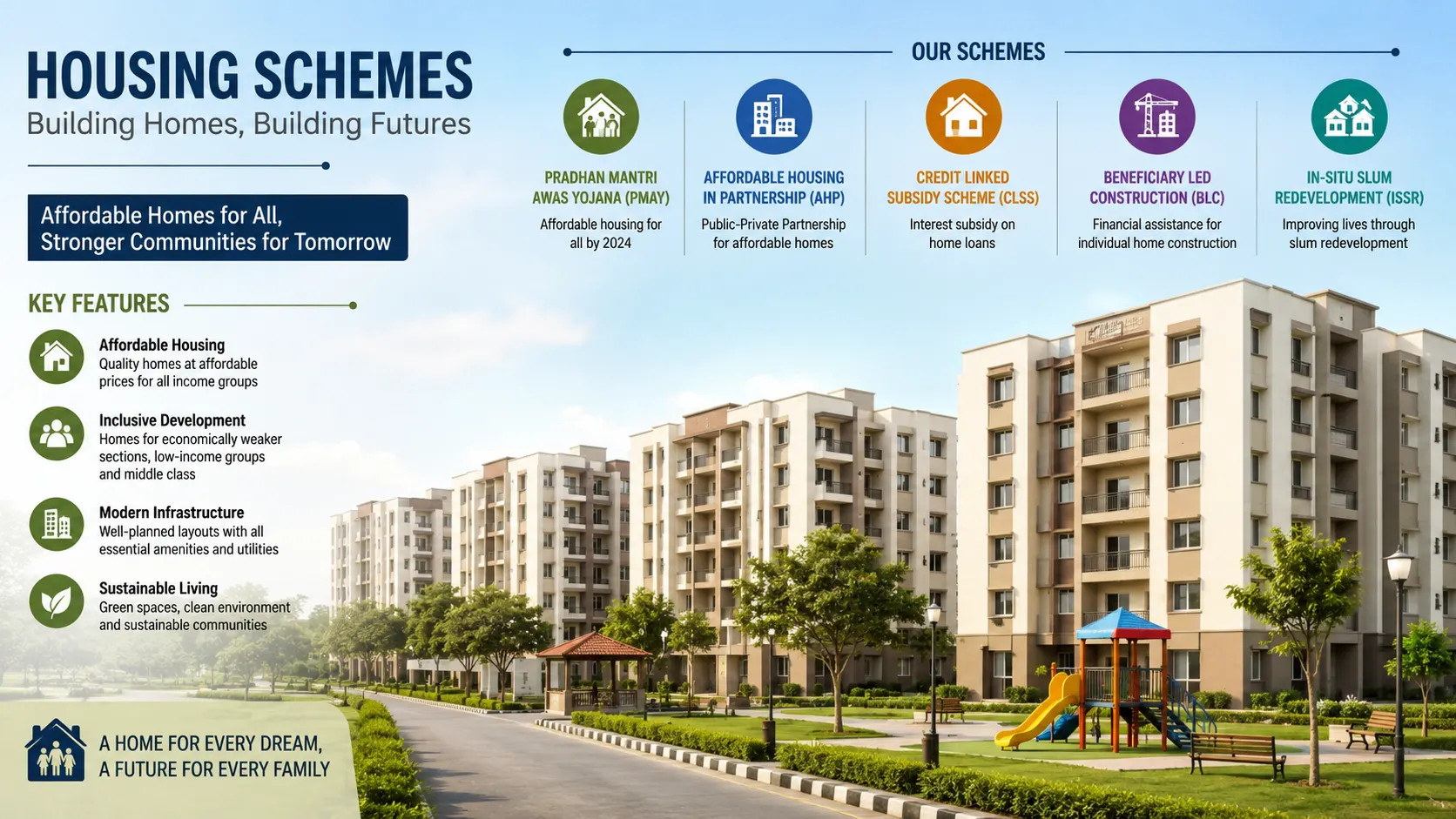
For years, the idea of government support to help urban households secure a permanent home has been part of India’s policy conversation. In theory, such housing initiatives are designed to bridge the widening gap between income growth and rising urban living costs. In practice, however, the experience often unfolds very differently on the ground.
In many cities, rents increase faster than wages, land prices escalate steadily, and affordable housing remains out of reach for large sections of middle- and lower-income families. Housing schemes, while well-intentioned, frequently exist in a space between promise and procedure. For potential beneficiaries, hope is quickly followed by layers of documentation, verification, and administrative hurdles.
The latest phase of the urban housing mission, which moved into its next stage from late 2024, aims to refine earlier efforts rather than reinvent them. The focus remains on easing access to home ownership through financial support linked to construction or purchase. Instead of direct cash handouts, the assistance is routed through formal lending channels, tying benefits closely to home loans and institutional financing.
What this actually means for a family depends far less on public announcements and far more on practical factors. Eligibility criteria play a decisive role, often based on income limits, property ownership status, and household composition. Even eligible applicants must navigate bank-level processes, where loan approval depends on credit history, repayment capacity, and compliance with lending norms.
Paperwork remains a critical point of friction. Applications pass through multiple stages — from submission and verification to lender approval and final benefit disbursal. At each step, delays or discrepancies can stall progress. For many households, the challenge is not awareness of the scheme but successfully carrying their application through the entire system without errors or rejections.
As a result, outcomes vary widely. Some families manage to reduce their borrowing burden and move closer to home ownership, while others struggle with documentation gaps, procedural delays, or mismatched expectations. The effectiveness of the programme ultimately lies not in its headline objectives but in how smoothly eligibility checks, banking processes, and administrative coordination work together.
In urban housing support, the fine print matters as much as the policy vision. Benefits are real, but they are rarely delivered in a straight line.