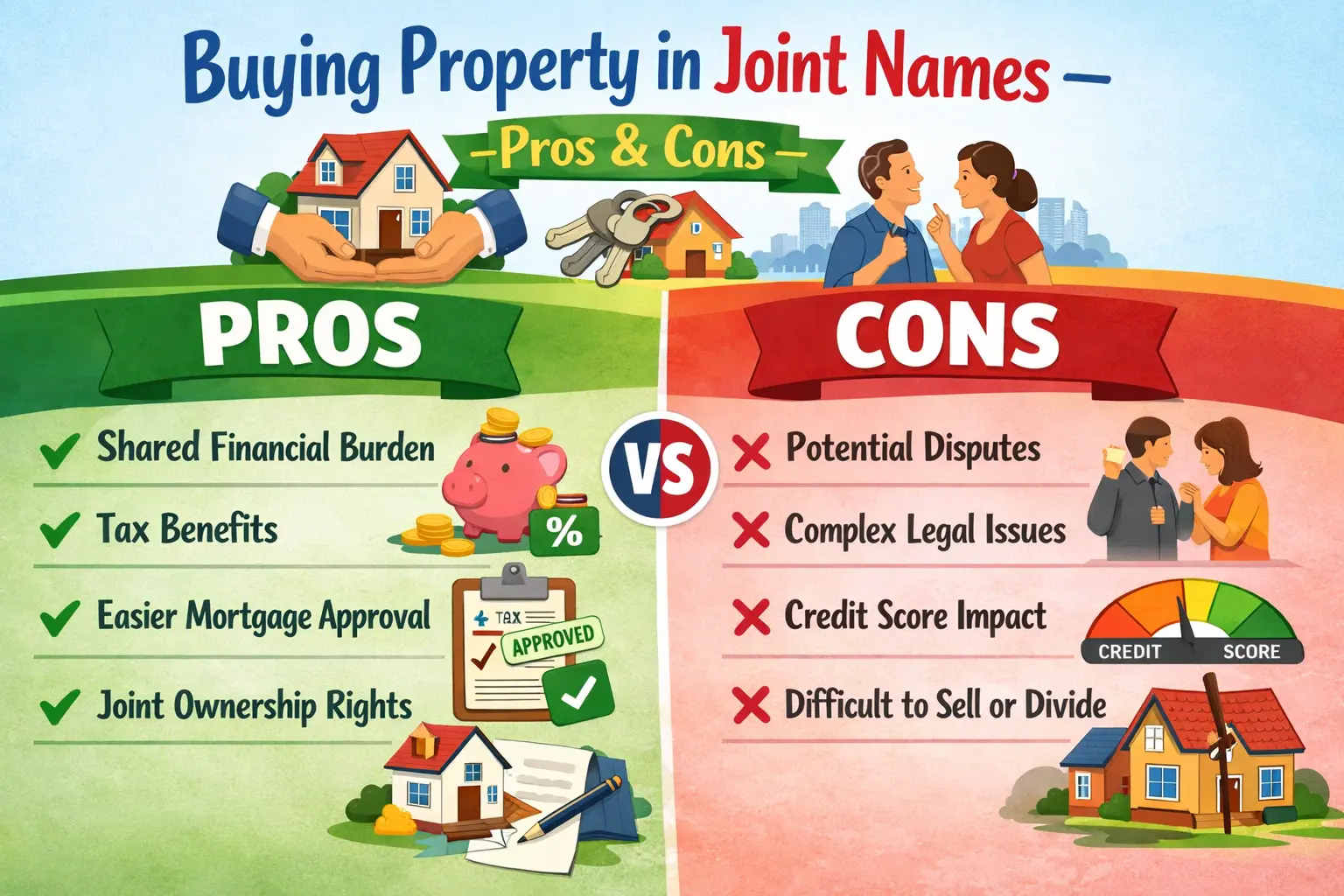
Buying a property jointly means two or more people legally own the same property. This is common for spouses, partners, family members, or friends. Ownership can be structured mainly as joint tenants or tenants in common, which affects rights and inheritance.
Pros of Buying Property in Joint Names
1. Shared Financial Burden
- Purchase price, deposit, mortgage repayments, maintenance, and taxes are divided.
- Makes property ownership more affordable.
- Reduces individual financial pressure.
2. Easier Mortgage Approval
- Combined incomes improve loan eligibility.
- Higher borrowing capacity.
- Better interest rates may be available.
3. Shared Tax Benefits
- Deductions (interest, property tax, depreciation, rental expenses) can often be split.
- Capital gains tax liability may be shared when selling (depending on local laws).
4. Joint Ownership Rights
- All owners have legal rights to the property.
- Decisions such as renting or selling usually require mutual consent.
- Provides a sense of security for co-owners.
5. Estate Planning Benefits
- In Joint Tenancy, ownership automatically passes to the surviving owner(s) upon death.
- Simplifies inheritance and avoids probate in many cases.
6. Ideal for Family or Investment Planning
- Enables families to buy property together.
- Useful for long-term investments or helping children enter the property market.
Cons of Buying Property in Joint Names
1. Risk of Disputes
- Disagreements may arise over finances, usage, selling, or renovations.
- Relationship breakdowns can complicate ownership.
2. Complex Legal Issues
- Legal documentation must be precise.
- Exiting the arrangement can be difficult without mutual agreement.
- Court intervention may be required in disputes.
3. Credit Score Impact
- All owners are equally responsible for the mortgage.
- If one party defaults, it affects everyone’s credit score.
- Late payments by one owner harm all co-owners.
4. Difficult to Sell or Divide
- Property cannot usually be sold without consent of all owners.
- Splitting ownership or buyouts can be costly and time-consuming.
5. Unequal Financial Contribution Risks
- If one owner contributes more financially, disputes may arise later.
- Without a legal agreement, recovering extra contributions can be difficult.
6. Inheritance Complications (Tenants in Common)
- Ownership shares pass according to a will, not automatically.
- Can create conflicts among heirs.
Key Things to Consider Before Buying Jointly
- Create a co-ownership agreement outlining exit plans, cost sharing, and dispute resolution
- Decide ownership structure carefully
- Consider future scenarios (marriage, separation, death, financial hardship)
- Seek legal and financial advice before purchase
Joint Tenants vs Tenants in Common
When buying property with someone else, the way ownership is structured matters a lot. The two most common forms are Joint Tenants and Tenants in Common. Each has different legal, financial, and inheritance implications.
Joint Tenants
Joint tenancy means all owners own the property together as a single unit.
Key features:
- All owners have equal ownership, regardless of who paid more.
- The property is owned as a whole, not in separate shares.
- Right of survivorship applies: if one owner dies, their share automatically passes to the remaining owner(s).
- The property does not form part of the deceased’s will or estate.
- One owner cannot sell or transfer their share without consent of the others.
Best suited for:
- Married couples
- Long-term partners
- People who want automatic inheritance for the survivor
Main drawback:
- No flexibility for unequal contributions or leaving a share to someone else.
Tenants in Common
Tenants in common means each owner holds a distinct share in the property.
Key features:
- Ownership shares can be equal or unequal.
- Each owner owns a defined portion of the property.
- There is no automatic inheritance.
- An owner’s share passes according to their will or legal heirs.
- Each owner can sell or transfer their share independently (subject to legal terms).
Best suited for:
- Friends buying property together
- Family members contributing different amounts
- Property investors
Main drawback:
- Inheritance can become complicated and lead to disputes among heirs.
Conclusion
Buying property in joint names can be a smart financial move when trust, transparency, and planning are in place. However, without proper agreements and foresight, it can lead to legal and financial complications.