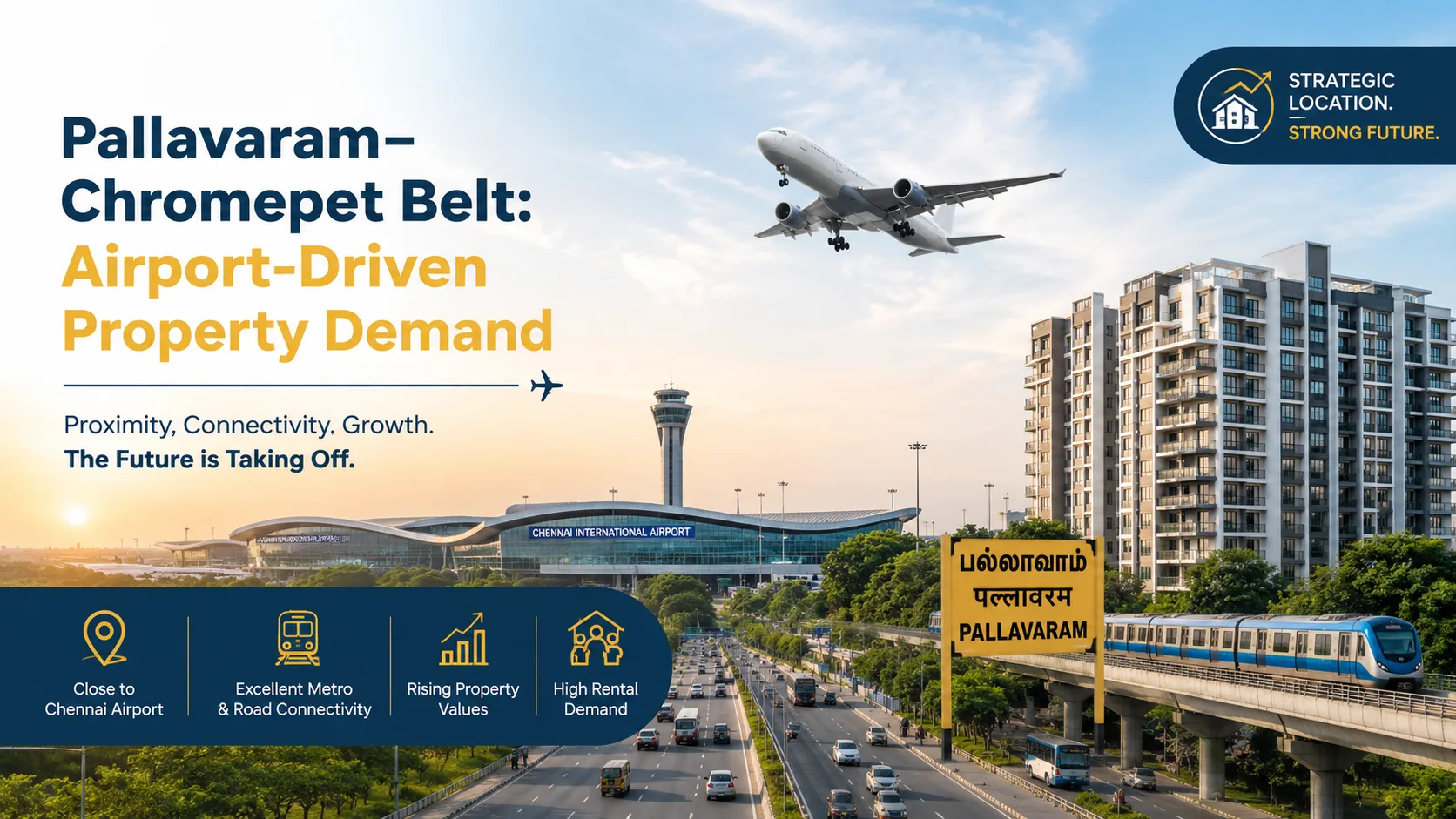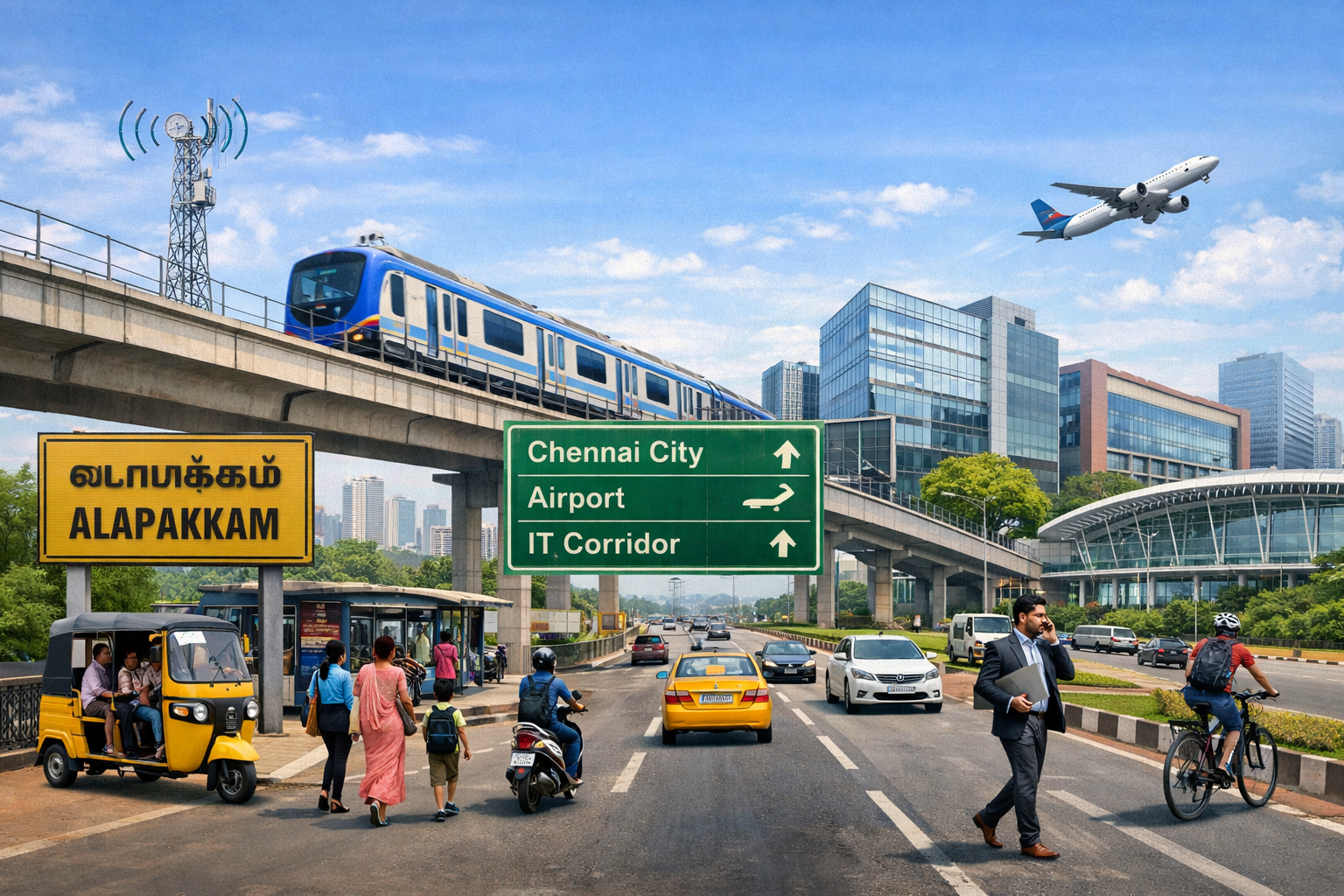
Airport connectivity and proximity to IT corridors are among the most powerful drivers of long-term urban, economic, and real estate growth. Together, they create a strong ecosystem that attracts businesses, talent, infrastructure investment, and population inflow, leading to sustained development over decades rather than short-term booms.
1. Understanding the Concept
1.1 Airport Access
Airport access refers to:
- Proximity to an international or domestic airport
- Ease of connectivity via highways, metro rail, expressways, or dedicated airport corridors
- Reduced travel time for passengers, cargo, and logistics
Modern airports are not just transport hubs—they are economic engines that influence regional growth patterns.
1.2 IT Corridor Access
An IT corridor is a concentrated zone of:
- Technology parks
- Software companies
- IT-enabled services (ITES)
- Startups, R&D centers, and multinational offices
These corridors often develop along major highways, ring roads, or metro lines and become magnets for skilled professionals and high-value employment.
2. Why Airports Drive Long-Term Growth
2.1 Global Connectivity and Business Expansion
Airports connect cities to:
- International markets
- Investors and clients
- Global supply chains
Companies prefer locations near airports because:
- Executives and clients travel frequently
- Faster access saves time and operational costs
- Cargo and high-value goods move efficiently
This leads to:
- Corporate offices
- Business parks
- Hotels, convention centers, and logistics hubs
Over time, this creates airport-centric economic zones (often called aerotropolises).
2.2 Employment Generation
Airports generate both direct and indirect employment, such as:
- Airline staff, ground handling, customs
- Cargo, warehousing, logistics
- Hospitality, retail, and maintenance services
Each airport job typically creates multiple secondary jobs, boosting local income levels and consumption.
2.3 Infrastructure Upgradation
Areas around airports often receive:
- Wide roads and expressways
- Metro or rapid transit lines
- Better water, power, and digital infrastructure
Governments prioritize airport-linked zones for infrastructure spending because:
- They represent the city to the world
- They support trade and tourism
This infrastructure investment continues for decades, ensuring long-term growth.
Also Read: Why Infrastructure Investment Predicts Real Estate Growth
3. Why IT Corridors Are Powerful Growth Engines
3.1 High-Value Employment and Income Growth
IT corridors generate:
- High-paying white-collar jobs
- Consistent demand for skilled talent
- Stable, recession-resistant employment (relative to many sectors)
High incomes lead to:
- Greater housing demand
- Demand for premium retail, schools, healthcare, and entertainment
This creates a self-sustaining economic loop.
3.2 Continuous Demand for Real Estate
IT corridors drive demand for:
- Residential housing (apartments, villas, co-living spaces)
- Commercial offices
- Retail spaces and mixed-use developments
Unlike industrial zones, IT corridors:
- Expand continuously as companies scale
- Attract new firms and startups
- Encourage vertical development
This ensures long-term appreciation rather than speculative spikes.
3.3 Talent Clustering and Innovation
When IT companies cluster:
- Knowledge sharing increases
- Innovation ecosystems emerge
- Startups, incubators, and venture capital follow
This makes the area future-proof, adaptable to new technologies and economic shifts.
4. Combined Impact: Airport + IT Corridor Synergy
When an area has both airport access and IT corridor proximity, growth accelerates significantly.
4.1 Ideal for Multinational Companies
Global firms look for:
- Seamless international travel
- Large talent pools
- High-quality infrastructure
Such locations become:
- Regional headquarters
- Global capability centers (GCCs)
- R&D hubs
This locks in long-term economic relevance.
4.2 Real Estate Appreciation Over Time
Historically, areas near airports and IT corridors show:
- Steady price appreciation
- Strong rental yields
- Lower vacancy rates
Unlike speculative real estate markets, growth here is demand-driven, supported by jobs and infrastructure.
4.3 Planned Urban Development
Governments often promote:
- Special Economic Zones (SEZs)
- Smart city projects
- Transit-oriented development (TOD)
These lead to:
- Organized layouts
- Better zoning
- Sustainable urban growth
Such planning ensures longevity and reduces risks of urban decay.
5. Social and Lifestyle Transformation
5.1 Improved Quality of Life
As demand grows, developers introduce:
- Schools, colleges, and universities
- Multi-specialty hospitals
- Shopping malls, restaurants, and entertainment zones
Residents benefit from:
- Reduced commute times
- Better social infrastructure
- Modern lifestyle amenities
5.2 Population Influx and Urbanization
Airport-IT corridors attract:
- Migrant professionals
- Entrepreneurs
- Service-sector workers
This leads to:
- Urban expansion
- Increased consumption
- Cultural diversity and vibrancy
Cities evolve from suburban zones into fully developed urban centers.
Also Read: Real estate market cycles understanding boom and bust cycles in residential and commercial markets
6. Long-Term vs Short-Term Growth
| Aspect | Airport & IT Corridor Growth | Speculative Growth |
| Driver | Jobs + Infrastructure | Hype & rumors |
| Stability | High | Low |
| Appreciation | Gradual & Sustained | Volatile |
| Rental Demand | Strong | Weak |
| Risk | Lower | Higher |
This makes airport and IT corridor access ideal for long-term investors, planners, and residents.
7. Future Outlook
With trends like:
- Remote work hybrid models
- Globalization of services
- Rise of data centers, AI, and fintech
Airport-linked IT corridors will:
- Continue expanding outward
- Attract global capital
- Remain relevant even as industries evolve
Cities that integrate airports, IT hubs, and transit systems will dominate future economic growth.
8. Conclusion
Airport and IT corridor access acts as a long-term growth catalyst because it combines:
- Global connectivity
- High-value employment
- Continuous infrastructure investment
- Sustainable real estate demand
Rather than short-lived development, these factors create enduring economic ecosystems that support growth for decades. Areas with strong airport and IT corridor connectivity consistently outperform others in terms of livability, investment returns, and resilience against economic downturns.
https://www.livehomes.in/live_insights