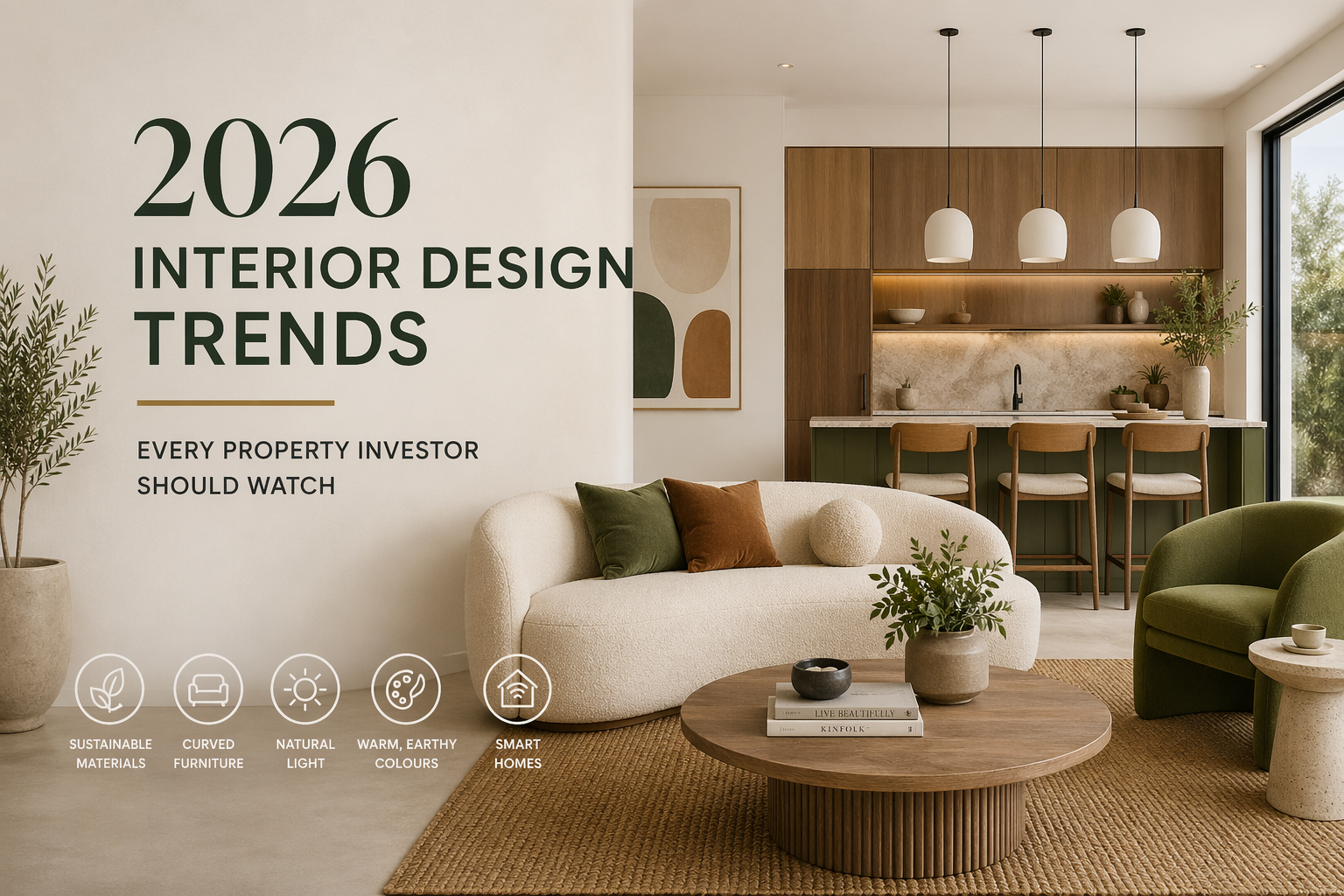
In 2026, interior design is no longer just about visual appeal. It has become a strategic tool that directly influences property value, buyer psychology, rental demand, and long-term returns. The dominant shift is toward human-centered, durable, and emotionally engaging spaces that balance aesthetics with functionality and well-being.
1. Shift from Sterile Minimalism to Warm, Livable Interiors
The cold, ultra-minimal interiors that dominated the past decade are losing favor. In 2026, design emphasizes warmth, depth, and emotional comfort.
Key characteristics:
- Softer, warmer neutral palettes (sand, clay, taupe, olive, caramel)
- Layered lighting instead of harsh overhead illumination
- Spaces that feel lived-in rather than showroom-perfect
Investor insight:
Warm interiors increase emotional connection, making properties feel more “home-like.” This often translates into faster sales, stronger tenant retention, and better perceived value without major structural upgrades.
2. Color Is Strategic, Not Decorative
Color in 2026 is intentional and controlled. Instead of flat whites or grays, designers use rich, grounded colors to define zones and create identity.
Common approaches:
- Accent walls with earthy reds, muted blues, or deep greens
- Tonal color layering instead of high contrast
- Color used to visually expand or soften spaces
Investor insight:
Well-chosen color schemes improve listing photography and memorability. Properties that stand out visually—but still feel timeless—perform better in competitive markets.
3. Texture and Material Depth Signal Quality
Buyers and tenants increasingly equate texture with value. Flat, glossy finishes are replaced with tactile surfaces.
Popular materials:
- Natural wood and wood veneers
- Stone, limewash, and plaster finishes
- Textured tiles and matte metals
Investor insight:
Textured materials elevate perceived craftsmanship and durability. Even modest upgrades (feature walls, countertops, flooring) can significantly increase perceived property quality and pricing power.
4. Comfort-Driven, Sculptural Furniture Shapes Interiors
Furniture trends focus on comfort, curves, and presence rather than sharp lines and rigid forms.
Key traits:
- Rounded sofas and chairs
- Deeper seating and softer upholstery
- Furniture that doubles as a design statement
Investor insight:
Comfortable, visually appealing furniture enhances staging effectiveness and tenant satisfaction. For furnished rentals or show homes, this can directly increase demand and justify premium pricing.
5. Flexible Layouts Respond to Modern Living Patterns
Interior layouts in 2026 are designed for adaptability. Homes must accommodate work, relaxation, socializing, and rest within the same footprint.
Design responses include:
- Multi-functional rooms
- Modular or movable furniture
- Defined zones within open-plan layouts
Investor insight:
Flexible layouts broaden the target audience. Properties that adapt to different lifestyles appeal to more buyers and renters, reducing vacancy and time on market.
6. Wellness-Oriented Design Becomes a Core Expectation
Well-being is no longer a luxury feature; it is an expectation. Design now supports mental, physical, and sensory health.
Key elements:
- Natural light optimization
- Improved airflow and acoustics
- Visual connection to nature (plants, natural materials, views)
Investor insight:
Wellness-focused interiors increase long-term desirability. Properties that feel calm, healthy, and comfortable command stronger loyalty from occupants and better long-term value stability.
7. Personalization Over Perfect Uniformity
Interiors in 2026 prioritize character and individuality over generic perfection.
Design traits:
- Layered décor instead of matchy sets
- Art, textures, and features that tell a story
- Subtle imperfections that feel authentic
Investor insight:
Spaces that feel personal and unique resonate emotionally. This improves buyer confidence and helps properties avoid looking interchangeable with competing listings.
8. Craftsmanship and Detail Add Perceived Luxury
Smaller details carry greater importance:
- Decorative hardware
- Mixed finishes and metals
- Architectural details such as curves, niches, or trim
Investor insight:
Attention to detail signals quality and care. These elements often cost less than major renovations but strongly influence how premium a property feels.
Investment Perspective
The 2026 interior design landscape rewards intentional, people-focused decisions rather than trend chasing. The most successful properties are those that:
- Feel warm and comfortable
- Use materials and color to convey quality
- Support modern, flexible lifestyles
- Appeal emotionally as well as functionally
For property investors, interior design in 2026 is not an aesthetic afterthought—it is a value-creation strategy that directly impacts demand, pricing, and long-term performance.