What Are Vitrified Tiles?
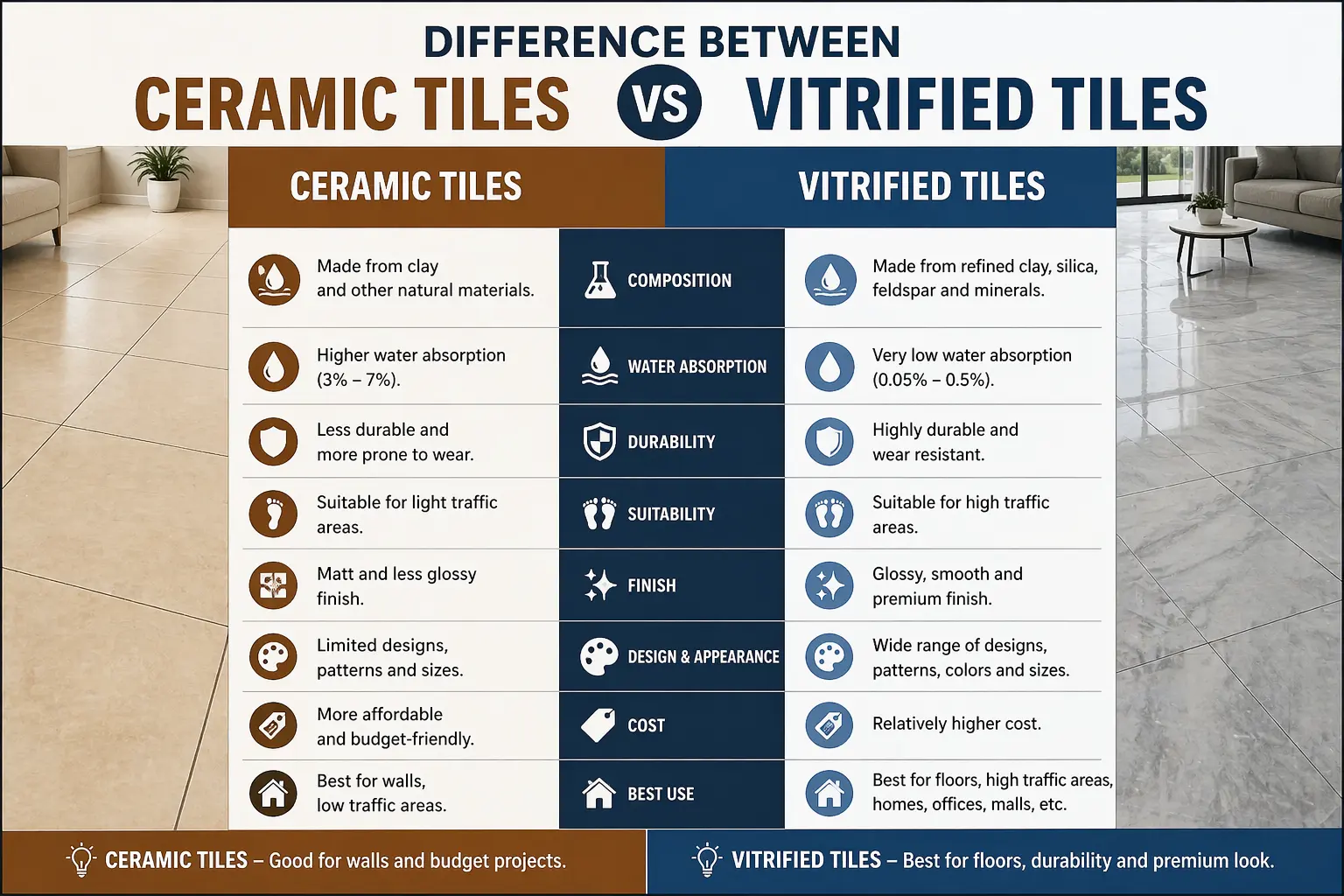
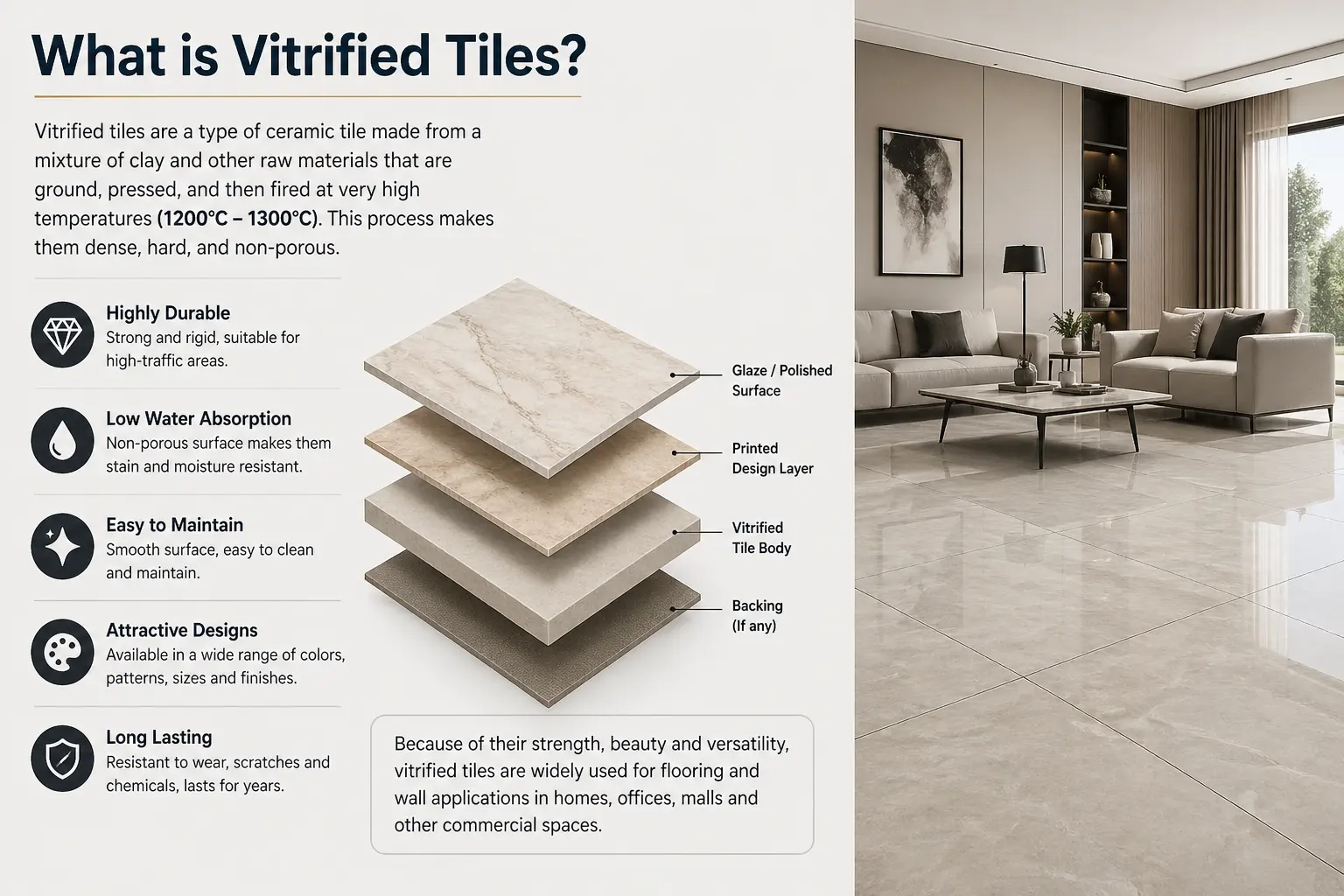
Vitrified tiles are a type of high-quality ceramic tile made by combining clay, silica, quartz, and feldspar, which are then pressed and fired at very high temperatures (around 1200°C–1300°C). This intense heat causes the materials to vitrify (partially melt and fuse), forming a dense, glass-like, non-porous tile. Because of this process, vitrified tiles are stronger, harder, and more durable than regular ceramic tiles and absorb very little water.
How Vitrified Tiles Are Made (Manufacturing Process)
- Raw Material Mixing
Clay, silica, quartz, and feldspar are finely ground and mixed.
- High-Pressure Pressing
The mixture is pressed under high pressure to give shape.
- High-Temperature Firing
Tiles are fired in kilns at temperatures above 1200°C.
- Vitrification
The minerals melt and fuse, creating a dense, glassy structure.
- Surface Finishing
Tiles may be polished, glazed, matte-finished, or digitally printed.
Key Characteristics of Vitrified Tiles
1. Very Low Water Absorption
- Water absorption is less than 0.5%
- Makes tiles stain-resistant and moisture-resistant
2. High Strength & Durability
- Hard and dense
- Resistant to cracks, scratches, and wear
3. Smooth & Uniform Surface
- Even texture and thickness
- Ideal for large-area flooring
4. Easy Maintenance
- Easy to clean with water and mild cleaners
- No need for sealing
5. Long Lifespan
- Can last 20–30 years or more with proper installation
Types of Vitrified Tiles
1. Full Body Vitrified Tiles
- Same color and pattern throughout the tile
- Best for heavy-traffic areas
2. Double Charge Vitrified Tiles
- Two layers fused together
- Thicker design layer, more durable than standard tiles
3. Glazed Vitrified Tiles (GVT)
- Digitally printed designs
- Available in marble, wood, stone looks
4. Polished Vitrified Tiles
- Shiny, mirror-like finish
- Elegant appearance for living spaces
5. Matte / Rustic Vitrified Tiles
- Non-slippery surface
- Ideal for bathrooms and outdoor areas
Common Sizes of Vitrified Tiles
- 600 × 600 mm
- 600 × 1200 mm
- 800 × 800 mm
- 1200 × 1200 mm
- Large slabs also available
Where Are Vitrified Tiles Used?
- Living rooms
- Bedrooms
- Kitchens
- Offices
- Shopping malls
- Airports
- Hotels
- Hospitals
- Commercial buildings
Advantages of Vitrified Tiles
- Highly durable and long-lasting
- Water and stain resistant
- Available in many designs and finishes
- Low maintenance
- Suitable for both residential and commercial use
- Uniform size and thickness
Disadvantages of Vitrified Tiles
- Polished tiles can be slippery when wet
- Slightly more expensive than ceramic tiles
- Hard surface (not comfortable for long standing)
FAQs About Vitrified Tiles
Q1. Are vitrified tiles waterproof?
They are not 100% waterproof, but they have very low water absorption, making them highly moisture-resistant.
Q2. Are vitrified tiles suitable for bathrooms?
Yes. Matte or anti-skid vitrified tiles are suitable for bathrooms. Avoid polished tiles in wet areas.
Q3. Do vitrified tiles need polishing?
No. Factory-polished tiles do not need additional polishing after installation.
Q4. Are vitrified tiles slippery?
Polished vitrified tiles can be slippery when wet. Matte or textured finishes are safer.
Q5. Can vitrified tiles be used outdoors?
Yes, rustic or outdoor-grade vitrified tiles are suitable for balconies and patios.
Q6. How long do vitrified tiles last?
With proper installation and care, they can last 25–30 years or more.
Q7. Are vitrified tiles better than marble?
They are more affordable, low maintenance, stain-resistant, and uniform compared to natural marble.
Q8. Do vitrified tiles crack easily?
No. When installed correctly on a proper base, they are highly crack-resistant.