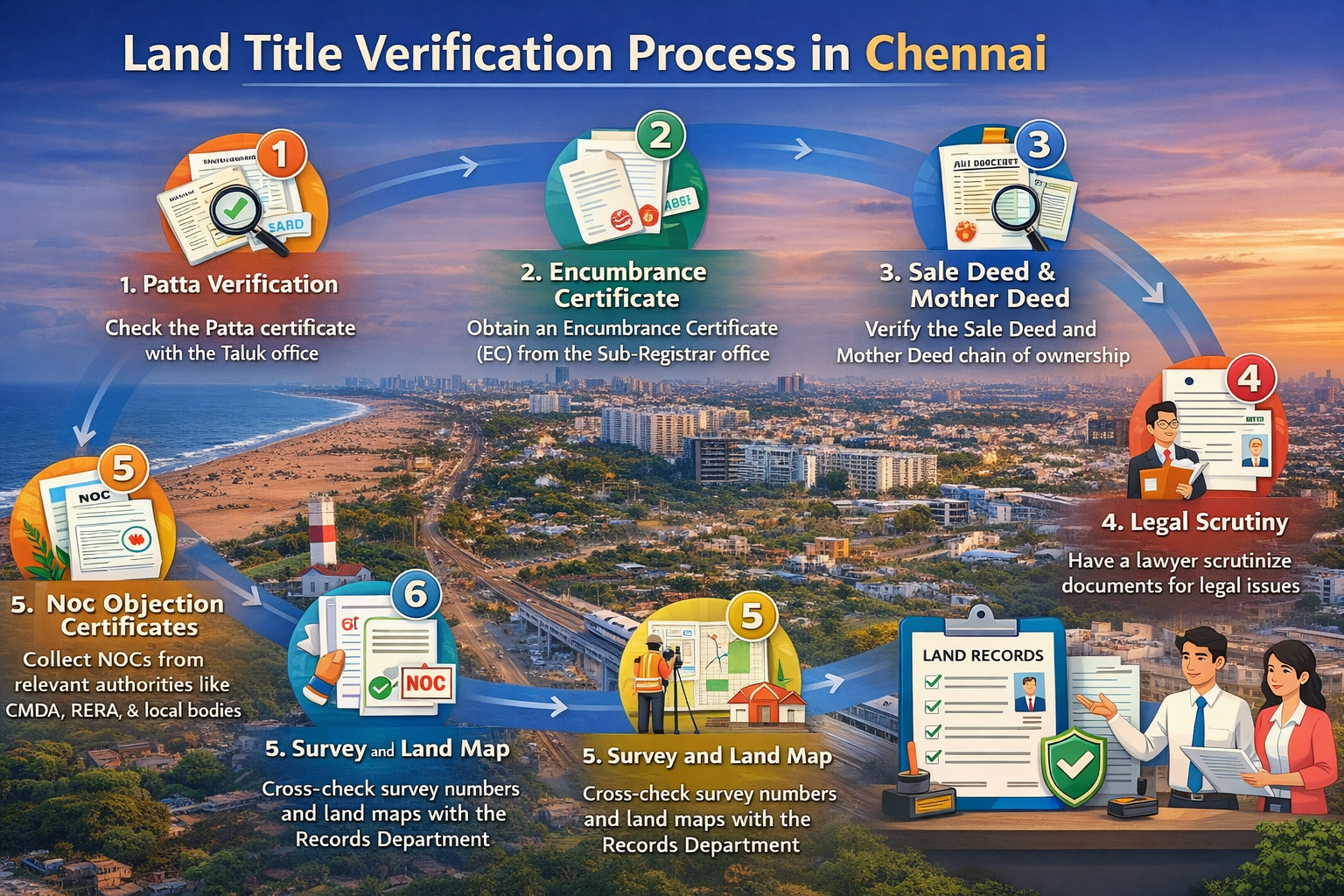
Land title verification is the process of confirming that a property:
- Is legally owned
- Has a clear ownership chain
- Is free from loans, disputes, and government claims
- Is eligible for sale, registration, and construction
This process is mandatory before buying land, plots, or independent houses.
STEP 1: Patta Verification (Ownership Proof)
What is a Patta?
A Patta is a revenue record issued by the Tamil Nadu Government that establishes lawful possession and ownership of land.
What to Verify in the Patta:
- Owner’s name (must match seller)
- Survey Number & Sub-division Number
- Area of land (sq.ft / acres)
- Taluk, Village & District
- Land Classification:
- Residential
- Commercial
- Agricultural (Nanjai / Punjai)
- Whether Patta is individual or joint
Where to Verify:
- Taluk Office (Revenue Department)
- Online Tamil Nadu e-Services portal
Common Risks:
- Fake Pattas
- Patta issued for government poramboke land
- Joint Patta without consent from all owners
Tip: For resale plots, ensure Patta has been transferred (Patta Mutation) to the current seller.
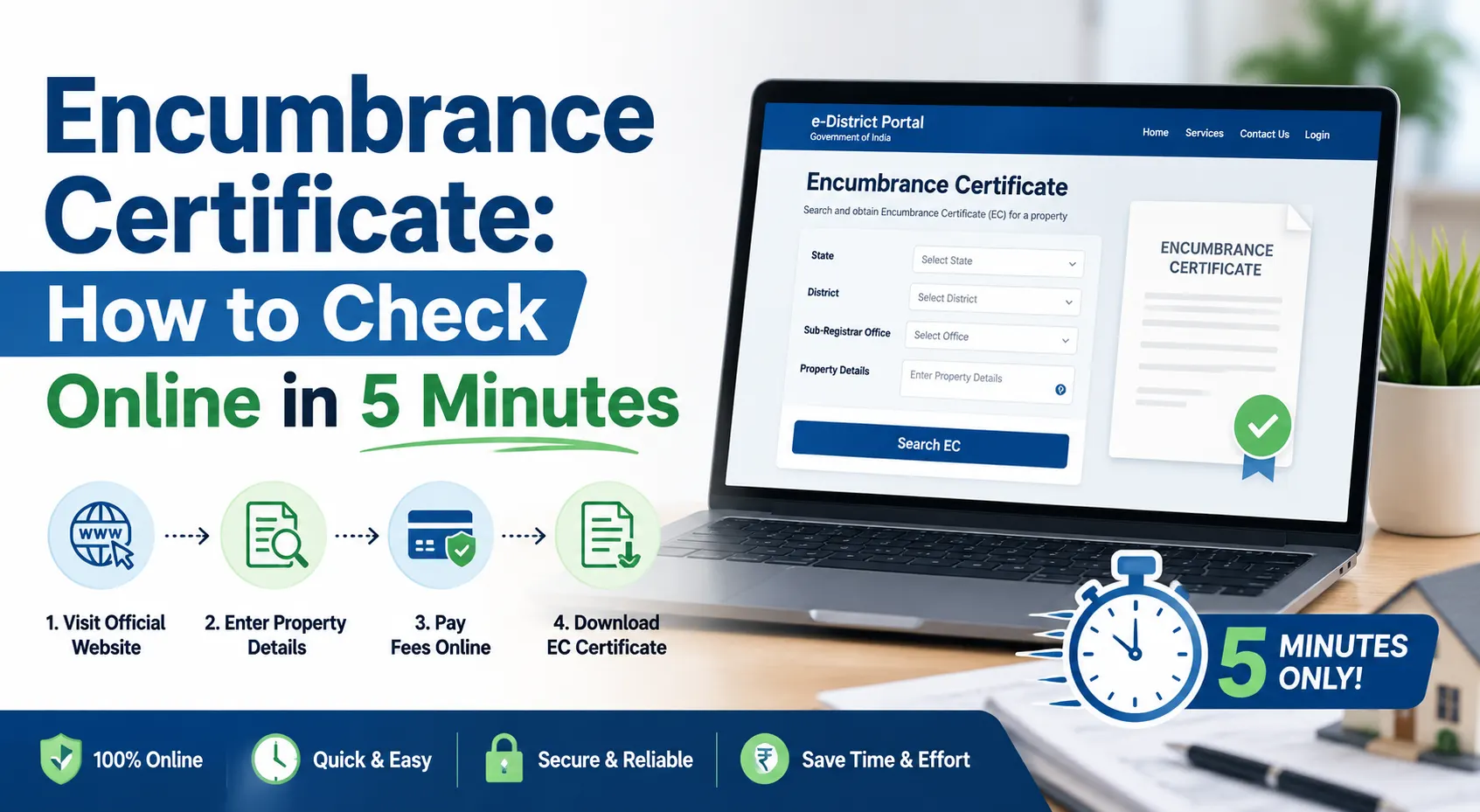
STEP 2: Encumbrance Certificate (EC) Verification
What is an EC?
An Encumbrance Certificate shows financial and legal liabilities registered against the property.
What EC Reveals:
- Sale transactions
- Mortgage to banks
- Loans
- Lease agreements
- Court attachments (if registered)
Time Period:
- Minimum: 30 years
- Ideal: 40–45 years
Types of EC:
- Form 15 – Lists transactions
- Form 16 (Nil EC)—Confirms no registered encumbrances
Issued By:
- Sub-Registrar Office
- Registration Department online portal
Critical Limitation:
EC does NOT show:
- Unregistered agreements
- Oral family disputes
- Pending court cases not yet recorded
STEP 3: Sale Deed Verification (Legal Ownership Transfer)
What is a sale deed?
A sale deed is the primary legal document transferring ownership from seller to buyer.
Checkpoints:
- Seller name matches Patta & EC
- Proper stamp duty paid
- Registration number & date
- The property description matches survey records
- No conditional clauses or hidden rights
Must Be:
- Properly stamped
- Registered
- Original available
Unregistered sale deeds have no legal value.
STEP 4: Mother Deed Verification (Ownership History)
What is a mother deed?
A mother deed traces ownership history of the land for 30–40 years.
Purpose:
- Confirms uninterrupted ownership chain
- Detects fraudulent transfers
- Identifies inheritance claims
What to Verify:
- Continuous ownership without gaps
- Legal inheritance transfers (will/legal heir certificate)
- No missing links between owners
Missing Mother Deed = High-Risk Property
STEP 5: Legal Scrutiny by Property Lawyer
A property lawyer performs comprehensive due diligence beyond documents.
Lawyer Will Check:
- Validity of all deeds
- EC vs Sale Deed consistency
- Pending litigation
- Land ceiling violations
- Government acquisition risk
- Compliance with local laws
Final Output:
Title Clearance Report (Legal Opinion)
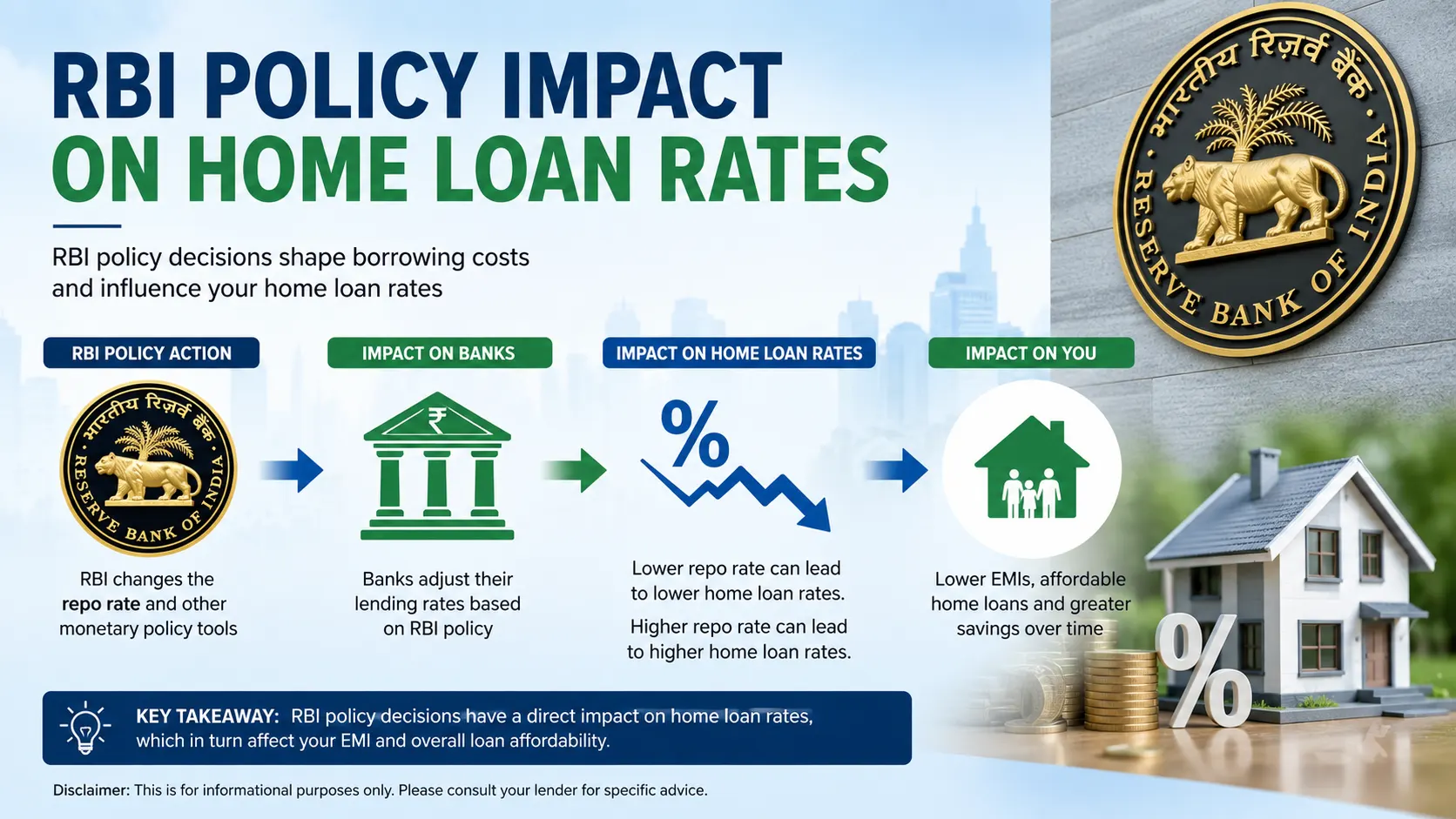
Banks rely heavily on this report before approving loans.
STEP 6: Survey, FMB & Land Measurement Verification
Why This Is Important:
Documents may be correct, but physical land boundaries might differ.
Documents Involved:
- FMB (Field Measurement Book)
- Village Map
- Survey Sketch
Verified Through:
- Survey & Records Department
- Licensed Government Surveyor
Confirms:
- Exact boundaries
- Encroachments
- Road access
- Matching of on-ground land with documents
STEP 7: No Objection Certificates (NOCs)
Depending on land type, NOCs may be required from:
- Local Panchayat/Corporation
- Chennai Metropolitan Development Authority (CMDA) – Layout approval
- Tamil Nadu RERA – For projects/apartments
- Electricity Board
- Water & Sewerage Board
Buying a plot without CMDA approval can lead to:
- Registration issues
- Demolition risk
- Loan rejection
STEP 8: Land Use & Zoning Verification
Land Categories:
- Residential
- Commercial
- Industrial
- Agricultural
- Mixed-use
Why It Matters:
- Construction allowed only on approved land use
- Agricultural land requires conversion
Verified Using:
- CMDA Master Plan
- Zoning Maps
STEP 9: Litigation & Government Claim Check
Check if Land Is:
- Government poramboke
- Ceiling surplus land
- Temple/Trust property
- Involved in civil or criminal cases
How:
- Revenue records
- Court databases
- Advocate verification
STEP 10: Registration & Stamp Duty Verification
Ensure:
- All deeds are registered
- Correct stamp duty paid
- Proper index numbers exist
Without registration:
Ownership not legally recognized
FINAL STEP: Title Clearance & Purchase Approval
Once all checks are complete:
- Lawyer issues Clear Title Certificate
- Property is legally safe for:
- Purchase
- Registration
- Construction
- Bank loans
- Resale
FAQs
Q1. Is EC enough to prove ownership?
No. EC shows transactions, not ownership validity.
Q2. Can land be sold without Patta?
Technically yes, but it's extremely risky, and banks won’t approve loans.
Q3. How to verify inherited property?
Check:
- Legal Heir Certificate
- Partition Deed / Will
- EC & Mother Deed continuity
Q4. What if land has joint owners?
- All owners must:
- Sign sale deed
- Give consent
- Appear during registration
Q5. Can agricultural land be used for housing?
Only after land use conversion approval.
Q6. How much does title verification cost?
Rs 5,000 – Rs 25,000 depending on complexity.
Q7. How long does verification take?
7–15 working days (may extend for disputed land).
Q8. Is CMDA approval mandatory for plots?
Yes, especially in Chennai metropolitan limits.
Q9. What happens if I skip verification?
- Loss of ownership
- Court cases
- Bank loan rejection
- Demolition notices
Q10. Is bank approval a guarantee of clear title?
No. Banks verify mainly for loan safety, not buyer safety.