When you take a loan from a bank or financial institution, the bank charges you interest for lending you money. Interest is the cost you pay for using the bank’s money over a certain period of time. One of the most important decisions while taking a loan is choosing between a fixed interest rate and a floating (variable) interest rate. This choice affects how much money you pay every month, how much interest you pay in total, and how comfortable or stressful your loan journey will be. Many borrowers make this decision without fully understanding the difference, which can lead to financial pressure later. This explanation will help you clearly understand both options in detail.
Understanding Interest Rates in Simple Terms
An interest rate is a percentage charged on the loan amount. If you borrow money, you must repay the following:
- The original loan amount (principal)
- Extra money (interest)
The way this interest is calculated depends on whether your loan has a fixed or floating rate.
Fixed Interest Rate – Complete and Deep Explanation
What Is a Fixed Interest Rate?
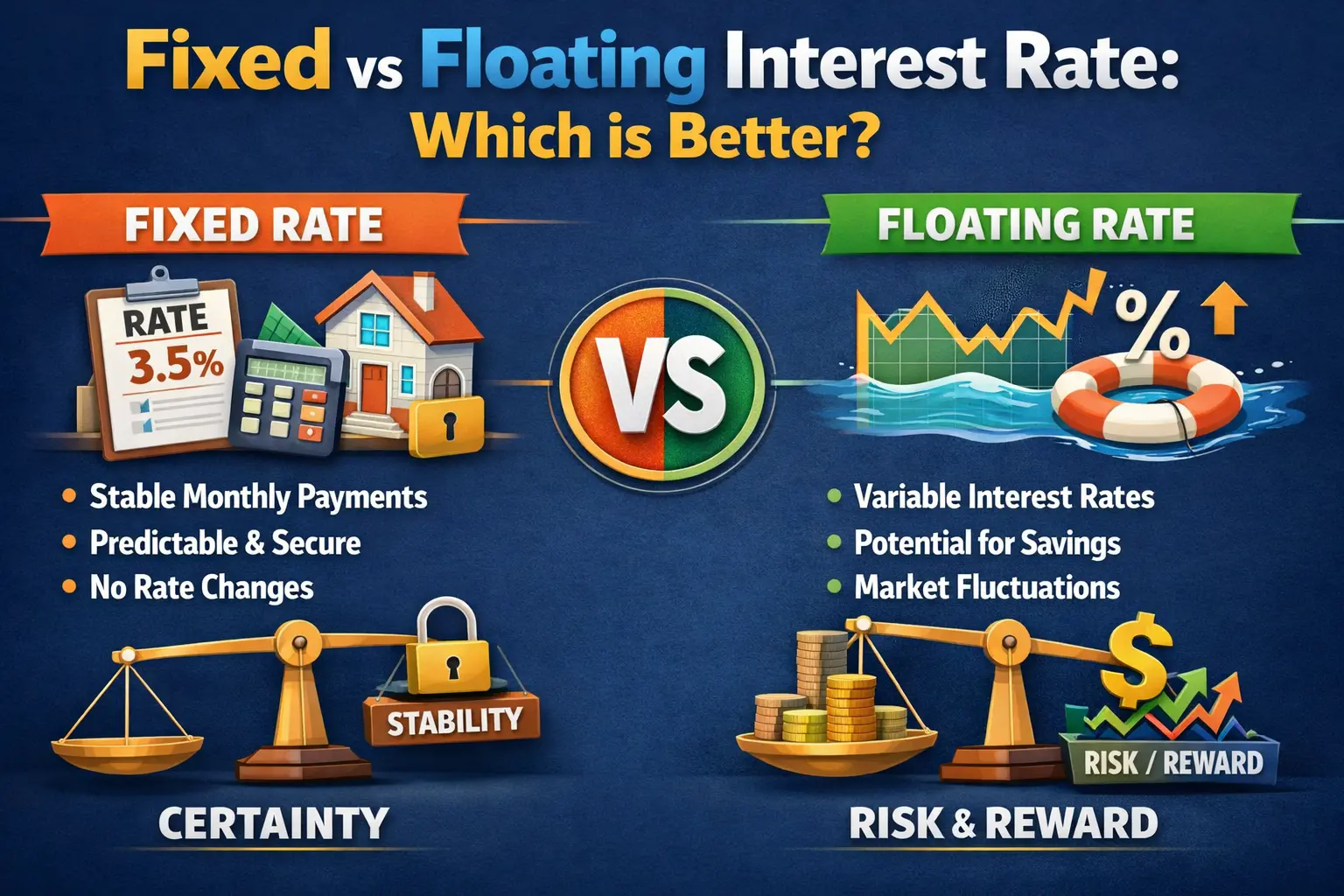
A fixed interest rate means the interest rate on your loan remains unchanged for the entire loan period or for a fixed number of years mentioned in the loan agreement.
Once your loan is approved:
- The interest rate is locked
- Your EMI remains the same every month
- Market interest rate changes do not affect you
Even if interest rates rise sharply in the economy, your loan payments stay exactly the same.
How Fixed Interest Rate Works in Real Life
When you take a loan at a fixed rate:
- The bank calculates your EMI at the beginning
- This EMI remains constant throughout the tenure
- You know in advance how much money you will pay every month and in total
This makes fixed interest rate loans highly predictable.
Advantages of Fixed Interest Rate (In Detail)
The biggest benefit of a fixed interest rate is certainty and peace of mind.
You always know:
- Your monthly EMI
- Your yearly loan expense
- Your total repayment amount
This is very useful for:
- People with fixed salaries
- Families with fixed monthly expenses
- Individuals with limited savings
Fixed interest rates protect you from:
- Sudden interest rate hikes
- Inflation-related increases
- Economic instability
They help in:
- Better budgeting
- Long-term financial planning
- Avoiding unexpected financial stress
Disadvantages of Fixed Interest Rate (In Detail)
The main disadvantage of a fixed interest rate is higher cost.
Banks charge higher rates because:
- They bear the risk of rising interest rates
- They give you stability at their own risk
Other disadvantages include:
- You do not benefit if interest rates fall
- Prepayment penalties are often charged
- Switching to floating rate may involve fees
This means you may end up paying more interest overall.
Who Should Choose Fixed Interest Rate?
- A fixed interest rate is best for:
- Risk-averse individuals
- First-time loan borrowers
- People with tight monthly budgets
- Short- to medium-term loans
- Periods when interest rates are rising
Floating Interest Rate – Complete and Deep Explanation
What Is a Floating Interest Rate?
A floating interest rate is an interest rate that changes over time based on market conditions.
It is linked to a benchmark rate such as:
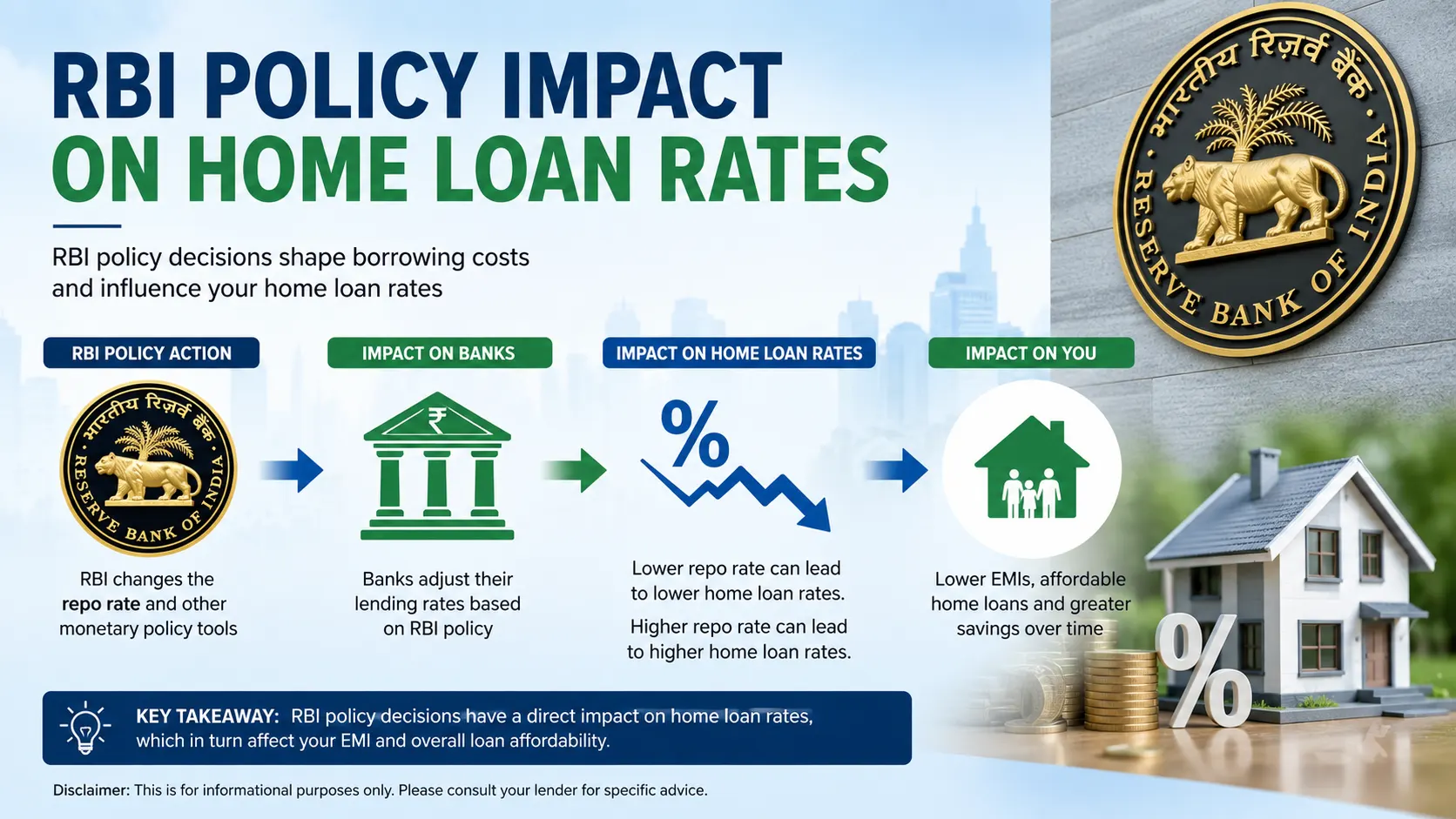
- Repo rate set by the central bank
- MCLR set by banks
When the benchmark rate changes, your loan interest rate also changes.
How Floating Interest Rate Works in Real Life
When market interest rates decrease:
- Your EMI may reduce
- Or your loan tenure may reduce
When market interest rates increase:
- Your EMI increases
- Or your loan tenure extends
The bank decides whether EMI or tenure changes, depending on loan terms.
Advantages of Floating Interest Rate (In Detail)
The biggest advantage of floating interest rates is long-term savings.
Floating rates:
- Start lower than fixed rates
- Benefit from falling interest rates
- Reduce total interest paid over time
Other advantages include:
- No prepayment penalties in most cases
- Flexibility to repay early
- Better for long-term loans like home loans
If interest rates remain stable or decline, floating loans can save a significant amount of money.
Disadvantages of Floating Interest Rate (In Detail)
The biggest drawback is uncertainty.
You may face:
- Unexpected EMI increases
- Difficulty managing monthly expenses
- Stress during rising interest rates
Floating interest rates are risky for:
- People with fixed income
- Borrowers with little savings
- Those who cannot handle EMI changes
Who Should Choose a Floating Interest Rate?
Floating interest rate is suitable for:
- Borrowers with growing income
- People with good financial discipline
- Long-term loan borrowers
- Periods of stable or falling interest rates
Hybrid Interest Rate – A Balanced Option
Some banks offer hybrid interest rate loans, which combine both fixed and floating rates.
In such loans:
- Initial years have a fixed interest rate
- Remaining tenure follows floating rate
This option offers:
- Stability at the beginning
- Savings in the long run
- A balance between safety and flexibility
Psychological and Financial Impact of Both Options
Fixed interest rate provides:
- Emotional comfort
- Stress-free repayment
- Financial predictability
Floating interest rate provides:
- Potential savings
- Financial efficiency
- Need for discipline and planning
Choosing the wrong option can lead to:
- Financial stress
- Missed savings
- Loan repayment difficulties
Conclusion
Choosing between fixed and floating interest rates is a major financial decision.
- Fixed interest rate offers stability, predictability, and peace of mind
- Floating interest rate offers flexibility, lower cost, and long-term savings
The right choice depends on:
- Income stability
- Risk tolerance
- Loan tenure
- Interest rate trends
Making an informed decision can save you lakhs of rupees over the loan period.
Frequently Asked Questions (FAQs)
1. Which interest rate is better overall?
There is no universal answer. Fixed is safer, floating is cheaper in the long run.
2. Is the fixed interest rate completely fixed?
Yes, unless your loan has a partial fixed period.
3. Can floating interest rates increase suddenly?
Yes, during inflation or economic tightening.
4. Can EMI change in floating loans?
Yes, EMI or tenure can change.
5. Are floating loans risky?
They carry moderate risk, manageable with savings.
6. Which is better for long-term loans?a
Floating interest rates are generally better.
7. Can I prepay a floating loan?
Yes, usually without penalty.
8. Do fixed loans allow early repayment?
Yes, but usually with penalties.
9. Should salaried people choose a fixed rate?
Yes, if income is stable and expenses are tight.
10. Can I switch between interest types?
Yes, most banks allow switching for a fee.